
Journal—
Musings & Observations
I’ve written for The Atlantic, Huffington Post, Forbes, Warwick and my mom.
You can also see the Magazine view.

Gordon Bearn
Photo by Bobby George. Kodak Portra 400 + Leica M2
After nearly twenty years away, I returned to Bethlehem, Pennsylvania, where I attended school at Lehigh University.
Going back was cathartic. It was a Proustian experience. Everything was more diminutive than I remembered. The campus was smaller, even though the trees were larger. In this experience, the twists and turns down memory lane, memories expanded in the most rich and unexpected of ways. Layers upon layers unfolded.
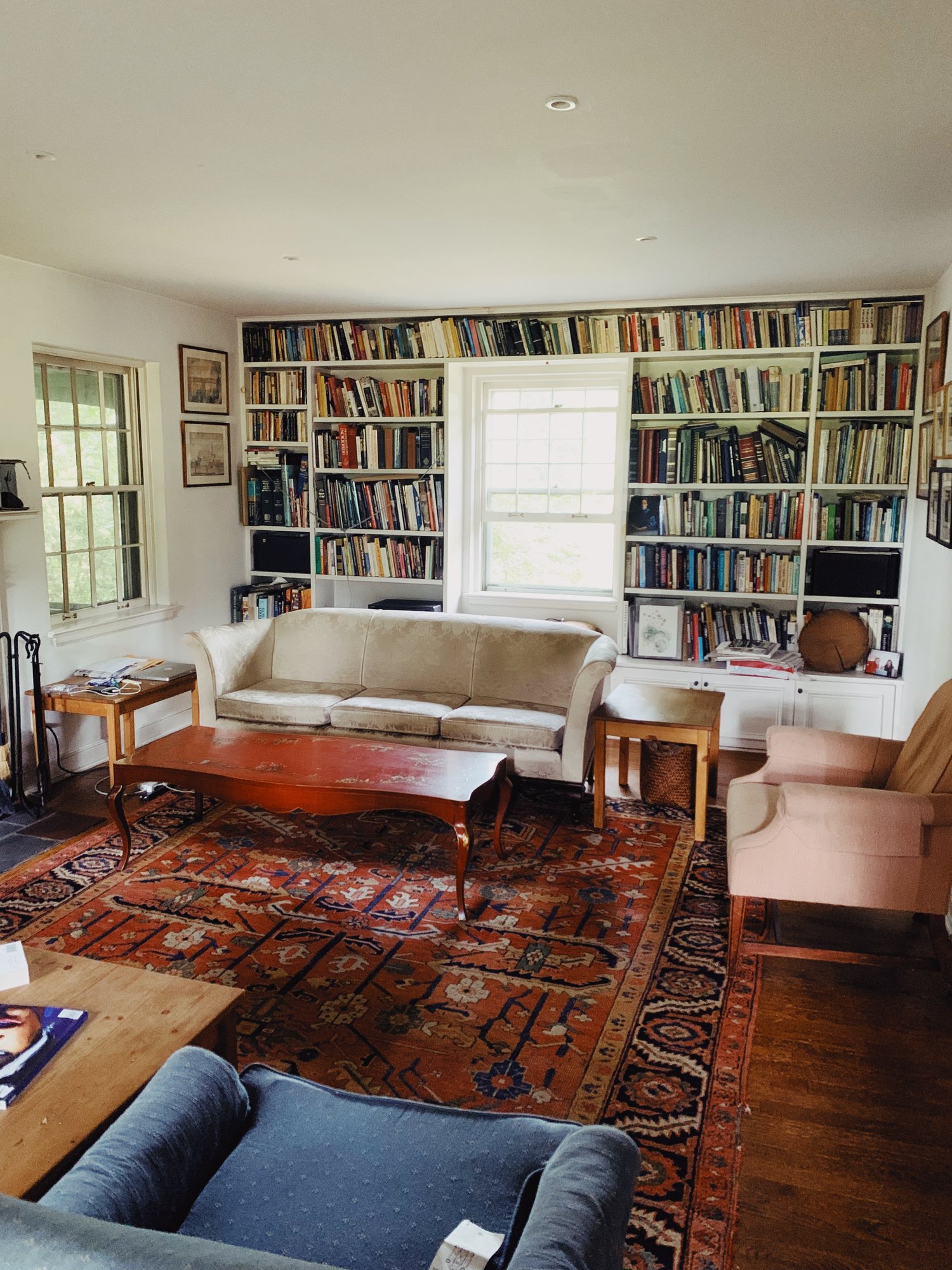
I returned, after all these years, to visit Gordon Bearn and his beautiful wife, Ellen. We had brunch and dinner and oh so many conversations and we walked along the Monocacy Creek, stopping at gardens and bends, following the railroad tracks.

Professor Bearn introduced me to philosophy, showcasing what it means to think and learn. In our time together, we explored so many thinkers: from Wittgenstein and Nietzsche to Klee and Deleuze. More than anything, he demonstrated the philosophical way of life: modesty, humility and humor, compassion and a passion for life.

What a beautiful man.

Dancing with Students
While shooting a brand film at the Academy of Thought and Industry, one of the students, Mica Manotoc, described painting as "entering into a dance". We were instantly captivated by her wherewithal and sensibilities. We wanted to learn more.

Her mind clears, she said, and everything slows down and makes sense. She talked about Pollock, and how he liberated her from the easel, freeing her to see the world differently. Of course, we asked if we could watch her work!
Moments later, we’re heading into the studio, and as any collaborative artist, she prompted us to select a color palette. Carefully choosing the paint, we helped her lay them out. Then, the magic started. We witnessed her "dance".

When she was finished, which she described as "just knowing when it's done", she handed the brush to us, asking us to leave our mark. The first thing that came to our minds was an x and an o with a smiley face.

She loved it! Almost as much as we loved her.
Upon leaving, she handed us the painting as a token of her appreciation, inscribing her gratitude on the back. 😍

I had to turn it into a logo. It's my new favorite thing!

Individualized Learning Isn’t about the Individual

There’s a widespread conception that individualized learning is solely about the individual. That by personalizing education, we’re only focusing on the individual needs of the student, outside the constructs of a larger community. Community, so the theory goes, suffers at the hands of the individual.
When we think of Socrates and Plato, or Plato and Aristotle, or Aristotle and Alexander the Great, we’re mired in imagery of individualism. A teacher instructs a student, a student then goes on to instruct their own students, and everything happens in isolation, removed from any sense of community.
Learning may participate in universal conversations, but the perception is that individuals participate in singular conversations. There is a master and a disciple, a clear hierarchy where the autonomy of the student is subsumed by the authority of the master. When the student becomes the master, the hierarchy perpetuates itself further. Any interactions that transpire outside this relationship are relegated, not to collective participation but to perceived individualism.
Picturing traditional education, this is exactly how we envision it. There is no Socrates or Plato or Aristotle, let alone the space to indulge in personalized learning. Instead, we find ourselves carefully seated in neatly organized, alphabetical rows. The teacher stands at the front of the room, easily accessible to the eyes of her seated students. She shares a single, often mandated, curriculum. Do Plato or Aristotle make the list?
Traditional education is a panopticon of learning. The lessons are for everyone, and everyone is expected to pay attention, despite their interests. If their interests lead them astray, the teacher carefully directs their wily exercsions back onto the proper path. Ironically, perhaps, it is the teacher who is individualized in traditional education. The role of the institution is to individually train the masters.
What happens to the students?
If individualized learning happens in the traditional model, by which we mean students are afforded personalized learning opportunities, it’s either the case that the student is advanced and can use some extra work to keep motivated and inspired or the student is lagging behind, and needs special care. In both of these scenarios, the students are typically escorted from the room, assigned to a separate, more specialized mentor and space. To this day, many of us wonder if we were ahead of our peers or behind.
There are no hierarchies, only a commitment to learning. The environment itself is prepared as a community.
When we imagine individualized learning, which is largely pioneered in communal type settings, often exhibited in Montessori classrooms throughout the world, an entirely different panorama presents itself. The panopticon is fragmented into a new perspective and appreciation for education, for the student and teacher. There are no hierarchies, only a commitment to learning. The environment itself is prepared as a community. Responsibility is a communal effort, not an individual one. In Montessori environments the students and teachers take care of the environment, the way the environment takes care of them.
There is no teacher who stands at the front of the room, orating the lessons of the day. There are no desks, adroitly organized in rows. Instead, there is a cornucopia of students who are free to move and explore their interests, learning at their own pace, in a mixed-age classroom, based on their individual needs. Who thought children of a certain age learned the same? The role of the teacher is also displaced, from that of the master, to that of the student, from individualizing their own roles, to individualizing that of their students. If there is an institution of personalized learning, it consists of empowering students.
Picturing a traditional classroom, we often think of community. There is a community of learners following their teacher, participating in lessons. Picturing an individualized learning environment, in this case a Montessori classroom, something else happens. We envision students working independently, irrespective of their peers. What this perception fails to appreciate is the communal nature of personalized learning.
What is at work here?
What role does community play in individualized learning? Is individualized learning really only about the individual? In our estimations, nothing could be further from the truth. In personalized learning environments, such as Montessori, there is an entire ecosystem of collaboration, a dynamic that is often unspoken, yet always present. The teacher, referred to as a guide, follows the student. The student actively participates in the community. The community is dynamic. It’s not predicated on competition, where the students are encouraged to usurp their peers. It’s predicated on collaboration, where the children naturally strive to surpass themselves, supporting their friends in their efforts. This is a rich and vibrant community that helps to foster and strengthen the entire community.
Whereas in traditional education the individual student is not essential to the functioning of the classroom and only the teacher is essential, with individualized learning there is a paradigm shift. The individual student, while working independently, is part of the larger community and quintessential to its flourishing.
The vocabulary that has been adopted to describe personalized learning environments often focuses on the individual: self-driven, self-motivated, self-disciplined, to name a few. What are similar terms for community? Despite these characterizations, we’d wager that individualized education is primarily concerned with community. How the community functions reflects on the individual. How the individuals function within the community reflects upon the learning environment. No one is excluded from an inclusive approach.
What is at play is a new type of community, one that is free minded, open, willing to experiment and create, committed to thinking, feeling, and uninhibited by the self.

A Son’s Love for His Father

My father would have turned seventy this year. He passed away when he was only fifty six. His untimely death seemed so unjust, the type of injustice that is deeply felt but never fully understood. All these years later, on the anniversary of his death, I wanted to share a few thoughts.
Losing someone isn't easy. Learning how to deal with it is even harder. Grief never leaves you. You may overcome it for a moment or learn how to incorporate it into your life, but it never truly leaves.
Sometimes grief appears in silence. It builds up through the day, or month or year. Other times it shows itself in sudden and unexpected outbursts of joy or sadness. Maybe a song comes on the radio or a memory comes rushing in. There's no sidestepping these moments.
We all have our own expressions of grief and we invent corresponding mechanisms to cope. We struggled then, in the moment of his death and in the immediate aftermath. We struggle today, but in very different ways. We've learned to articulate our emotions.
But, we've never forgotten.
I have a heartfelt appreciation for the time my father and I spent together and all the gifts I continue to realize he afforded.
I simply cannot imagine my father as an older man. He was so full of life - a seemingly inextinguishable vitality.
If he were alive today, would he need help walking or remembering? Would he still be working? Would he take more time to fish and do the things that he loved? Actually, I wonder if he'd still be alive. Or, if something else would have taken him instead.
I'm reminded of Rimbaud, and his venerable lines,
"A thousand Dreams within me softly burn:
From time to time my heart is like some oak
Whose blood runs golden where a branch is torn."
Growing up in Oak Grove, Alabama my father earned the nickname "oak", presumably for his steady resolve and because he never forgot his roots. He always knew where he came from and he always knew where he was going. We just didn't think it would be to his grave. Not then. Maybe not ever.
The flame of my father's life runs through our veins.
I see him in my sister. In her gestures and actions, in her indefatigable sense of purpose. It's as clear as day.
My wife tells me she sees my father in my wrinkles and in my smile and the way I fold my arm across the table as I eat. When old photos surface of my father as a younger man, my wife is captivated by the resemblance.
I imagine my father's life before me. I remember the life that we shared.
I also see him in my dreams, vivid, intoxicating dreams. The type of dreams where memories intermix with times unknown. Betwixt, you awake, alarmed and unsteady. You smile and look around the room. Is he still alive or was that just a dream?
A branch was torn from our life the day he passed away, but our dreams still burn, cascading golden rays of hope and promise. I'd like to think he saw these dreams kindle. Actually, I know he did. He was the one who ignited so many of them.
My memories of him are as alive today as they ever were. It's not so much that the grief has subsided.` We've learned how to accept it and found ways to express ourselves in healthy and productive ways. We've taken stock of its importance.
Sometimes we are overwhelmed. Sometimes we are at peace. We're conflicted in our emotions. We take comfort in affirming fate and acknowledging the splendors of life. Yet, taking a step back, we also recognize the pain.
I often wonder what I'd say to him now, after all of these years. More than anything, I think I'd just like to sit in the same room and feel his presence once again.
The bond between a father and son is often unspoken. The way we showed our affection was through a handshake, or a reassuring smile, always with a profound sense of mutual respect.
My favorite memories are actually rather simple: playing catch when he returned home from work, hoping to get one more throw in before the sun set or mom called us to dinner; or, riding quietly in the car as we headed out on a fishing trip, watching the sun chase us in the rear view mirror as we sped across a hazy morning sky, inching ever closer to our destination.
It struck me only the other day. My father came from nothing. He gave us everything. I know he'd be proud of our family. The strength we have mustered despite the pain we've endured. He'd be particularly proud of my mother and the way she has united the family in her thoughtful embrace.
My father never would have wanted any of us to suffer, to feel his loss. He'd simply wish that we went on, with our heads up and the wind at our back, reassured that everything was going to be okay.
Everything is okay, dad. But, we miss you just the same.

You Were Never Really Here
Rarely am I as affected by a film as I was by You Were Never Really Here.
You Were Never Really Here, a title that bears repeating, not only for its cadence - You-Were-Never-Really-Here - but also for its cinematic import, is a spectacularly beautiful, thought-provoking film. It offers a rare, brutal and unmistakable glimpse into our shared humanity.
The story can best be characterized as a traumatized veteran, Joe, who tirelessly searches for lost girls, at no consequence to his own life. The official, theatrical, storyline runs:
"When a job spins out of control, Joe's nightmares overtake him as a conspiracy is uncovered leading to what may be his death trip or his awakening."
You Were Never Really Here captures our miseries no less than our joys. It also produces, and this is perhaps what fascinates me the most, subtle lessons on how to overcome that which ails us, that which we are afflicted by: time, memory, pain, or the pleasures that take hold.
The film highlights, to stunning effect, that which we can learn to digest and surpass, not by suspension, or blissful ignorance, or willful disregard, but rather, through incorporation, participation, and by actively working to over overcome our tribulations.
Director Lynn Ramsay, who orchestrates this composition, instantly takes hold of our traditional assumptions. Like Nietzsche's madman who enters the crowded marketplace to announce the death of god, Ramsay jarringly displaces our readily adopted views of time, memory, pain, pleasure and violence.
Ramsay places us, as viewers, in an uncomfortable position: examining life from an interwoven perspective of what she names, "post-violence". Shifting in our seats, we can hardly look away. The landscape looks so unfamiliar and yet, somehow, we recognize its very contours.
Presenting a cohesive patchwork of thoughts, dreams and memories, Ramsay effortlessly weaves together our pain, pleasure and despair, into a comprehensive and meaningful engagement. Time never strays. It always, invariably, exerts its full force. Despite its violence, or because of it, the film is deeply appreciative of the fleeting, teeming temporality of existence. Time carries us, as much as we carry time, until we give up, or it gives in. Mortality, and our sense of death, is never far from the screen.
Ramsay focuses our attention on the violence that emerges as these threads, often unknowingly, lest we say subconsciously, intersect. These intersections product violent encounters. Ramsay asks us a string of strident and impactful questions:
How can we carry the violence of our memories?
How can we endure the pain of our pleasures?
How can we resist that which overwhelms us?
Is there hope in our endurance?
The best way to describe You Were Never Really Here is as if Dylan Thomas refused to read Do Not Go Gentle Into That Good Night aloud and instead decided to silently utter these poetically resistant words to himself. The film brews with a burning sense of expression, of a trapped, cathartic energy. Some things must be said, while others we just haven't found a way to articulate.
The main character, "Joe", played by Joaquin Phoenix, is intoxicated by the pain of life. He carries with him a series of deep, traumatic scars. Scars of abuse, of war and violence, and, perhaps most alarming, his current state of affairs: a state of existence that could only be characterized as striving to endure the hardships of life.
Occupying the paradox of a life fully-realized - through professional combat and service rendered - and yet completely unrealized - through relationships and love - Joe keeps on. He persists. It's hard not to see Samuel Beckett's prophetic words represented in Joe's particular gait:
"I can't go on. I must go on."
Flashbacks, more like schisms in his psyche (and in our viewership), anchor the audience in a stream of consciousness that is forever splitting itself as it reluctantly tackles the unlikely future. Aging, tired, and economical, Joe's heavy body demonstrates a physicality that is at once worn and provocative. You realize that Joe has lived a time that is singular to him. You wonder how he's still alive.
As Joe's character transforms, so transforms the audience. We're taken through a metamorphosis, whiplashed and cajoled by his emotions and sympathies towards the world, and equally frightened and alarmed by his nightmares. The hero is described as "impotent of masculinity", and yet its sheer brutality that is characterized. Is this a death trip? Or, is he on a journey to awaken?
Joaquin Phoenix is gracious, beautiful, brutal and mesmerizingly enchanting in his darkness and silent humor. He describes his acting as a "body crackling with energy", and there's a definite appreciation of this active search he realizes in nearly every film he acts. His roles demand of him the same sense of unbridled pain and memory that Joe exemplifies, bringing to the surface the time that is imprisoned in our bodies.
Three particular scenes serve as a testament to Ramsay's vision.
There's an early scene in which Joe struggles for his life. He's attacked by an unexpected assailant. Wrestling on the floor of a seedy hotel room, fighting to survive as his life is in imminent danger, the camera slowly pans to a mirror fastened to the ceiling above the bed. Immediately erotic, we're cast into an uncomfortable position of voyeurism, of participating in the act of violence, of witnessing our own nightmares and fantasies. At the same time, we're abruptly thrown into a position of complicity.
When Joe buries his mother, he disposes of her body in a lake. Filling her black, plastic body bag with rocks, he wades into the calm, still, gentle water. Slowly feeling her weight amass as he continues to walk forward. He attaches himself to his mother, unwilling or un-wanting to let go. His memories, his pain, his solace float to the surface, gasping for air. In a moment, it's as if everything will fade away into the recesses of the darkness or the clear morning light. And, yet, he persists, striving towards his existence, or sense of justice.
Having mortally wounded the man who is potentially responsible for the death of his mother, Joe confronts the dying attacker. Sprawled out on the kitchen floor, the assailant recognizes his futile situation: death is imminent. He's always known his own mortality, felt it in his bones and in his work, and yet he never knew when it would come. Joe inquires as to whether he was the one who pulled the trigger, killing his mother, as if that knowledge would someone alleviate the anguish both men share. Lying on the floor next to each other, they hold hands as the dying man slowly gasps for his last breaths, recognizing in each other a shared plight.
The violent landscape that is presented is not a fetishization of violence, or glamorization of violence. It's virtually the opposite. It's the expression of our unexpected nexts, our hallucinations, and the narratives that comprise the singularities of our life. Through character flaws, no less than beautifies, Lynn Ramsay is able to achieve a graciousness, or recognition of violence, or the shared humanity that participates in the violence of mortality, that rarely goes witnessed in films.

Segmentation of Citizens
Bernard Steiger, writing in our “post-truth era”, identifies a shift in politics from focusing on citizens, or what might be called citizen-politics, to identifying and targeting audiences, or audience-politics.
On this model, marketing, in effect, co-opts citizens by advertising to audiences. Deleuze, for his part, warned of this years ago, seeing philosophy, as the creation of concepts, being appropriated by Madison Avenue. As a result of this newly evolved marketing apparatus, a fragmented, disparate politics is created based on identity.
Instead of aspiring to build an aspirational politics based on citizens oriented by a yet to be determined future - lest we call it a utopia, following Plato - what is established on the contrary is a politics rooted in the identification of existing traits and characteristics.
There are many distribution channels by which this message is propagated, especially algorithmically, but the mechanisms by which the audiences are recognized are exactly the same: identifying and targeting users (who comprise an audience) by exploiting specifically collected data points.
Digital landscapes, then, exacerbated by their social connectivity, become conclaves, meta-destinations architected for desires to be constantly kept in check (or unleashed) by a network that is perpetually refashioning itself to adjust to increasingly static personifications.
As an example, if you click "like" on an ad, you are served up more of these ads, or similar ads based on shared characteristics, until not only does the advertiser readily identify you and define you by these particular traits, you also come to identify yourself by these same modes and habits of thinking and participating in the world.
How quickly and unwittingly we become products, caught in an endlessly evolving and mutating matrix of marketing, where the only thing that stays constant is the targeted audience that we identified ourselves with in the first place. Perhaps unknowingly, we find ourselves entrenched in a position we might not know how to get out of or, worse yet, not even realize we're actually in.
The aspirational city-state of Socrates, so eloquently discussed in The Republic, is levied by brand allegiance (read audience politics). Identification itself has been trumped by identity. Whereas tolerance becomes perceived as indecision - or indifference - divisiveness of other “audiences” is promoted as a decisive, readily identifiable characteristic.
It's no wonder that the post-Truth rhetoric feels disjointed and even schizophrenic: it's targeted towards specific audiences. What incites one audience calms another and new techniques and styles are required. Communication and truth, per say, haven't broken down, they've been allocated towards perspectival, segmented landscapes.
The appropriation of analytics by the mechanisms of the market has instigated a divide between citizen-politics and audience-politics, the consequences and repercussions of which we're still trying to comprehend, but that we've already, invariable, felt.

Invent Your Own Questions
This interview with philosopher Miguel de Beistegui intersected my life at a really interesting time.
When asked if philosophy can contribute to the resolution of concrete problems, de Beistegui answered passionately:
"I feel quite strongly about this," he explained. "The singularity and task of philosophy is not, as Popper famously said, to solve problems, whether of an epistemological or social nature. It is to construct problems."
I think this distinction, between "solving problems" and "constructing problems", is a really important differentiation, one that is often overlooked or willfully ignored.
More boldly, this focus on constructing problems is a paradigm shift in how we think about the role philosophy plays in everyday life, and perhaps more specifically, how we can think concretely about figuring out problems.
One thing is clear.
Philosophy has a fundamental role to play.
While there may be readymade answers for readymade problems - literally ready at hand - when you construct a problem and examine its very composition, an entirely different landscape is at work.
What does this mean?
Well, "as Deleuze says", de Beistegui articulates, "we always get the answers and solutions we deserve on the basis of the problems we construct."
Asking the right questions, then, and finding a way to construct a problem, becomes of critical and necessary import. If you have an answer, it might mean that it's a poorly posed question.
All too often, the landscapes we visit are all-too familiar. We feel comfortable with the answers, because we don't examine the questions.
The role of philosophy is to construct problems. This approach flips the widely accepted reliance on answers squarely on their perfectly rounded heads.
Miguel de Beistegui goes on to address the politics of philosophy. He states that philosophy must refuse the structure of thinking in terms of solutions, and resist the false powers that hold us hostage.
"The politics of philosophy consist first and foremost, and initially, in not allowing power – political, scientific, mediatic, etc. – to impose problems on us."
Quite literally, we must resist the manufactured conditions by which a solution is arrived at by approaching the problem with a question. As de Beistegui expounds, "We need to ask," upfront, "in whose interest is it to formulate the problem in that way, to emphasize this or that problem, and to then demand that we think of a solution."
One of my absolutely favorite quotes, which speaks directly to this line of thinking, and is a philosophy I have stoutheartedly adopted myself, comes from Deleuze:
"Most of the time, when someone asks me a question, even one which relations to me, I see that, strictly, I don't have anything to say. Questions are invented, like anything else. If you aren't allowed to invent your questions, with elements from all over the place, from nevermind where, if people "pose" them to you, you haven't much to say. The art of constructing a problem is very important: you invent a problem, a problem-position, before finding a solution."
Invent your own questions.
P.S. I have been thinking a lot lately about mentors and how they rarely know how they affect our lives. It's only later, when the lessons they taught us are fully incorporated into our everyday lives. Miguel de Beistegui, perhaps unbeknownst to himself, directly impacted my life in a very positive, meaningful way, by teaching me the power of failure and giving me the courage to overcome my mistakes.

The Badlands
The Badlands on Foundation.
Strange and magical things happen when you enter The Badlands.
The horizon disappears beneath the weight of the sky as it intersects with the lightness of the land. The sun announces itself with a peculiarity that lies beyond time.
A certain tranquility and uneasiness overwhelms your senses. Immediately transfixed, you find yourself transported to you know not where. Thoughts pervade your thoughts.
As you glimpse the layers, the landscapes lead you on new paths. You imagine other times and other peoples.
You wonder if you too will one day become the color red. Then you switch gears to bath in the green.
The prairie somehow emerges from beneath the clouds, as your eyes navigate the endless expanses, trying to get their bearings. Are those people? Is this now?
Standing where others have stood, you feel the reassurance of time. You also start to tremble with a vertigo that only time can elicit.
Before us lays everything that came before us. The sun casts its shadows. The earth awaits.




Saying Goodbye to the Madmen

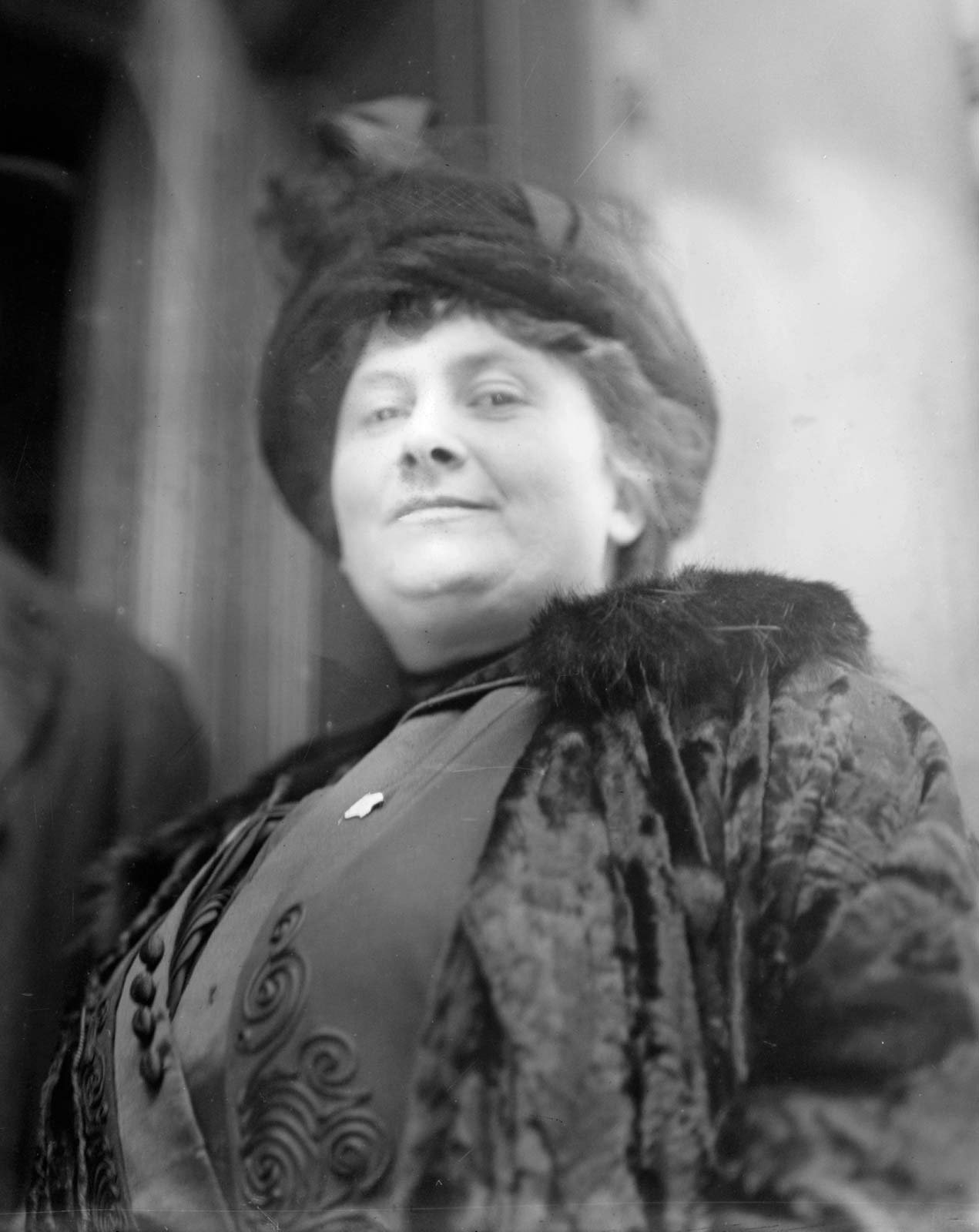
It’s funny really, how the Madmen came to be…
The Madmen were birthed in a flurry of late night exchanges, a barrage of passionate emails flung haphazardly across the interwebs. These original conversations were a sight to behold, as if we were collectively jotting down notes to send out an interplanetary message.
The threads were so long and so deep that they hurt your eyeballs just to scroll through them, let alone read, but their passion was undeniable, so pure and heartfelt. You couldn’t hardly look away.
You couldn’t help but be attracted to the madness.
What came out of those initial exchanges was precisely how we started to think and talk about ourselves: a ragtag group of impatient dads and advocates from around the world, united by a common zeal to bring the Montessori method to millions more.
We coalesced around a simple idea: to make Montessori more accessible, more mainstream, and more understood. We wanted to shake things up: to shake up the institutions that were starting to ossify, and to bring a new found awareness and appreciation to Montessori.
We didn’t have articles of incorporation or a governing board of people or documents. We only had the passion of each other and our shared conviction to try to make things better.
Who knows what we may or may not have achieved? Perhaps the message that we conspired to send out into the universe, all these years ago now, is still waiting to be received.
Regardless, it’s finally time for us to say good bye, at least for now. We need a new group of mad people organizing themselves around a shared vision for what the future might look like.
Thank you.
P.S. The Montessori Madmen was a ragtag group formed by passionate fathers - eager to make Montessori more accessible.

Learning is an Always Everywhere Adventure

Meet Gordon Bearn, Professor of Philosophy at Lehigh University, and my personal inspiration. I sent him a note and asked him who inspired him.
Q: Who has inspired you to learn?
A: Almost every Wednesday afternoon, during the Winter of my sophomore year, Tim Jones, Allen Wall and I would walk a little way off campus to the house of Mr. Lawrence, Professor Nathaniel M. Lawrence to the wider world. There for the next three hours, with three other students, we sat comfortably on two couches, two Golden Retrievers stretched out on the living room floor, and with an old edition of Kierkegaard on the arm of his well worn armchair, he taught us Existentialism. Anyway that was what the course was called, but it was impossible for him to talk about anything without talking about everything. In detail.
My recollections of the experience of those long afternoons is inseparable from the inspiration Tim and Allen and I gave to each other. Our assignments were extraordinarily difficult. And long. Exchanging Kierkegaard or Sartre thoughts, we would wander from libraries closed at 2:00 to Wall’s living room and talk and talk. We barely slept, especially Tuesday nights. By the time we walked into Mr. Lawrence’s living room, we had already had more than one seminar, together. Apart from a living conversational community, I don’t suppose philosophy can even exist. Perhaps nothing can.
We thought Mr. Lawrence was probably old: he had learned logic from Henry Sheffer, and while telling us about Alfred North Whitehead, he would imitate Evelyn Whitehead’s English accent. But Mr. and Mrs. Lawrence were much younger than we imagined. Besides bare bones Ikaria sabbaticals, the High Sierras every summer, and the Himalayas on a recent trip, they seemed to have climbed every mountain visible from their home. What, gesturing, he said to me once: you’ve never climbed The Dome?!
It was a not infrequent tone. He could never believe how little we had read or seen or done. I suppose it was sort of a compliment, he could never believe that our side of the conversation was so inexperienced. What, he told our class: you haven’t read the Symposium? Read it this weekend! There was never any thought that our learning would be restricted by syllabi. And with Ancient Greek especially, but German and French too, he was always telling us about linguistic idiosyncrasies and assuming that we too could read the untranslated books he told us about.
Later I taught for a year with him at Williams and during that time Ellen and I would sometimes be invited to climb the neighboring hills with him and his wife Mary. We were walking together, talking about something. Suddenly he drops to his knees, shouting something in Latin. Nose to the earth, he is gently digging out an apparently rare fungus. Slowly he gets up, cradling the fungus to a spot a little deeper in the woods where it could avoid the danger of Vibram soles. Knowledge of fungi was as much a part of his philosophical life as being a multilingual scholar.
Nathaniel, as I came to call him, cared or seemed to care about the whole of nature and humanity. That was what he wrote about and taught about, and so fungi were no less important to him than De Broglie’s microphysical wave packets, and either or both could surface in just about any discussion. In that Existentialism course, we talked as much about Newton’s conception of time as we talked about whether we could trust Victor Eremita, the fictional editor of Either/Or. We learned that he had built the coffee table in front of the couch as a smiling challenge to Plato’s thought that ever object only participated in one form – it was meant to be equally bench and table.
The learning may have gone both ways. Since I was enrolled at the time in a course on 20th C theater, something in Sartre or Kierkegaard started vibrating with Six Characters and I said so. He didn’t see it, so I was invited to explain why and I am sure he responded in some way but perhaps because my task had rendered me timid, I have forgotten what he said. I was pretty scared every Wednesday, it took one agonizing week before I even asked him where the bathroom was.
Two summers before our Existentialism he had visited for the first time Japan. He returned amazed at the linguistic peculiarities of that language and immediately hired a student to teach Mary and him, once a week, Japanese. Like Socrates late in life beginning to learn to play the lyre, like a grandfather planting an Oak seedling, the Lawrence’s at their age, beginning Japanese, that has always impressed me. Since learning extends to all of nature and is always exciting, it is never finished, and there is no time to late to begin. Learning is unlimited by syllabi, libraries, roofs of any kind. Learning is an always adventure.
Adventure was one of Whitehead’s favorite words, and it was with Whitehead that Nathaniel began his philosophical education. I had developed an affection for Whitehead already when I asked Nathaniel to guide an independent study on Philosophy of Biology. Of course there were books and books to read over the summer, but what I really wanted to do but was afraid to ask was to read Whitehead with him. Slowly as the semester moved on, it became clear that I kept asking to read another book of Whitehead’s, and the meetings of my independent study became Whitehead meetings.
Sometime in early November, Nathaniel asked me what we were doing. I said: an independent study. And he pointed out that meeting weekly was not very independent, and we should stop our weekly meetings. I was shocked, felt even a little rejected. But off I went and read Whitehead and Lawrence and others on Whitehead, and the reading and learning has never stopped. Even then I thought of a picture in one of Jane Goodall’s books. A mother Chimpanzee is weaning her child: a hand placed on her child’s head, her long arm stretched out straight kept her breast frustratingly out of reach, and the child’s adult adventures finally possible.
Q: What did they teach you?
A: Learning is an always everywhere adventure.
Originally published on Montessorium, February 14th, 2014.