
Journal—
Musings & Observations
I’ve written for The Atlantic, Huffington Post, Forbes, Warwick and my mom.
You can also see the Magazine view.

Metaphilosophers
Metaphilosophers to guide us through the metaverse.
Metaphilosophers to guide us through the metaverse.


Thoughts on Architecture
Life thrives when its creatively challenged by its environment.

If architecture has taught me anything about life, it’s that life thrives when it’s actively fostered, continuously supported, and creatively challenged.
I believe the same can be said for “learning”.
When learning is supported, when what is ‘taught is taught’, with a mindset that is as open as that which learning opens - everything flourishes. Of course, the opposite can be true and this is the slippery slope we carefully navigate.
In a curious quote, one that demands rumination, patience and incorporation, G.K. Chesterton writes,
“The object of opening the mind, as of opening the mouth, is to close it again on something solid.”
All that is learning is that which encounters the new.
When a positive framework of nurture and care are implemented, with maintenance and subsistence, giant leaps of self transformation spawn into a state of perpetually taking flight.
Everything else recedes.
Gabriel Garcia Marquez:
“The scalpel is the greatest proof of the failure of medicine.” What these words highlight, with astounding precision and generality, is our profound, and interrelated relationship to the world.
Nothing happens irrespective of everything.
Learning needs to be taken into consideration - considered the exact same way as an apprentice who observes a master progressively rendering themselves obsolete.
I believe this applies to life - and if an architecture of life exists, a learning of life, our role is to actively support and serve as a catalyst to these pathways.
The old adage rings true - if you create the conditions for success, success begets success.

Nietzsche’s First Sketch of the Eternal Return
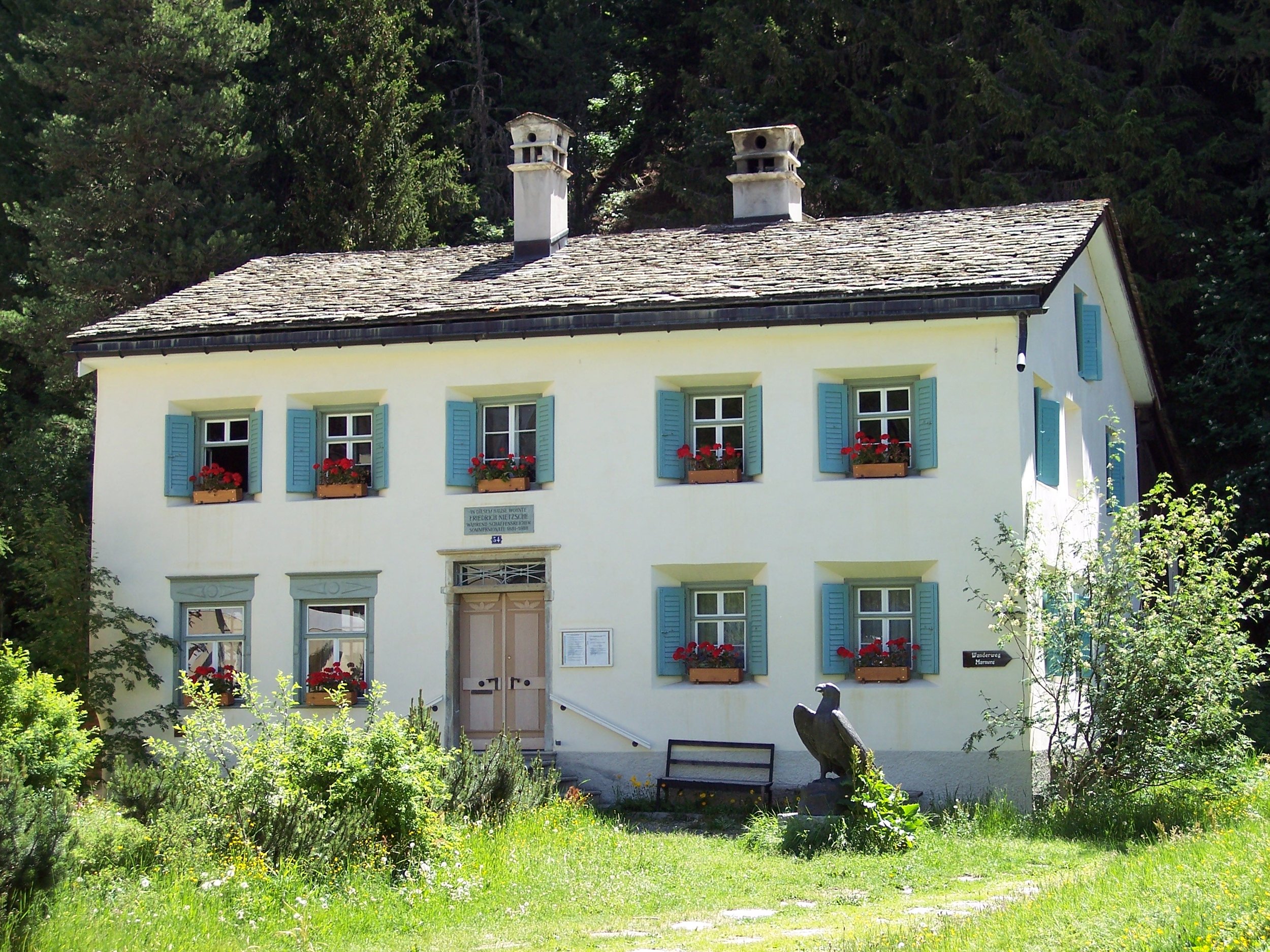
“The Return of the Same.”
1. The incorporation of fundamental errors.
2. The incorporation of passions.
3. The incorporation of knowledge and of renunciatory knowledge. (Passion for knowledge)
4. The innocent one. The individual as experiment. The alleviation of life, abasement, enfeeblement - transition.
5. The heavy new burden: the eternal return of the same. Infinite importance of our knowing, erring, habits, ways of living for all that is to come. What shall we do with the rest of our lives - we who have spent the majority of our lives in the most profound ignorance? We shall *teach the teaching* - it is the most powerful means of *incorporating* it in ourselves. Our kind of blessedness, as teachers of the greatest teaching.“

Segmentation of Citizens
Bernard Steiger, writing in our “post-truth era”, identifies a shift in politics from focusing on citizens, or what might be called citizen-politics, to identifying and targeting audiences, or audience-politics.
On this model, marketing, in effect, co-opts citizens by advertising to audiences. Deleuze, for his part, warned of this years ago, seeing philosophy, as the creation of concepts, being appropriated by Madison Avenue. As a result of this newly evolved marketing apparatus, a fragmented, disparate politics is created based on identity.
Instead of aspiring to build an aspirational politics based on citizens oriented by a yet to be determined future - lest we call it a utopia, following Plato - what is established on the contrary is a politics rooted in the identification of existing traits and characteristics.
There are many distribution channels by which this message is propagated, especially algorithmically, but the mechanisms by which the audiences are recognized are exactly the same: identifying and targeting users (who comprise an audience) by exploiting specifically collected data points.
Digital landscapes, then, exacerbated by their social connectivity, become conclaves, meta-destinations architected for desires to be constantly kept in check (or unleashed) by a network that is perpetually refashioning itself to adjust to increasingly static personifications.
As an example, if you click "like" on an ad, you are served up more of these ads, or similar ads based on shared characteristics, until not only does the advertiser readily identify you and define you by these particular traits, you also come to identify yourself by these same modes and habits of thinking and participating in the world.
How quickly and unwittingly we become products, caught in an endlessly evolving and mutating matrix of marketing, where the only thing that stays constant is the targeted audience that we identified ourselves with in the first place. Perhaps unknowingly, we find ourselves entrenched in a position we might not know how to get out of or, worse yet, not even realize we're actually in.
The aspirational city-state of Socrates, so eloquently discussed in The Republic, is levied by brand allegiance (read audience politics). Identification itself has been trumped by identity. Whereas tolerance becomes perceived as indecision - or indifference - divisiveness of other “audiences” is promoted as a decisive, readily identifiable characteristic.
It's no wonder that the post-Truth rhetoric feels disjointed and even schizophrenic: it's targeted towards specific audiences. What incites one audience calms another and new techniques and styles are required. Communication and truth, per say, haven't broken down, they've been allocated towards perspectival, segmented landscapes.
The appropriation of analytics by the mechanisms of the market has instigated a divide between citizen-politics and audience-politics, the consequences and repercussions of which we're still trying to comprehend, but that we've already, invariable, felt.

Savage Beauty

There's something extraordinary about the Savage Beauty exhibit.
In the introduction to Anti-Oedipus: Capitalism and Schizophrenia, published in 1972, Michel Foucault once famously remarked that 'perhaps one day this century will be known as Deleuzian'.
Alexander McQueen -
"When I'm dead and gone, people will know that the twenty-first century was started by Alexander McQueen."
Despite the hubris, and in spite of the flamboyance, he was on to something.
You feel a sense of vital movement in his couture. Like a wind, steadily blowing in your face, confidently reassuring you of the course, even if it's not readily apparent, and you have to traverse unbeknownst obstacles ahead.
The work is not weighted down by despair or destruction. Rather, it's uplifting, even in its darkness - jarringly so, one would conjecture. It's a wellspring of hope and defiance, a resistance to that which subsumes the death spirals of existence.
"There's no way back for me now. I'm going to take you on journey you've never dreamed possible."
"I oscillate between life and death," says McQueen, like a seasoned ferryman.
There's a feeling of complete and utter unrest in his work. Of not being satisfied. Of striving. Of always trying to keep on moving, back and forth, until the forth takes us somewhere new.
Movement is a major theme in the retrospective of Alexander McQueen. Nothing is static. It's all trying to get somewhere, even if it doesn't know where. Certainly, McQueen took us to places we never knew we could find.
"You've got to know the rule to break them. That's what I'm here for, to demolish the rules but keep to tradition."

Recommendations

Not unlike dreams, the sharing of books can be personal, intimate, even revelatory. Sometimes you want to share them with the world. Other times, you want to pretend they never left the dark, wondrous imagination of your nightstand.
It’s hard to know exactly what to share. Or, with whom.
When someone you admire or trust, or want to learn from, recommends a book, or an author, or a subject, you instantly find yourself endeared to that new terrain. You try to track it down. Learn from it. Follow its curves. You’re enchanted by the labyrinth, and the promise of the surreptitious landscape. The unfamiliarity draws you near.
Secrets keep well those who empower them with their desires.
In seemingly unexplainable, mysterious ways, the panorama summons you forth, rough-hewn and precipitous. You listen. You survey the craggy meadow from above, trying to apply your honeyed, honeymoon eyes. You take notes. You’re attentive to the nuances, as a new set of possibilities present themselves for you to navigate.
Everything is as if for the first time.
Recommendations arrive like storks in the night. You’re not sure if they’re fairytales to be believed. You conceive of the risks involved with a new enterprise: the feasibility, the practicality, the chance occurrence. Then, as if unexpectedly, everything else slowly fades away. You follow the myth into the moonlight.
It’s just you and the recommendation.
The joy of exploration, and everything that accompanies those loud, embolden sirens of happiness, surpasses everything. Desire, to be sure, trumps satisfaction, every, single time. You are contented in the recommendation, as you try to figure out if it suits you just so. The right recommendation can yield a life-long friend.
Recommendations can deliver us from the abyss.
Whether the recommendation was betrothed, or you discovered it on your own, the happenstance becomes your songline. There’s a sense of excitement. You’re passionate about the unexamined depths of expansion, incorporation and, maybe, if you’re lucky, maturation.
Recommendations provide encounters.
Yet, what does this relationship entail? Not only what comprises a recommendation - the etiology, so to speak - but also, how they are delivered, how they affect us, and ultimately, how they are archived. What exactly is in the nature of a recommendation?Is it purely a selfless act of generosity, or a form of selfish identification with another? Or, perhaps more basically, a need to share with the world?
There’s a lot at play in a simple recommendation.
In a very deep-rooted, almost idiosyncratic, individualized way, learning itself is but a curation of recommendations. I say ‘but’, yet, it’s so much more than that. It’s the way your lover recites Sartre in a cafe, or how your favorite professor lends you his personal copy of Nietzsche, or a stranger on Twitter, in a moment of strength, confesses their secret love for The Story of the Eye.
Recommendations participate in the world.
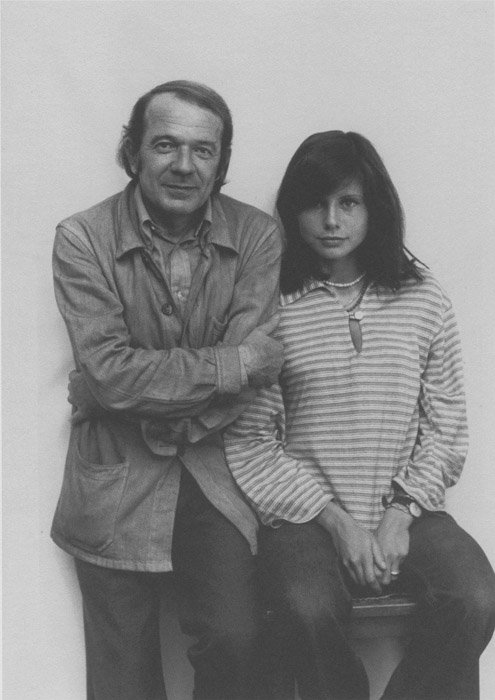
I Was A Child: The Childhood of the World
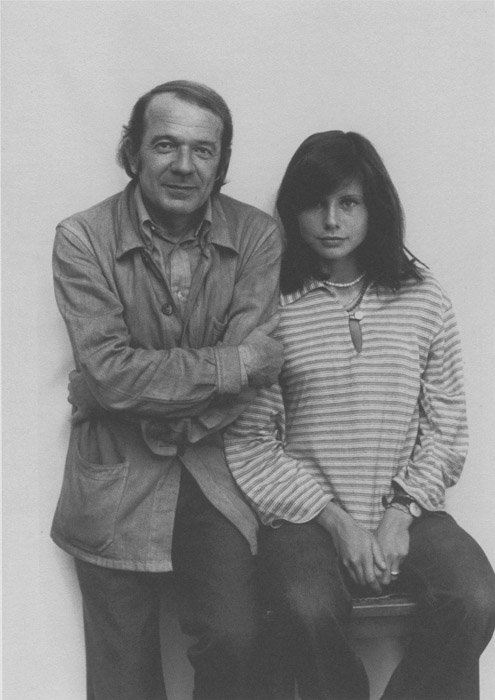
As with so many things, we turn to Gilles Deleuze for inspiration. In his wonderful interviews with Claire Parnet, Deleuze is prompted to comment on his childhood and what it means to write.
He responds, "Writing is becoming, becoming-animal, becoming-child, and one writes for life, to become something, whatever one wants except becoming a writer and except an archive."
What exactly does this mean?
As soon as one becomes a writer, so the theory goes, one ceases to become something new. In essence, one becomes irrelevant, with nothing original or important to say. Not only does the individual lose the ability to transform themselves, their writing also suffers from the loss of the power of transformation. One no longer understands, for example, what it means, and what it takes, to write in the first place. The wellspring of joy and affirmation, from which writing often bursts forth, runs dry.
When one identifies themselves as a writer, says Deleuze, they have the tendency to become sedentary and complacent in their modes and habits of thinking and describing the world. They lose their nomadic perspective, so to speak. But, at the same time, they retain or gain their identity, i.e.: "I am a writer." In opposition, Deleuze presents another type of author, a "writer" that avoids the archive, losing themselves in their work. Another orientation to writing takes place, then, because the writer has engaged with the act of having something to say, to "becoming-animal" or "becoming-child".
Deleuze goes on to explain, in reference to childhood, that there are two types of "places" from which individuals write. The first, it could be said, is from the perspective of a "memorialist", which is to say, an individual who writes from the experience of one's own childhood. To be sure, we all have examples. Of course, this type of writing appeals directly to the private life of memories, accessing the personal archive of an individual's childhood. This model of writing, this personal archive of life, has zero interest for Deleuze. Why? Well, it just doesn't tell us enough about the world, or ourselves. It's a collection of identities.
In contrast to the "memorialist", Deleuze proposes a second type of author, one who writes from what he terms, the "childhood of the world". What a spectacular concept, one worth repeating, hearing it roll of your tongue: "The childhood of the world". The phrase contains just the right amount of staccato and optimism. It's as cautious as it is upbeat. That being so, and all things considered, Deleuze is absolutely convinced that writing has nothing to do with memory. It's something else entirely.
Following Ossip Mandelstam, Deleuze remarks that writing, therefore, is "pushing language to the limit, stuttering, becoming an animal, becoming a child". It has nothing to do with digging "through family archives", but rather, inventing a way to express a new language, within a language. Children are so great at this: inventing their own language as they go along.
What lessons can we learn from this line of thinking? How can it be incorporated and applied to our individual, practical lives? Can the concept of the "child of the world" be utilized to help us as we write and as we continue to create and draw the contours of our lives?
Well, in a certain, dare we say "autobiographical sense", we strongly believe that everything we have learned, we have learned from children. Not from our memories of childhood, but from their expressions towards the world. It's not that childhood isn't interesting on a personal level, remarks Deleuze, because it most certainly is, but rather, what is of most interest is the "emotion of a child", "the sense of being a child, any child whatsoever." It's a principle that we hold dear: as we write, as we design, and as we architect experiences for children. We all know children are amazing, but they're even more amazing than we give them credit for.
As Deleuze writes in What Children Say, "Children never stop talking about what they are doing or trying to do: exploring milieus, by means of dynamic trajectories, and drawing up maps of them". They're always exploring the world around them, trying to figure things out as they go along. Everything is new and exciting, and they want to taste it, and feel it, and see it - always for the very first time. Nothing is more new than the ordinary and everyday. If only we could learn to see the world with their mouths, fingers and eyes. If only we had the same confidence in our mistakes.
Yet, and with everything in mind, Deleuze insists, "'I was a child,' and the importance of this indefinite article is the multiplicity of a child. The indefinite article has an extreme richness." Lest we forget, we must never lose the perspective of the "childhood of the world". We must write to become a child. Or, if you prefer, become an animal!
Learn to Read
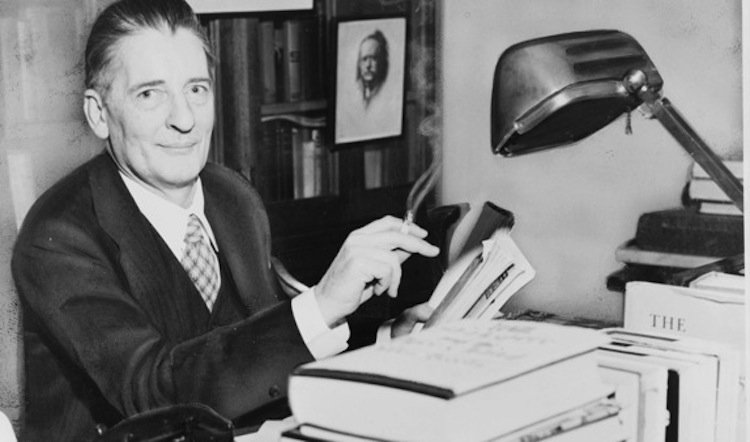
For the past few weeks, and at the suggestion of Madeline Gins, I've been working with a copy editor. My eyes have been completely opened. I feel the way a newborn must feel, as her mother tends to her matter-laden eyes with such measured and well-intentioned movements. It's as if an entirely new set of circumstances has suddenly, and more clearly, been laid out before me. Why couldn't I see this way before?
Truly, I want a copy editor to review everything that I write. In many respects, I can now feel "my editor" as she kneads the words in my head, even before they're pressed upon the page. "It can be smoother still," I can hear her iterating. Working with her has been such a profound, illuminating experience. It's almost like the sensation I experienced when switching from the brutality of a typewriter, to the grace and ease of a computer. I can still feel the keys tingling beneath my fingertips as I read her suggested revisions. And, of course, she's been right virtually one-hundred-percent of the time.
I can feel her as she carefully wades into the text. She's so attentive not to interrupt the flow. Yet, you can still sense her presence, as she works to uplift the man-made boulders from the middle of the restless stream. Visually, I see and take note of her comments and suggestions. I try to plot out their alternative courses of action, and what they might mean for the rest of the text. The margins come alive, even as they sever their connections to the body of work, in a way that they always should, with vigor and focus. To be sure, looking from the shore is an acquired perspective.
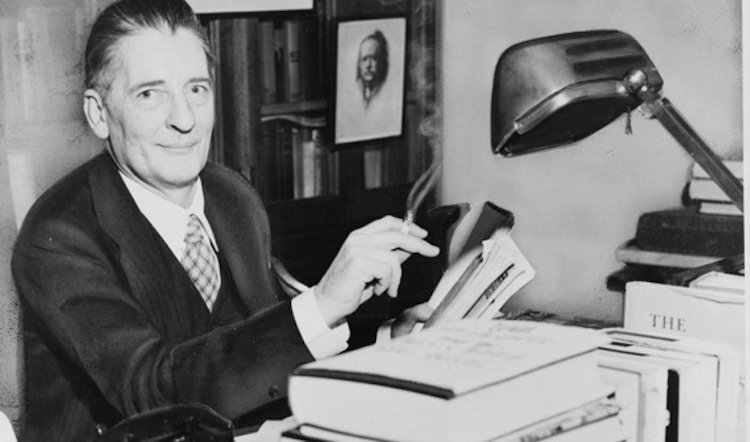
Alongside this momentous discovery, which I'm still trying to digest, I've recently stumbled upon the work of Max Perkins. This might sound ironic, since he's primarily known as the editor and confidante of some of the last centuries greatest literary titans: Ernest Hemingway, F. Scott Fitzgerald, Thomas Wolfe and the affably talented Marguerite Young. Have you read Miss MacIntosh, My Darling? Needless to say, I've been thinking a lot about the relationship between an editor and an author. Mandy Brown has unearthed some wonderful comments by Perkins on this precise subject. You can read them here.
Perkins once offered writing advice to a young servicemen eager to take up his pen. He wrote: "I think, in truth, that the best writing of all is done long after the events it is concerned with, when they have been digested and reflected upon unconsciously, and the writer has completely realized them in himself. It is good journalistic writing that is done quickly while everything is still new, but not the best writing. . . " Living in the age of the blog, when journalism itself has been called into question, I find this advice extremely refreshing. Further still, I was struck by what I perceive to be his single best piece of advice: "Learn about writing from reading."

Bento’s Sketchbook

My book of the year award goes to Bento's Sketchbook, by John Berger. Here's the official blurb about Bento's Sketchbook: "The seventeenth-century philosopher Baruch Spinoza, also known as Benedict or Bento de Spinoza; spent the most intense years of his short life writing. A sporadic draughtsman, he also carried with him a sketchbook. After his sudden death, his friends rescued letters, manuscripts, notes;but no drawings."
"For years, John Berger has imagined finding Bento's sketchbook without knowing what its pages might hold, but wanting to see the drawings alongside his surviving words. When one day a friend gave Berger a beautiful, virgin sketchbook, John said, "This is Bento's!"; and he began to draw, taking his inspiration from the philosopher's vision."
"The result is Bento's Sketchbook, an exploration of the practice of drawing and a meditation on how art guides our gaze to the world: to flowers, to the human body, to the pitilessness of the new world order and the forms of resistance to it."
With moments of resounding clarity and insight, Berger reveals that which remains imprisoned and mysterious. He strives to capture the ephemeral and fleeting. "I began to make drawings prompted by something asking to be drawn." What is aloof, but speaking to us, he actively tries to present.
"We who draw do so not only to make something observed visible to others, but also to accompany something invisible to its incalculable destination."
Berger is our contemporary. As if accidentally, but that's not quite right, Berger sets out to provide a new type of book, a book with images, texts, and quotes. Images of his own construction, quotes of the great Spinoza, salted with Berger's stunning text and prose.
Further still, Berger sets out to articulate the conditions of exposition, of creation, and juxtaposition. "You lose your sense of time when drawing. You are so concentrated on scales of space." It is with Berger, that we wish to share. "I'm taking my time, as if I had all the time in the world," shares Berger.
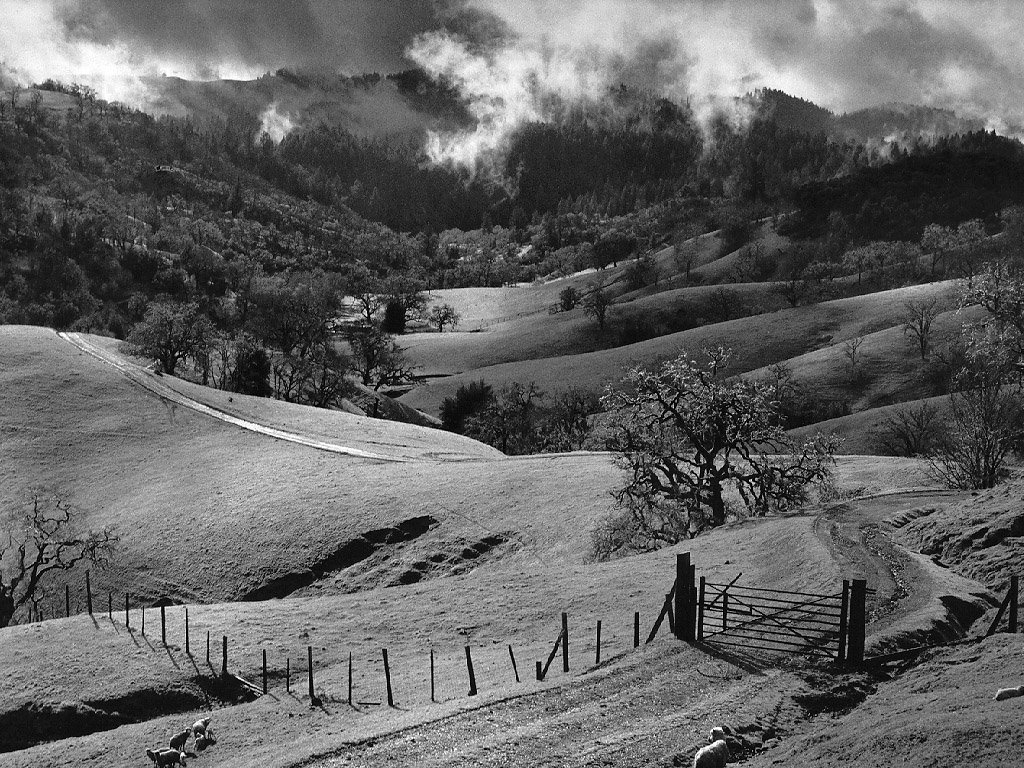
Ansel Adams
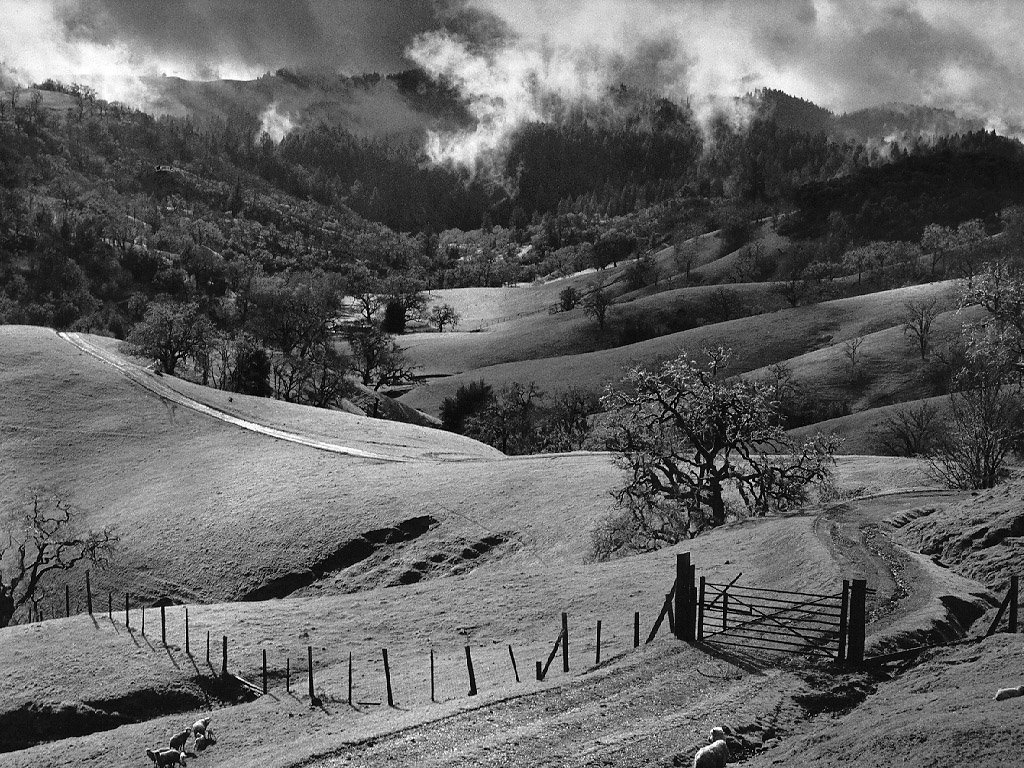
With the advent of the iPhone, and perhaps even before that, yes, before that, we've started, as a culture, to gain a new found appreciation for photography. In my estimations, we're coming to better understand, not only shot, composition and subject matter, but also post-production, execution and treatment. As Annie Leibovitz claims, following the old adage, the best camera is the one with you. You see, for us, that's pretty easy. Most of us carry our iPhones in our pockets or purses or have them readily accessible. The iPhone has changed the way we view the world.
Capturing a scene or a moment didn't use to be as spontaneous. When the great American photographer Ansel Adams desired to shoot a scene at Yosemite National Park, he would trek off into the wilderness, searching for the great unknown: the location as much as the subject. For a century that was defined by the cinema, photography wasn't so much as neglected, as not fully realized or endorsed. And yet, Ansel Adams found a way to reveal new possibilities for the medium.
Recently, I had the chance to catch the Ansel Adams retrospective, curated by himself. I was really struck by the breadth and depth of the work. As with most characterizations, I was presumptuously negative about the expanses of his work, but the import of Ansell Adams is spectacular. We're all increasingly coming to know and understand photography, and Adams still points the way.