
Journal—
Musings & Observations
I’ve written for The Atlantic, Huffington Post, Forbes, Warwick and my mom.
You can also see the Magazine view.

You Were Never Really Here
Rarely am I as affected by a film as I was by You Were Never Really Here.
You Were Never Really Here, a title that bears repeating, not only for its cadence - You-Were-Never-Really-Here - but also for its cinematic import, is a spectacularly beautiful, thought-provoking film. It offers a rare, brutal and unmistakable glimpse into our shared humanity.
The story can best be characterized as a traumatized veteran, Joe, who tirelessly searches for lost girls, at no consequence to his own life. The official, theatrical, storyline runs:
"When a job spins out of control, Joe's nightmares overtake him as a conspiracy is uncovered leading to what may be his death trip or his awakening."
You Were Never Really Here captures our miseries no less than our joys. It also produces, and this is perhaps what fascinates me the most, subtle lessons on how to overcome that which ails us, that which we are afflicted by: time, memory, pain, or the pleasures that take hold.
The film highlights, to stunning effect, that which we can learn to digest and surpass, not by suspension, or blissful ignorance, or willful disregard, but rather, through incorporation, participation, and by actively working to over overcome our tribulations.
Director Lynn Ramsay, who orchestrates this composition, instantly takes hold of our traditional assumptions. Like Nietzsche's madman who enters the crowded marketplace to announce the death of god, Ramsay jarringly displaces our readily adopted views of time, memory, pain, pleasure and violence.
Ramsay places us, as viewers, in an uncomfortable position: examining life from an interwoven perspective of what she names, "post-violence". Shifting in our seats, we can hardly look away. The landscape looks so unfamiliar and yet, somehow, we recognize its very contours.
Presenting a cohesive patchwork of thoughts, dreams and memories, Ramsay effortlessly weaves together our pain, pleasure and despair, into a comprehensive and meaningful engagement. Time never strays. It always, invariably, exerts its full force. Despite its violence, or because of it, the film is deeply appreciative of the fleeting, teeming temporality of existence. Time carries us, as much as we carry time, until we give up, or it gives in. Mortality, and our sense of death, is never far from the screen.
Ramsay focuses our attention on the violence that emerges as these threads, often unknowingly, lest we say subconsciously, intersect. These intersections product violent encounters. Ramsay asks us a string of strident and impactful questions:
How can we carry the violence of our memories?
How can we endure the pain of our pleasures?
How can we resist that which overwhelms us?
Is there hope in our endurance?
The best way to describe You Were Never Really Here is as if Dylan Thomas refused to read Do Not Go Gentle Into That Good Night aloud and instead decided to silently utter these poetically resistant words to himself. The film brews with a burning sense of expression, of a trapped, cathartic energy. Some things must be said, while others we just haven't found a way to articulate.
The main character, "Joe", played by Joaquin Phoenix, is intoxicated by the pain of life. He carries with him a series of deep, traumatic scars. Scars of abuse, of war and violence, and, perhaps most alarming, his current state of affairs: a state of existence that could only be characterized as striving to endure the hardships of life.
Occupying the paradox of a life fully-realized - through professional combat and service rendered - and yet completely unrealized - through relationships and love - Joe keeps on. He persists. It's hard not to see Samuel Beckett's prophetic words represented in Joe's particular gait:
"I can't go on. I must go on."
Flashbacks, more like schisms in his psyche (and in our viewership), anchor the audience in a stream of consciousness that is forever splitting itself as it reluctantly tackles the unlikely future. Aging, tired, and economical, Joe's heavy body demonstrates a physicality that is at once worn and provocative. You realize that Joe has lived a time that is singular to him. You wonder how he's still alive.
As Joe's character transforms, so transforms the audience. We're taken through a metamorphosis, whiplashed and cajoled by his emotions and sympathies towards the world, and equally frightened and alarmed by his nightmares. The hero is described as "impotent of masculinity", and yet its sheer brutality that is characterized. Is this a death trip? Or, is he on a journey to awaken?
Joaquin Phoenix is gracious, beautiful, brutal and mesmerizingly enchanting in his darkness and silent humor. He describes his acting as a "body crackling with energy", and there's a definite appreciation of this active search he realizes in nearly every film he acts. His roles demand of him the same sense of unbridled pain and memory that Joe exemplifies, bringing to the surface the time that is imprisoned in our bodies.
Three particular scenes serve as a testament to Ramsay's vision.
There's an early scene in which Joe struggles for his life. He's attacked by an unexpected assailant. Wrestling on the floor of a seedy hotel room, fighting to survive as his life is in imminent danger, the camera slowly pans to a mirror fastened to the ceiling above the bed. Immediately erotic, we're cast into an uncomfortable position of voyeurism, of participating in the act of violence, of witnessing our own nightmares and fantasies. At the same time, we're abruptly thrown into a position of complicity.
When Joe buries his mother, he disposes of her body in a lake. Filling her black, plastic body bag with rocks, he wades into the calm, still, gentle water. Slowly feeling her weight amass as he continues to walk forward. He attaches himself to his mother, unwilling or un-wanting to let go. His memories, his pain, his solace float to the surface, gasping for air. In a moment, it's as if everything will fade away into the recesses of the darkness or the clear morning light. And, yet, he persists, striving towards his existence, or sense of justice.
Having mortally wounded the man who is potentially responsible for the death of his mother, Joe confronts the dying attacker. Sprawled out on the kitchen floor, the assailant recognizes his futile situation: death is imminent. He's always known his own mortality, felt it in his bones and in his work, and yet he never knew when it would come. Joe inquires as to whether he was the one who pulled the trigger, killing his mother, as if that knowledge would someone alleviate the anguish both men share. Lying on the floor next to each other, they hold hands as the dying man slowly gasps for his last breaths, recognizing in each other a shared plight.
The violent landscape that is presented is not a fetishization of violence, or glamorization of violence. It's virtually the opposite. It's the expression of our unexpected nexts, our hallucinations, and the narratives that comprise the singularities of our life. Through character flaws, no less than beautifies, Lynn Ramsay is able to achieve a graciousness, or recognition of violence, or the shared humanity that participates in the violence of mortality, that rarely goes witnessed in films.

Lawrence of Arabia

A few days ago, the local cineplex featured Lawrence of Arabia as a part of their return to classics series. With its epic landscapes, and beautiful, panoramic style shots, we couldn't resist. We actually made the decision to forgo the almost four hours of post-work relaxation and fully immerse ourselves in this historic, cinematic experience. After all, Lawrence of Arabia is the type of film that demands your attention.
Not only were we completely overwhelmed by the magnitude of the vast, sweeping images, we were also surprisingly enchanted by the accompanying symphony, keeping us a pace as we traversed the desolate landscapes. We hate to say it, and not to sound pretentious, but Lawrence of Arabia is one of those films for which theaters were invented. It needs to be seen the way David Lean envisioned it to be seen. What a mesmerizingly rich and cathartic experience, ripe with so many insights.
Yet, as we walked away from the film, we found ourselves wanting to articulate, "There's no way that Lawrence of Arabia would resonate with contemporary viewers." We went so far as to say that if the exact same film was shot today, it wouldn't even make it to the big screen. It's not because of the period in which it was shot, but rather the style and mode of presentation that it bestows.
Why?
The long, silent, fixed shots are so resistant to our contemporary modes of viewership. Our obsessions with instantaneity are entirely displaced, leaving the viewer almost isolated. In many respects, then, our attention to duration has shifted to a different type of viewer. Of course, we realize that we're not writing anything new, but we were completely interrupted and taken a back by the experience. Overall, it seems that we, as viewers, have become much less patient, dare we say less interested or involved, and more distracted.
For example, as the film opens, there is a rather lengthy sequence in which the screen is completely dark for an extended period of time. The experience leaves viewers looking at each other, not in anticipation of what is to come, but almost worried that something is wrong. Is the reel broken? Yet, thankfully, the music carries us along, leaving us only to question the image.
Oh, how much the viewer has changed. Or, said otherwise, how much the expectation of the film has been altered. The long, silent shots are unsettling, alarming and arresting in their scope and solitude. Not to prance, or to reiterate, but watching a film in the theater is still a much different experience than watching a film at home. For one, the environment of the theater demands your attention, in a way that the theater of your house does not. There's a different set of expectations, and circumstances.
In a way, Lawrence of Arabia is predicated on the notion that you will actually pay attention, that you won't be interrupted, or want to be interrupted, by your cellphone or the doorbell. Still, it seemed that everyone in the audience that night was looking for an interruption.

The Birth of Television

In reviewing my list of films last year, it became rather apparent that I spent more time watching television shows, than engaging in the cinema. Which is not to say indulging in the excesses of television, but in the innovations of television.
Why? Well, I'm not entirely sure. However, I can share that my new favorite "cinematic experience", which has become increasingly frequent, is watching an entire television season in the course of a weekend. Most recently, we have watched five seasons of Sons of Anarchy in extended, uninterrupted bursts.
As a frame of reference, that's approximately three thousand minutes, or fifty hours of viewing time. An insane amount of dedicated, hallowed out space. For the sake of comparison, we could probably tackle Proust, in French, in that same window of opportunity.
The experience was totally immersive. Not only were we engrossed in the plot and the characters and the cinematic style and modes of presentation, there was a very real sense of not wanting the show to end. Of course, this is not specific to Sons of Anarchy, but to the "culture" or "world" - to use an expression of Wong Kar Wai's - that is constructed within the particular series.
We felt complete absorption, but not in the same way we watch the news or late night talk shows - which we rarely engage. No, it was a refreshingly tonic, exhilarating sensation. It is, in many respects, the same sensation we find in the best of cinema: the convergence of the spectator with the spectacle. All the same, there's always the risk of total absorption, as demonstrated so eloquently in Videodrome.
The continuity of the television series, despite the constant threat of interruption, and ultimately, being discontinued, imparts a sense of jubilation and triumph. It seems as if, contra the cinema, it will go on forever. You could literally be enmeshed in the folds of the story, endlessly. We could, just as literally, watch a character age within our lifetime, and not just as in the famous scene in Citizen Kane.
But, the mode of interruption itself has also been altered. No longer is television, at least on this model, riddled with advertisements. Instead, it's been forced to reconfigure itself. We've experienced a radical departure from the traditional format. It's precisely here that television is trying to figure itself out.
It's not that the television is competing with the cinema - although it is - but rather, that it's innovating its own space. After so many years, it feels like it's finally departing from its strong roots in the radio, and developing its own path.
As the cinema becomes less and less of an event, not only physically (watching films at home, instead of the theater), but also, temporally, (as the time from a movie entering the theater to the home shortens), the television has witnessed a resurgence.
*As a side note, in the past few years, we have watched: Sons of Anarchy, Madmen, Downtown Abbey, Game of Throwns, The Killing, Friday Night Lights, Walking Dead, & Boardwalk Empire.
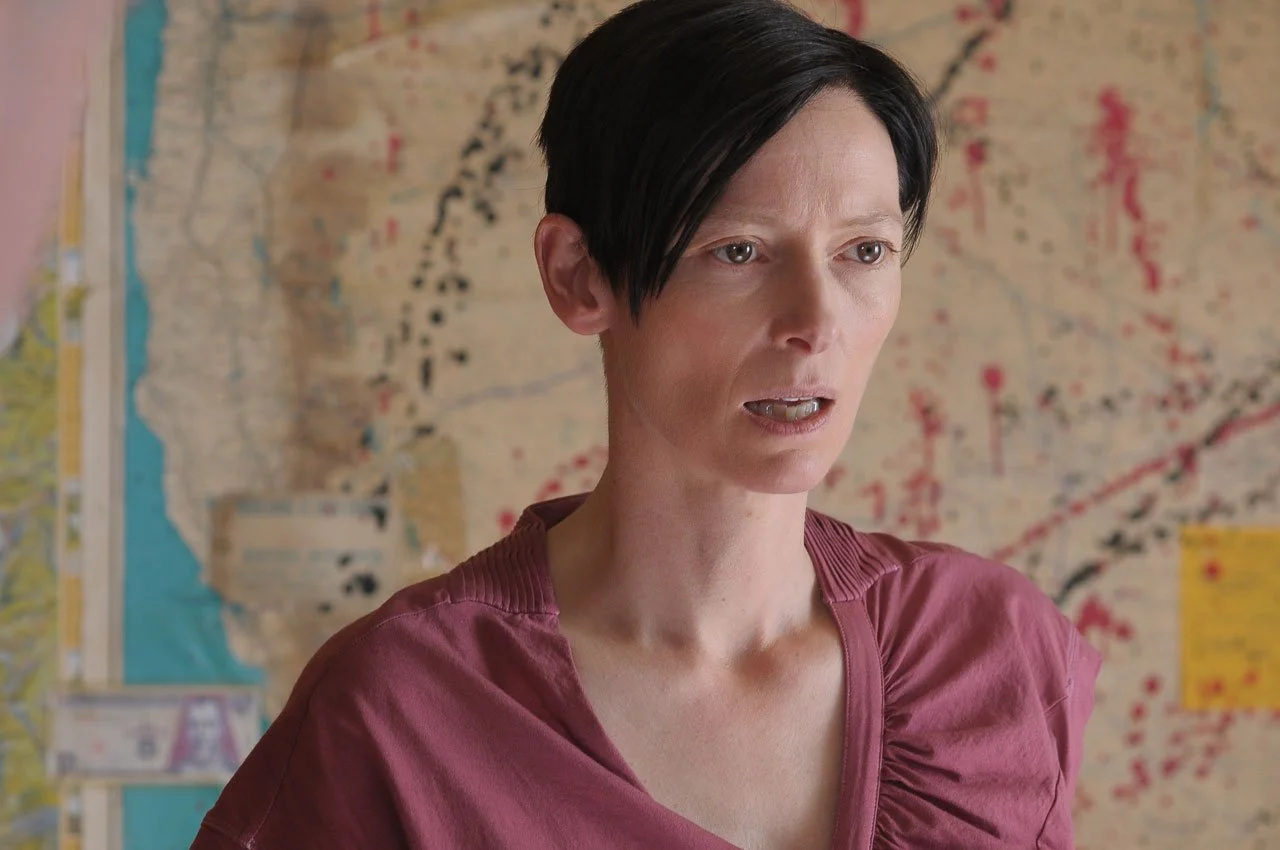
We Need to Talk about Kevin
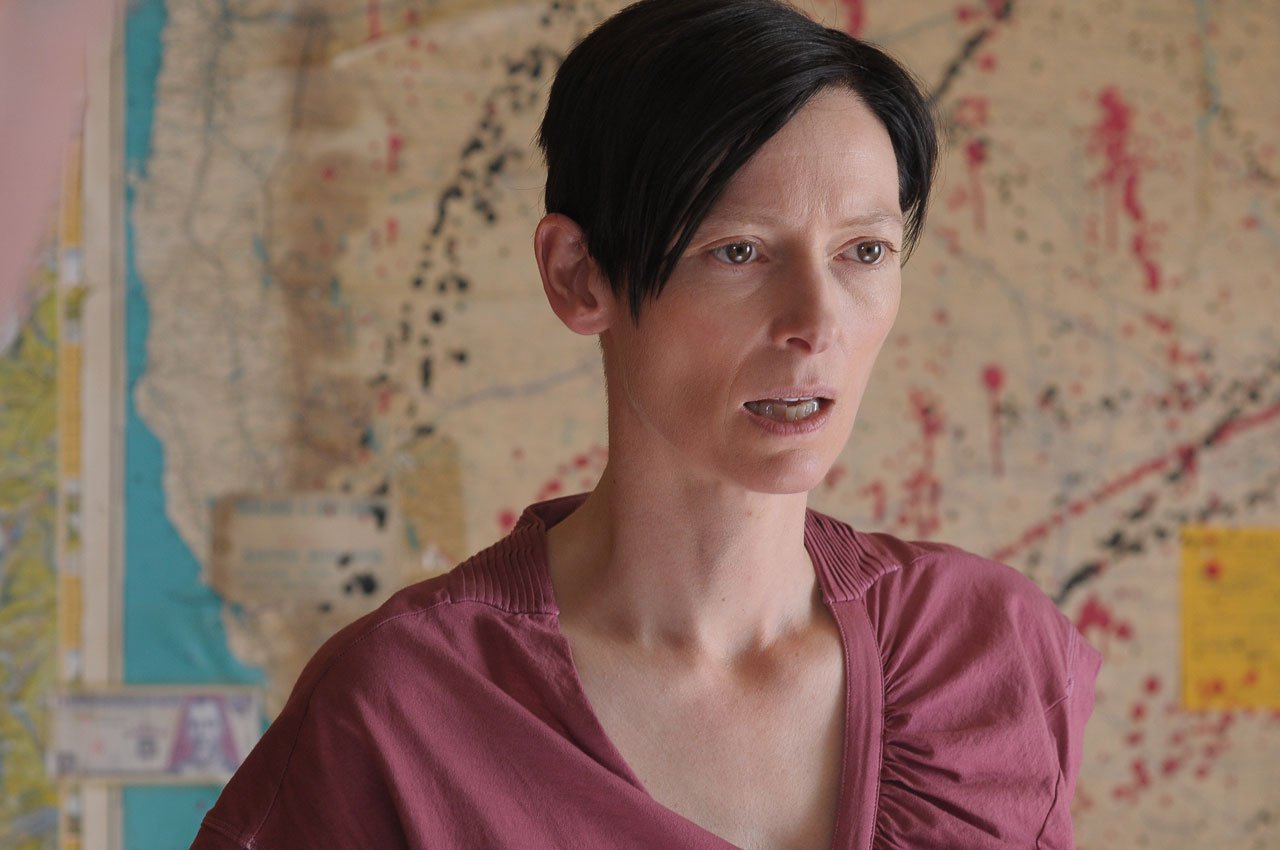
We Need to Talk about Kevin, directed by Lynne Ramsay, is a wonderfully dark, contemporary and morose film. Perhaps better than any, it manages to address the deceptively raucous currents of disaffected youth, in a manner that befits our current cultural landscape. The screams of violence are nascent, riddled with destructive outbursts and furry, and yet, no one, not even those closest, can hear their clashes and cries.
With that in mind, the film is surprisingly tonic, composed of complex notes of life: messy and complicated; and death, just as exhausting and exhilarating. It's not so much that We Need to Talk about Kevin captures our conscious, as it develops and reveals a collective apathy towards that consciousness. In short, it works to reveal that which remains woefully neglected, overlooked and, to use a turn of phrase, misdiagnosed.
What an incredibly alarming and stark portrait. The darkness is unapologetic, if not humorous. Which is to say that the film is masterfully dutiful and ripe, but not with complacency. Instead, it's concocted, in equal parts, of triumph and despair. Most of all, and in a very necessary acumen, it conveys a precocious sense of hope, understanding and optimism. The way the film is told, it's less that the narrative contains the seeds of authorship, as much as the viewer is placed in a position of nourishment.
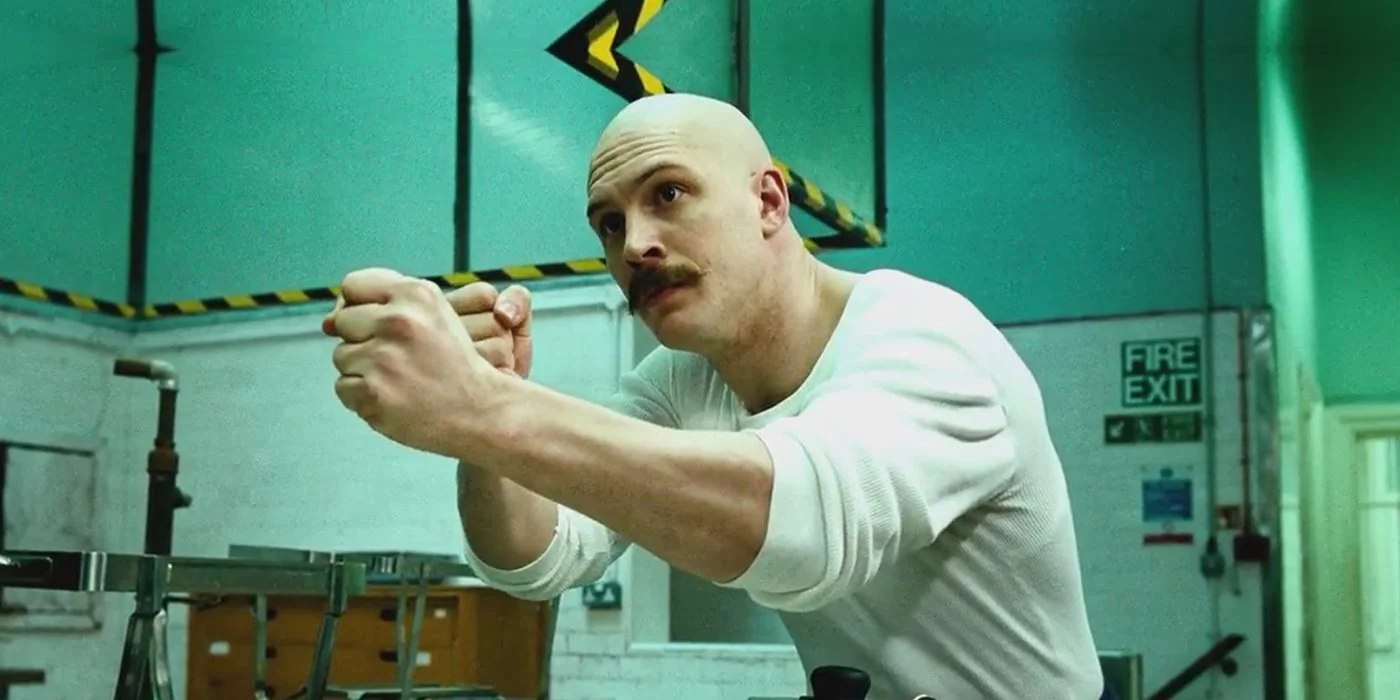
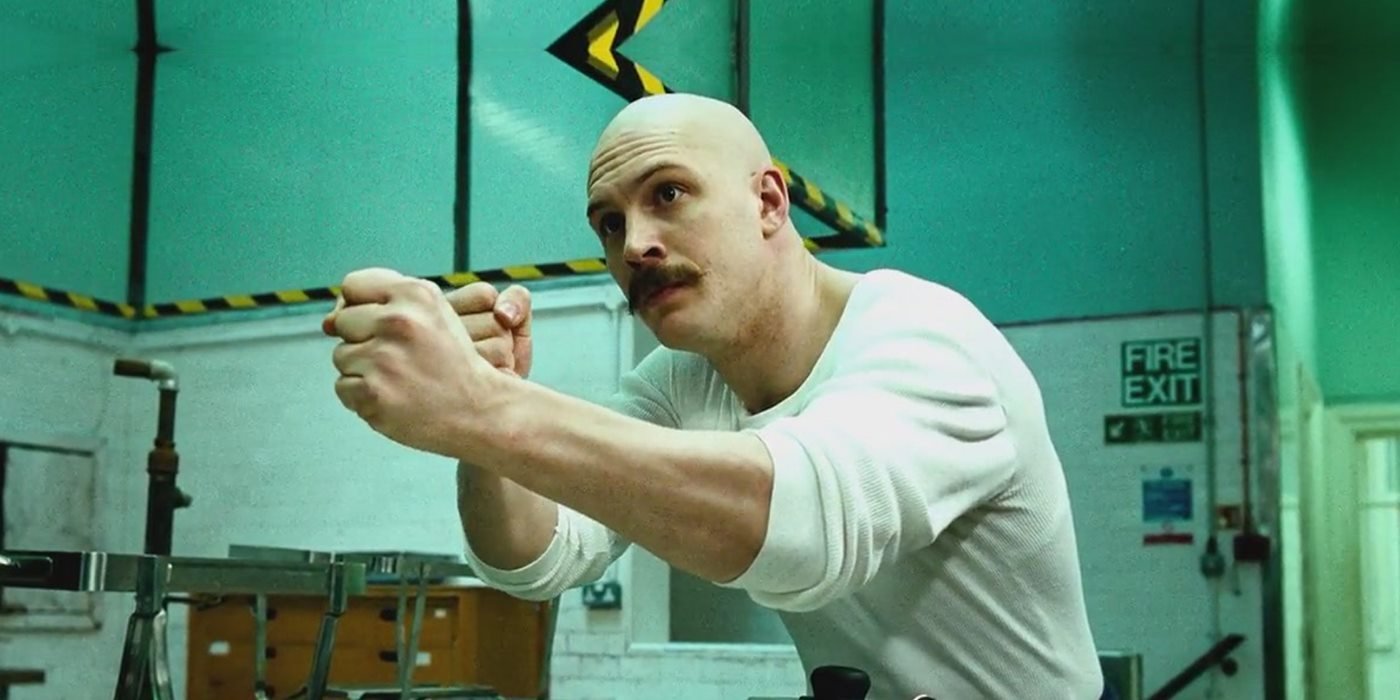
Living the Movie
Alright, so I've been a fan of Nicolas Winding Refn since I first viewed Pusher (1996) in the late 1990's. The Pusher Trilogy is brutal, sincere and smarts of humanity. There's a reason it's a cult phenomenon: in an age of inauthenticity and righteousness, it's aggressive, honest, and to the point.
Bronson (2008) pushes in this direction, and extends the rage: forcefully, compassionately and wholeheartedly. There's a dreamlike quality to the sumptuousness of the images, rich and fertile in their splendor and violence. The camera becomes intoxicated, caught up in the moment, and the sudden outbursts of expression and indignation. It's as if justice cries forth amidst the insanity of it all. Valhalla Rising (2009), on this exact same trajectory - of madness, compulsion and intensity - delves further into an exploration of the living dream. Existence is put on stage so as to deliver a performance.
EnterNicolas Winding Refn latest film, Drive (2011), which has been described as a "neo-noir": a combination of Fante and Bukowski. Featuring Ryan Gosling (more about him in a future post) Drive is poised to explode the noir genre. There's a lovely interview with Ryan Gosling and Nicolas Winding Refn in the WSJ, that serves as a compliment to the video posted above. Totally fascinated by the creative process they describe, as "living the movie".