
Journal—
Musings & Observations
I’ve written for The Atlantic, Huffington Post, Forbes, Warwick and my mom.
You can also see the Magazine view.

The Ware Board

We went to the pottery studio for our son's ninth birthday. He'd always wanted to go, one of those quiet persistent wishes children carry without making much noise about, and so we went, the whole family, with no agenda beyond the thing itself.
Making pottery.
The clay was cold when I first touched it. Not unpleasantly so. The kind of cold that asks for attention, that says here, pay attention to this. I was a beginner in the fullest sense: no vocabulary, no muscle memory, no idea what my hands were supposed to know. The wheel turned. The clay did not do what I imagined it would.
My wife and I were intensely watching our son.
There is a certain humility that arrives rather quickly in a pottery studio. The material is patient in a way that feels almost instructive. It will wait for you to stop fighting it. And when you stop fighting, something else becomes possible. Not mastery. Just the beginning of a conversation.
It reminds me of many things in my life.
Midway through the class, I learned a new word. Ware board, our instructor said. A simple wooden board where you set a piece that isn't finished, isn't decided, isn't ready for the kiln or the discard pile. You place it there and you walk away. The work rests. You rest. Something in the relationship between you and the object is allowed to breathe.
You can see it, sitting right there, a reminder of sorts.
I turned the word over in my mind. Ware, from the old English for made things. Dinnerware. Hardware. Software. Your wares. A ware board is a board for what you've made, before you've decided what it is.
I was intrigued by the word, fascinated by the concept.
My wife, on the other hand, found the practice unnerving. First, she articulated, you have to decide when you're done throwing the pottery. How do you do that? Then, you have to figure out, through the ware board and process, if what you created will move on.
There's a fragility to it, a firmness, a setting in motion, all at once.
At some point I found myself watching the owner. I'm not sure when exactly, somewhere between my own attempts to listen to the clay and the moment I stopped trying to impose anything on the wheel. I was curious about her movements. How she crafted the experience. Her hands were measured and determined. Certain but unreserved. There's a contradiction in that I haven't resolved.
The painter Lucian Freud once said that imagination is the ability to see things as they truly are. I think that's what I was watching, not fantasy or imposition, but a kind of radical attentiveness. You'd expect one or the other, precision or receptivity. Instead, she seemed to hold both at once, and the clay responded to it. She had cultivated patience. A productive, almost concerted approach to the clay.
I wanted to understand what I was seeing, so I approached her.
My wife and I love Rodin, I told her. The world of the sculptor who begins with a solid object and slowly chisels away, removing everything but the vision, reveals something profound. It takes our breath away. However, standing in the pottery studio, watching the wheel turn, it felt like something else was at work. Less like removal, more like what? Conversation, maybe. I asked her how she thought about the creative process. How she'd come to think of her art.
The going back and forth.
She said the majority of her work, in her words, is simply following the minerals. They speak to me, she said. They express themselves. She spoke about this passionately. She shapes the objects she crafts through her hands. At the same time, she noted that the direction is already there, in the material, waiting to be actualized.
I didn't have a response to that right away. I'm not sure I do now.
Our son didn't hesitate.
Where I approached the wheel with caution, measuring the distance between what I imagined and what my hands could do, he simply began. The clay responded. Later he told me he was trying to make whatever his fingers were telling him, which is, I think, exactly what the owner meant about following the minerals. He just hadn't needed anyone to teach him the language for it.
He wasn't working with haste. He was working with care. It was a collaboration with his imagination. His entire presence was focused on that act of making.
The owner watched him intently for a moment. She said that he had his own technique. She went on to describe how many people develop a particular relationship with the materials, something intimate and unrepeatable. She shared that there's something, in particular, about childhood, and how children approach the world, that inspires curiosity in herself.
Our son chose two pieces from the wareboard to keep.
As I was watching him, I realized how proud I was. But it was something closer to admiration, for his curiosity, for the joy he took in discovery, for the way he wasn't the least bit constrained by not knowing what he was doing. He hadn't arrived with a philosophy. He hadn't needed one. He didn't look around to see what other people might think. He just followed his heart forward, and the clay met him there.
I thought about the wareboard again.
I thought about setting something down before you've decided what it is. About how that might be less a technique than a disposition, a willingness to leave things unresolved long enough for them to tell you what they are.
He didn't need to be taught that. He already knew.
I was reminded of a quote from the poet Gary Snyder, which I read often.
First, don't move. Second, find out what that teaches you.
We can learn a lot from the wareboard and how children approach the world.

Montessori as Organization

Montessori school in Berlin, Germany. Photo courtesy of Paola Trabalzini.
Founders are constantly searching for opportunities to improve, innovate and inspire, whether they are focused on building teams, communities, or products, and Montessori offers a multitude of concepts to consider employing and putting into practice. I believe the one-hundred-year-old philosophy of learning that Maria Montessori enacted created a new framework and lexicon by which to imagine building companies and experiences.

About —
Maria Montessori, the Italian physician turned educator, pioneered a radical approach to education, one based on the individual needs of the students, as opposed to that of the teacher, curriculum or system.
In so doing, she upturned the establishment and created the conditions by which learning could be personalized, reimagining and anticipating many of the conditions of the twenty-first century.
As a trained scientist, Montessori took a very experimental, data-driven approach to education. It would be valued today, in Silicon Valley, for its emphasis on measurement, documentation, and outcomes, and, more broadly, for its holistic spirit of innovation. It’d also be recognized for its aesthetic sensibility, human-centered design, and diverse and inclusive approaches.
Montessori’s hypothesis was fairly simple: everyone learns differently and at their own pace, and therefore, there simply can't be a one-size fits all, ready-made approach to learning. Montessori observed that a child is born curious, and our role as adults is essentially to get out of the way, to construct a safe and healthy learning environment that helps support and facilitate discoveries. There is no need for overtly prescribed instructions or to provide incentives or judgements to learn. Curiosity is a natural condition of life. It is its own reward.
Based on these insights, nearly every existing tenant of education needed to be re-examined, stone by stone: either forcefully cracked at its foundation and reconfigured or constructed anew. As a result, Montessori sought to establish a strong and robust foundation, utilizing the core discoveries of her research as building blocks for the future.
Here are a few key takeaways from the Montessori philosophy of learning that I believe can be directly applied to building a company, creating a product, growing a team or culture, and engaging with a community. They can also provide inspiration for the construction of a philosophy of life.
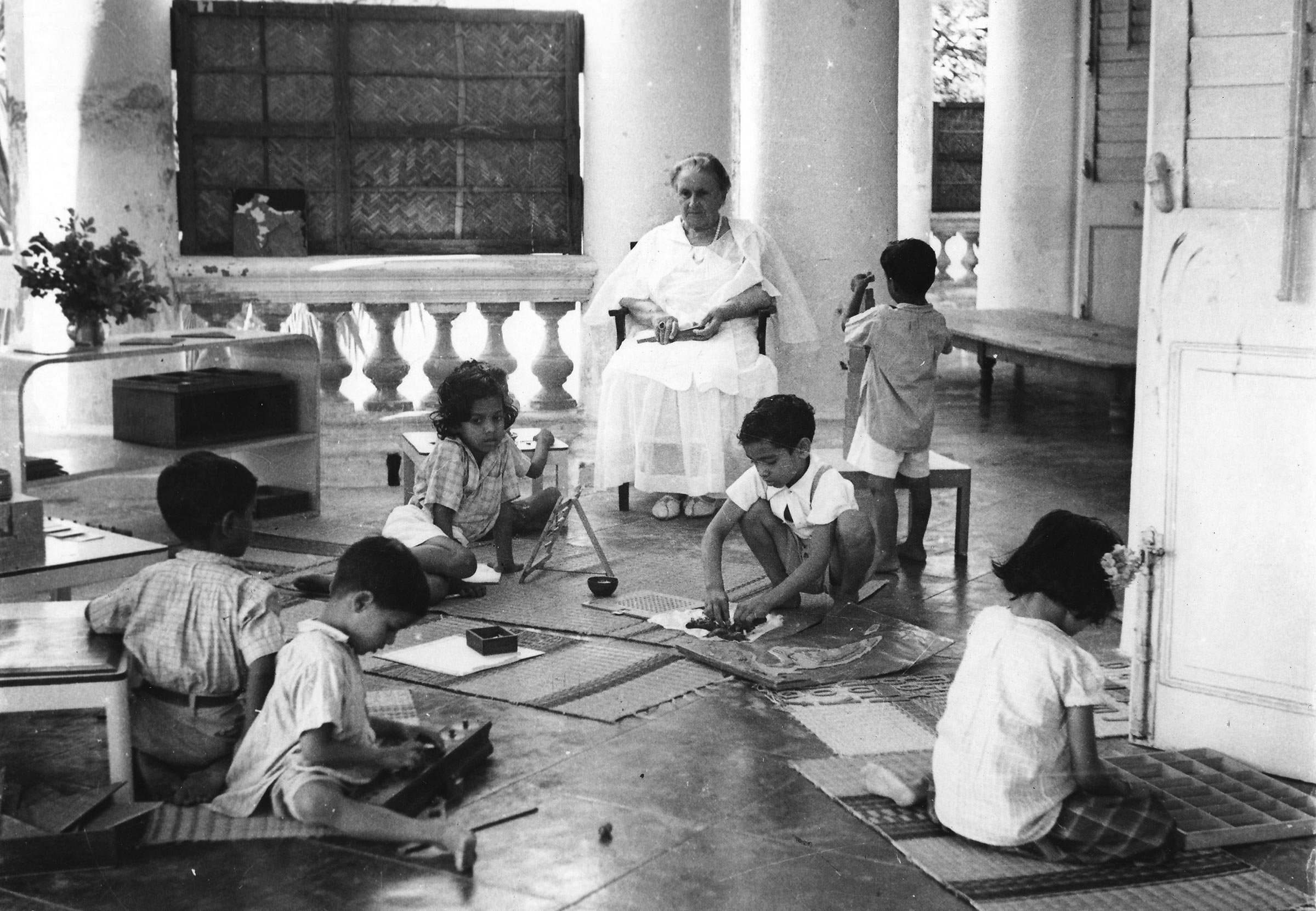
1. The Prepared Environment —
The concept of the prepared environment is perhaps the single most innovative construct enacted by Maria Montessori.
The prepared environment is, in my estimations, the first principle by which to come to terms with Montessori and serves as a necessary complement to the mindset needed to recognize and participate in the novel educational experience. For our purposes here, it also serves as a model for how to think about organizing a company, team, community, or perhaps even a product.
In a world primarily constructed for adults, by adults, with adult-centered considerations, the prepared environment can be thought of as a specifically designed space for children, optimized to help children learn in direct proportion to their interests, sensitivities and needs.
The basic idea draws inspiration from the notion that if the space is structured to be “psychologically satisfying”, it’ll increase the child’s ability to meet their developmental needs, further increasing their confidence to explore and follow their interests. As Montessori elucidates, “children acquire knowledge through experiences in the environment.”
“Concerning proportion, there have to be limitations of size. If the room is too small it acts as a restriction and causes disorder. If it is too big it disperses attention. The proportion of a room, therefore, should not depend only on the possibility of ample circulate of air, or, in other words, its cubic contents, but it should be adapted to what I call psychological proportions or needs”.
Essentially, if everything in the space is purposefully architected, what is in motion will be realized in affinity with the prepared environment. This is to say, in slightly different terminology, if the environment is thoughtfully constructed, a set of expectations will persist, allowing for a wide range of interest and opportunities to be maximized.
In terms of thinking about building a company or product, or working closely with a team or community, a practical insight that resonates from Montessori is: If you take care of the environment, the environment will take care of you. What this means is that a culture is assembled around a set of principles that thereby house and support the development of those who inhabit the space. It is a shift in mindset, a disposition in attitude and everything therein.
If you build the type of company that aligns with a set of values established with your community, and that product adheres to those basic tenets, everything will find its mode of expression in those relations – in so far as the prepared environment is healthy. The question becomes how to prepare the environment to accommodate those needs, while maintaining an unconditional ethos of those principles.
The prepared environment is always the first place to concentrate efforts and the first place to point fingers. The prepared environment offers an image of thought by which to organize ideas. It is the architectural structure that makes everything possible - a metaphor to make use of as the place where innovation occurs.

2. Isolation of Difficulty —
If you picture the prepared environment as an architectural surround that accommodates its inhabitants, and, at the same time, holds fast to the premise that everything happens in relationship to that structure, it becomes increasingly important to learn how to identify problems, work through their specific challenges, and come to understand the state of possible solutions that exists within those constructions.
Ideas can be fragile and difficult to grasp. It is imperative to understand how to take care of them, nurture them, cultivate their proclivities, and, ultimately, develop a philosophy of curiosity.
As Christopher Alexander writes, “A well-designed house not only fits its context well but also illuminates the problem of just what the context is, and thereby classifies the life which it accommodates.”
It can be extremely hard to concentrate on a singular task, especially if it’s part of a larger sequence of work, or if there are distractions in the environment, i.e.: If things are moving too quickly at the company, etc., but it is absolutely necessary to start with the basics. If one room in the house feels out of sorts, the entire house is impacted.
Montessori has a term for this procedure: The isolation of a difficulty.
At its core, the concept of isolating one difficulty at a time revolves around the idea that a problem must be broken down into its constituent parts. It must be stripped of any preconceived notions, and it must exist without extravagances. Only later will it be repositioned within a larger context. A helpful motto to accompany any such investigations: Assume nothing, if you must assume anything at all.
The activities in a Montessori classroom are specifically designed to isolate one difficulty, and thereby create a sense of order in the environment. Aesthetics plays an essential function, as it draws attention to the task at hand, literally summoning the investigations, and guiding the experience throughout the process.
Take, for example, the introduction of the pink tower, a Montessori activity utilized to initially teach visual discrimination. It is intentionally designed to be the same color – pink – so as to remove any other unnecessary obstacles. It allows the child to master one aspect of the wooden material at a time. Minimize the confusion to maximize the learning. Only later, after an appreciation has been developed, will other concepts contained within the activity be extrapolated, and fully ascertained.

“The material consists of ten cubes, ranging from 1 cm³ to 1000 cm³. The second cube is the same size as eight of the one-centimeter cubes; that is, it is equivalent to 8 cm³ (or 2 cm cubed); the third cube is equivalent to 27 cm³ (or 3 cm cubed) … the tenth cube is equivalent to 1000 cm³ (or 10 cm cubed). This progression, together with the properties of length, width, height, and weight, give mathematical properties to the physical aspects of the Pink Tower.” Architectural blue prints designed by Bobby George and Hugh Weber.
Everything has a natural place in the prepared environment. There is an order to the problems to be solved, one that is earned and revised through iterations, and it is deliberately, and unmistakably, part and parcel of the whole.
The challenge for a company becomes creating the type of environment where problems can be isolated, diligently worked on and supported without distraction. Creating the space and mindset where difficulties can be isolated in a prepared environment allows for growth and opportunities and the spirit of innovation to run wild. As Annette Haines writes, “A task should neither be so hard that it is overwhelming, nor so easy that it is boring.” Familiarize yourself with the problem and enjoy it.

3. Simple to Complex —
Creating techniques to optimize potential becomes a mainstay in nearly every pedagogical conversation. Invariably, it also becomes a lingering question in many organizations and inevitable in thinking about building products. It is an issue that is rarely adequately addressed, but can be thought of as moving from simple to complex.
How to give shape to a problem? How to outline a problem so it can be encountered, wrestled with and enjoyed, and, ultimately, incorporated? By reversing an otherwise standardized approach to problem solving, Montessori arrives at a rather novel solution.
Instead of starting with the abstract, which she perceives to be the outcome, she begins by introducing a concrete appreciation of the concept. That being the case, she systemically designs an entirely new system of learning, necessarily from the ground up, based on the unadorned idea that everything must be organized from simple to complex.
For purposes of visualization, a mathematical example can illustrate this well. How to introduce the concept of a number? For Montessori, it is not through abstraction, in this case the numerical representation, “2”. After all, what does the number 2 actually represent? Instead, it is through the introduction of a concrete appreciation of the concept, isolating one difficulty at a time.
Another helpful example is music. Instead of introducing the symbolic representation of a note, how it is depicted on a chord chart as a form of musical notion, it’d be presented first as a sound, and then later, once it has been incorporated, assigned a corresponding name, “C”, etc.
Every problem, no matter the simplicity, should be approached as if for the very first time. This is exactly the revelation in education that Montessori enacted. How many times are concepts introduced first by abstractions? How many times are the problems presented in which they are hard to grasp? It’s a consideration worth keeping close to the chest.
On this point, Christopher Alexander, is succinct: “Once these concrete influences are represented symbolically in verbal terms, and these symbolic representations or names are subsumed under larger and still more abstract categories to make them amendable to thought, they begin to seriously impair our ability to see beyond them.” Representations have a tendency to obfuscate and betray what swarms otherwise.
If we arrive at the abstract without a firm appreciation of the concrete, it may be the case that we will be limited in our imagination, struggling to grasp the concept fully, and overlook the potential latent in ideas. With respect to organizing a business, the golden ticket, or, in the least, the price of admission, is the thought of continually striving to remove abstraction, to live in the concrete, until it becomes necessary to make it abstract – if at all.
In order to understand the cardinal idea at work, it must be first broken down. Annette Haines explains, “As children progress and become capable of making more complex connections, they are eventually able to handle information that is less isolated.” With inherent capabilities comes a more attenuated experience.
While this concept may appear to be relatively straightforward, it’s important to keep in mind the spirit of always starting with the simple (reversing engineering problems if needed) and then progressing towards more complexity when appropriate.
It’s just as important that the question constantly remain present: Is this complexity necessary? How to simplify? All too often, problems are arrived at with ready-made solutions. This process allows us to take a collective breath and begin again. If simplicity slips out of place, organizations, products, and communities can lose their way, and complexity never solved anything.

4. Collaboration Trumps Competition —
An old pedagogical idea persists. Namely, the implementation of tests to measure the aptitude of students in relation to the progress of their peers. On this model, competition becomes a game of averages, where the needs of the outliers – those ahead and those behind – become conditioned to the status quo. Students compete against medians, instead of learning how to compete against themselves.
What escapes the competitive approach, and where Montessori enters the discussion, is in an effort to personalize learning experiences, and, as a consequence, maximize individual potential. How does she accomplish this movement? In a turn toward collaboration, and the power of the environment, which supports the growth of everyone learning at their own pace, according to their own needs, all at the exact same time, and in support of one another’s efforts.
At first blush, it may seem counterintuitive. How best to collaborate, however, quickly becomes the generosity of competition that Montessori envisions. With an emphasis on collaboration, the false constructs of an artificial system of competition are evaded. Instead of hierarchies, for instance, which can be extremely heavy, weighing things down, implementing micro-managed practices and other techniques, Montessori creates the prepared environment, which liberates every student in their quest to follow their own interests and pursue their own curiosities.
In a beautiful image of thought, Montessori explains this collaborative approach in respect to a garden: “The usual idea of an educative garden in the sense of one being divided into individual strips for reach child does not appeal to us as anything convincing. The garden should be the result of the collaboration of all the children. There should always be collaboration in protect, collection of fruits, harvesting, and so on. The garden should be, psychologically, a place that allows each one to do what he or she feels like doing.”
Of course, outcomes are necessary. Yet, in this shift of emphasis towards collaboration, it becomes just as essential to create the type of conditions in which potential can be realized without limitation, as it does to ensure proficiencies. Competition can only go so far, whereas collaboration becomes limitless.
In many successful organizations, multidisciplinary teams are deployed to solve problems, tackling questions through the lens of collaboration, often without identity and with a shared connection to the larger mission at hand. Ironically, when there is a shift in perception, and the expectations contained therein, there is also a shift in accomplishment, and what is possible.
Diverse voices with various talents emerge unified. In these instances, 1 + 1 = 3. Others can accelerate ideas in a symphony of exchanges. Motivation stems, not from personal gain or accomplishment, let alone a career trajectory, but from a much larger mission, to participate in something that exceeds any individual.

5. Freedom Within Limits —
It’s difficult to imagine a more readily applicable Montessori concept to be used in the organization of a company than freedom within limits. Simultaneously, it’d be difficult to find a more mischaracterized, or misunderstood, concept in Montessori.
For our purposes here, it’d be helpful to outline the broad strokes of a working definition of freedom within limits — namely, as a condition of independence, Montessori creates a prepared environment in which children are free to explore their interests, on their own time, at their own pace, in so far as that freedom exists within a set of rules and limitations. Safety is a top priority.
Let’s unpack that further.
Children have complete freedom, and they are empowered to pursue their autonomy, as long as that freedom lives in accordance with predefined and established criteria. Here’s an example: Students in a Montessori classroom are free to choose any work they have been shown, in so far as they don’t abuse the material or work with the activity in a way they haven’t been shown.
In coming to terms with this concept, it is important to keep in mind a relevant quote from Montessori: “To let the child do as he likes when he has not yet developed any powers of control is to betray the idea of freedom.”
Limitations have been set up out of respect for the child and the rules implemented to empower freedom, and not the other way around.
The considerations are at least two-fold:
1) To allow for independence, growth and the ability to choose, and, at the same time, 2) to ensure children are safe, taken care of, and supported in their development, as they continue to progress, gaining confidence through the lessons on their own accord.
Students observe other students engaging with activities, and, so the idea goes, through the power of absorption of the environment, come to develop a basic understanding and appreciation of the work.
As Montessori reminds us, “Children will never be free unless the environment is safe, such that there is no danger to the child. If there is any possibility of danger, the children cannot be left alone. This results in a lack of freedom and the imposition of the adult personality, in which case the children’s feeling of spontaneity is curbed.”
With respect to building a business, there is much to digest in this quote alone.
With clear expectations and established routines, there is a harmony and order to the environment, a buzz to the work, and a natural excitement. Creativity needs constraints. Montessori creates the conditions needed for children to thrive independently. It’s as if a plant has been constantly tended to and taken care of in order to maximize its growth and well being.
It’s not always easy to achieve balance, to arrive at a set of limits that foster creativity, laying the foundations for growth. But, this is exactly where experimentation happens, when spontaneity emerges, and thinking and productivity take on a life of their own.
Learning how to inspire independence, harness the powers of the imagination, and safely permit experimentation in a company becomes a matter of focus and intent, of intentionally setting limits that allow individuals and ideas to run free.

Health and Wellness —
If Montessori teaches us anything, it’s the importance of taking care – of the environment, of each other, and the powers of the imagination to take us beyond ourselves.
With all of the above in mind, and the lessons shared and examples provided, the health and wellness of the environment is quintessential to what comes to flourish within. While this is not an explicitly articulated concept in Montessori, it is an underlying philosophy of life that permeates the work, a thread to be woven throughout her innovative pedagogy.
While many of these concepts shared are already widely glimpsed if not underway in companies, small and large alike, I think they could benefit from being further catalyzed in operations, documented in practice, and put to lasting work. In the least, these concepts are tools to try out. If they help build meaningful impact, use them. If not, set them aside. Use only what you can. Build what matters most.
Take care of the environment, as it takes care of you.
Concentrate your efforts on the environment, instead of individuals.
People, plants, and pixels are part of the same environment.
Familiarize yourself with problems by asking questions first
Reverse assumptions by turning them inside out and examining them.
Start with simplicity and strive to remove complexity.
Take time to collaborate, pushing to outcompete yourself and realize potential.
Search for patterns by which to build together harmoniously.
The environment provides the necessary mechanisms.
Follow curiosity independently.
"The crucial quality of shape, no matter of what kind, lies in its organization..."
- Christopher Alexander.
Photos from Montessori 150.
Note: I have previously published, ‘Montessori and the Work Environment’ at Guidepost Montessori, and, ‘How to Adopt a Montessori Style Work Environment’, at the Huffington Post.

Parenting in the Age of AI

Editorial note: With the advent of artificial intelligence, I have been thinking about the intersection of education and technology through the lens of parenting, and coming to better understand and appreciate the role society has to play amongst these new frontiers. While learning the many lessons of tending to our neighbors’ garden, our family discovers a relationship between artificial intelligence and getting our fingers dirty in the mud.
Our family spent a week or two, at the height of the summer, diligently tending to our neighbors’ beautiful garden. We watered it. We pruned it. And, from time to time, we wrestled with the unruly bits.
With care and patience, we took care of it, as it took care of us. We learned so many things. The British horticulturist, Gertrude Jekyll, is instructive on this matter:
“A garden is a grand teacher. It teaches patience and careful watchfulness; it teaches industry and thrift; above all it teaches entire trust.”
With trust in our back pockets, so to speak, we came to enjoy the natural rhythms and wonders a garden affords.
Here are a few of our lessons.
For starters, we were delighted by the sense of purpose and timeliness it created, the work it involved, and the conversations it invoked. As a family, we developed a sense of accountability, neighborly responsibility, and we enjoyed, perhaps most of all, getting our hands dirty together.
It’s worth a moment to describe the scene.
The well established garden sits atop a hill, overlooking a state park. It’s directly adjacent to our neighbor’s home, unassuming yet expansive. The garden is approximately 12’ x 12’ and produces a bountiful harvest. The table of contents reads like a grocery list. Cucumbers and okra, tomatoes and carrots, squash and snap peas, red and yellow peppers, zucchini, a few pumpkins, eggplant, and bunches and bunches of thick, heavenly-looking kale.
Oh, and, jalapeños.
As a measure of their gratitude, our neighbors, both retired university professors — one a former professor of economics with a PhD dissertation on Habermas (and more than a passing interest in Marx) and the other a professor of English, whom I imagine reads Augustine on her porch as the sunsets over the garden — suggested we take home whatever we could eat.
As they gave us a tour of our duties, with the sharp and austere wisdom only acquired through experience, they interspersed everyday instructions with hard earned life lessons.
“Here’s how the spigot for the water works,” they explained, adjusting the hose. “The water should run for thirty minutes. Please make sure the sprinkler reaches every part of the garden,” they shared. “If you don’t close the gate behind you,” they warned, “the rabbits will have a feast.”
In jest, we nodded and smiled and told tales of the latest Peter Rabbit.
As cycling enthusiasts, we'd become accustomed to their help repairing and maintaining our bicycles, and we were wishing nothing more than to return the favor by helping tend to their well kept garden.
Our surrogate grandparents, as we affectionately refer to them, were heading out on their annual cross-country roadtrip to visit their grandchildren and we found ourselves confronted by a proposition we couldn’t refuse. We took them up on their offer in spades, excited to begin our new family adventure.
“Let’s go to the garden.”
Each afternoon, as dinner slowly approached, we’d walk down the gravel road, less than a quarter mile away. Our kids would ride their bikes, kicking up dust as they dashed ahead. They’d enthusiastically shout back at us, “The okra looks ready!”
My wife and I were mesmerized by how quickly our five-year-old, Ross, had become accustomed to riding his bike. He’d taken it up so quickly, and with such bravado — from being unable to balance, to tentatively teeter-tottering, to ultimately safely taking flight behind the handlebars.
“Ding! Ding!” went his bells.
I was reminded of a passage from the architect Christopher Alexander, in “Notes on the Synthesis of Form”, in which he articulates two types of learning.
On the one hand, there is a more formal style of learning, exemplified by making rules explicit. Knowledge is condensed into repeatable, programmatic incidents, easily measured and shared. Here, “learning is a specialized activity and no longer happens automatically.” Alexander names this type of learning “self-conscious,” as opposed to unselfconscious, as it is more rote and academic in nature. Examples are aplenty, I only need to queue my childhood anxiety toward fractions.
Learning through instruction.
On the other hand, there is a more informal style of learning, a craft that is acquired through an ability to “imitate by practice,” to learn through experiences and by successfully making mistakes. As Alexander goes on to explain, “The great example of this kind of learning is the child’s learning of elementary skills, like bicycle riding. He topples almost randomly at first, but each time he does something wrong, it fails; when he happens to do it right, it’s success and the fact that his success is recognized makes him more likely to repeat it right.”
Learning through experimentation.
I wondered what mistakes we’d make with the garden.
After tenderly picking a tomato off the vine, Ross would eagerly bite into the supremely red skin. “It’s just to taste test, Mom,” he’d unabashedly spell out. Ross enjoys tomatoes the way most children his age enjoy M&M’s or Skittles. He’d record his delight through his newly toothless smile. “It just burst into my mouth,” he'd share, adding a skip to his step.
“I think these tomatoes are delicious,” he declared.
Over the weeks, my wife and I would exchange contented glances, admiring the commitment our children had made towards helping the neighbors, investing the time required to learn something new, and understanding more deeply what it takes to tend to a garden and put food on the table.
“Mom, can we have our own garden next year?”
On one occasion, shortly after we’d enjoyed our summer salad with squash and snap peas, a few sunflower seeds and freshly cracked pepper, Ross decided to examine the recently harvested jalapeños in greater detail.
The bright green sheen of those alluring, curvy creatures summoned his curiosity. His eyes traced the mysterious chili pepper with excitement. With a knife, and a steady hand, he cut open the innards, amused as the seeds sprawled out.
“Be careful,” we quickly chimed in. “If you’re interested in giving it a taste, we’d recommend a tiny lick on the tip of your tongue. It might be spicy,” we warned.
“Did we remember to shut off the water?” Sonny, our eight-year-old dutifully asked.
Ross apprehensively dabbed the seemingly innocuous jalapeño to his fully extended tongue. His level of discernment elevated with his eyebrows.
He paused. We peered on.
Ross slowly retracted his tongue, contemplating the foreign experience, as he reluctantly absorbed the pungency. For a moment, he enjoyed the novelty and excitement of trying something new. Then he half shrugged and confidently said, “It's not that spicy,” lingering on n-o-t.
As a parent and an educator, I couldn't help but recall Alfred North Whitehead’s articulation of what he names three stages of learning: romanticization, specialization, and generalization. It’s a taxonomy I think about often, perhaps too often, and one that encapsulates so many educational scenarios in a relatively simple and memorable formulation.
In this particular case, the tripartite classification sums up the nature of the experience rather concisely. As humans, a) we’re allured by something new, b) we work tirelessly to better understand it, and then, after those processes are incorporated, c) we desire nothing more than to share what we have learned with others — including ourselves. It’s a very communal approach to understanding, one that I'd ascribe to Alexander's unselfconscious style of learning, and gardens offer robust opportunities to undergo these types of generative learning experiences.
Ross was enticed by the rather intriguing jalapeño, but his lessons weren't over, at least not yet.
“Be sure to wash your hands after you touch the jalapeños,” we shared. “It might burn whatever you touch.”
After collectively convincing ourselves that we did, in fact, turn off the water, our dinner conversation turned to artificial intelligence, a relatively new, and rather contentious topic towards the end of the school year. Heading into fourth grade, Sonny was inquiring about the role it might play in writing his book reports next year, and we were discussing different approaches to learning, both inside and outside the classroom.
“Wait a second,” Sonny said, “you mean ChatGPT can learn how I’d write?” He waits a moment, collecting his thoughts. Thinking out loud, he asks, “But, how does it know how I’d think?”
Then, all of the sudden, and perhaps expectedly, Ross belts out a cry across the table, an expression no parent wishes to hear.
"M-o-m-m-m-m-y", he shouted, in a loud, uncontrollable, guttural cry.
Jalapeño, not pictured.
The task of parenting laid completely bare.
On the one hand, you want to protect your children from everything, anything that might cause harm or discomfort or unease. You want to take away, instantly, any pain, sickness, or ailment that might afflict your child. Or, better yet, you want to prevent it from happening in the first place.
On this account, we failed.
On the other hand, you want your child to be able to experience things on their own, with resourcefulness, resilience, and determination. We hope they are adequately prepared to face the adversity they will inevitably confront, with gusto, and a certain set of guiding principles we positively helped to shape and inform.
On this account, I hope we succeeded.
Perhaps this is the paradox of parenting par excellence — a constant negotiation for independence realized through the confidence of experimentation. In the least, herein lies the perennial tension between a child’s endless sense of curiosity and a parent’s infinite sense of protectiveness. It’s the perfect dance towards the invention of new possibilities amidst an evolving set of expectations.
In her significant treatment, “On Immunity,” a treatise I picked up at the height of the pandemic, Eula Biss begins her account with reference to Greek mythology, noting how gods were on an eternal quest to protect their children from the mortal hazards of life — to no avail. “A child cannot be kept from his fate,” she grudgingly recounts, “though this does not stop the gods themselves from trying.”
In some measure, and within reason, we, as parents, must support our child’s efforts towards independence. We must, to the best of our ability, create the conditions in which our children can safely explore and pursue their own interests, with minimal risk to their health. That can be a pretty monumental task. Undoubtedly, parents and teachers alike assume mythical forms in the eyes of their children, lest we remind ourselves through our daily faults, that we are merely human.
In those moments, when Ross’s tears made their way across the table, it's hard not to cast judgement, on ourselves or on our children.
How many times, for instance, have we heard or uttered those fateful words, “I told you so”? It’s often difficult to affirm choices, but it’s also important to note that consequences provide their own form of feedback. Immediate, contingent, and without recourse.
I can still hear my fourth-grade teacher's voice in my head, every time I struggle through fractions.
“Bobby,” she’d say, “it’s simple. You just need to follow my instructions.”
Ross immediately learned, not from us or our words or our stories or even our actions. Not even the freshly sliced cool cucumbers that adorned his burning eyes, or the inextinguishable love we exerted, could take away those lessons.
The next day, in the warm embrace of South Dakota’s unrelenting sun, Ross turned to me with an inquisitive smile, the type of smile that could shake the leaves off of the trees. We’d just returned from checking on the garden, more out of habit than necessity, and his eyes were still irritated from the night before. I looked on with intent. I thought he was going to talk about jalapeños and express a newfound fear, something my wife and I went to bed talking about.
Instead, he asked, “What’s the greatest invention of all time?”
It’s the type of question only children know how to invent. Honest. Brave. Imaginative. Without restraint.
My response was quick and resolute. Struck by his wherewithal, I tried to meet his enthusiasm midair, sharing the first thought that jumped to mind.
“I think it’s the wheel,” I said.
I’d just read Bill Bryson’s book, “At Home.” I was fascinated by the simultaneous discovery of the wheel, how it was invented at vastly different geographical locations but all within a certain period of time. I was taken aback by this idea, overwhelmed by how artificial intelligence was systematically becoming omnipresent, also at the same time, in the same place. The contrast was apparent, and not just technological.
This passage is worth quoting at length:
The interesting thing about the Neolithic Revolution is that it happened all over the Earth, among people who could have no idea that others in distant places were doing precisely the same things. Farming was independently invented at least seven times — in China, the Middle East, New Guinea, the Andes, the Amazon basin, Mexico, and West Africa. Cities likewise emerged in six places in China, Eygpt, India, Meso-potamia, Central America, and the Andes. That all of these things happened all over, often without any possibility of shared contact, seems uncanny. As one historian has put it: "When Cortés landed in Mexico he found roads, canals, cit-ies, palaces, schools, law courts, markets, irrigation works, kings, priests, temples, peasants, artisans, armies, astrono-mers, merchants, sports, theater, art, music, and books, all invented quite independently of similar developments on other continents. And some of it is a little uncanny, to be sure.
Dogs, for instance, were domesticated at much the same time in places as far apart as England, Siberia, and North America.
It is tempting to think of this as a kind of global lightbulb moment, but that is really stretching things. Most of the developments actually involved vast periods of trial, error, and adjustment, often over the course of thousands of years.
Agriculture started 11,500 years ago in the Levant, but 8,000 years ago in China and only a little over 5,000 years ago in most of the Americas. People had been living with domesticated animals for 4,000 years before it occurred to anyone to put the bigger of them to work pulling plows; Westerners used a clumsy, heavy, exceedingly inefficient straight-bladed plow for a further 2,000 years before someone introduced them to the simple curved plow the Chinese had been using since time immemorial. Mesopotamians invented and used the wheel, but neighboring Egypt waited 2,000 years before adopting it.
In Central America, the Maya also independently invented the wheel but couldn't think of any practical applications for it and so reserved it exclusively for children’s toys. The Incas didn't have wheels at all, or money or iron or writing. The march of progress, in short, has been anything but predictable and rhythmic.
“Oh, that’s a nice one,” Ross said.
He thought about the wheel for a moment. I could see the notion take shape, spinning in his head. He took a deep, valorous breath and grinned with confidence.
“It’s shoes,” he exclaimed, “because, if we didn’t have shoes on our feet, our feet would really hurt when we hunted.”
A bit confounded by my answer, Ross went on to rightfully rationalize that we needed to hunt for food in order to survive.
“You know, he added, “there used to be so many buffaloes roaming these lands.”
I was stunned, first in awe of the maturity of the question, and then the logical sequence in his thoughtful answer. His conviction was just as awe-inspiring. Drinking our lemonades, we sat on the porch in mutual delight, enjoying one another’s company.
Later that day, when his older brother, Sonny, returned home, exhausted from basketball camp, we hurriedly rushed to ask him our question.
Impatiently, I framed the context, providing an overview of our respective answers.
“I said it was the wheel. Your brother said it was shoes.”
Sonny paused for a moment, either out of enervation or simply digesting the nature of our responses.
“What’s the greatest invention of all time?” He repeated.
“That’s easy,” he said. “It’s artificial intelligence.”
A bit puzzled, and pleased, I pushed.
“Why do you think that?”
“Well, because if you ask AI, it'd say AI.”
“Really?” I probed.
“Maybe not today or tomorrow but someday.”
In that moment, I was stunned, captivated by the capaciousness of his reply. He was not self-conscious in his response. He was confident and sincere. What sparked this answer? Why had Sonny come to offer this response?
I started to contemplate how our children will interact with the technology at home and in school, what shapes, forms, and relationships these interactions might presuppose, and how that experience might juxtapose or accompany the practicalities of more every day tasks, like taking care of a garden, biking, or accidentally rubbing jalapeño juice in your eyes.
Out of curiosity, I queried Chat GPT, “Jalapeño juice in your eyes can be extremely painful. If this happens, it’s important to rinse your eyes with cold water immediately to alleviate the burning sensation.”
A cascade of questions started to flow forth, originating from a single observation. With artificial intelligence, how are we suddenly faced with the instantaneity of an all-encompassing, pervasive form of technology, unlike the slow, incongruous discovery and adoption of the wheel, as Bryson showcased? For years technologists have said it is coming, that it is already here, but now it is squarely present, searching for even more applicable use cases to demonstrate itself.
While it’s too soon to determine, with any sense of accuracy, the advantages and disadvantages of artificial intelligence, if we can speak so simply, it’s not too soon to ask the hard questions with a reasonable amount of concern and optimism, to try to better understand how exactly this technology might impact us as a society.
Is there a precedent?
I was reminded of an early interview Steve Jobs conducted on the role computers were playing in education. The arguments at the time, pointed, skeptical and cautious, weren’t dissimilar to those being leveled today. While the order of magnitude may have changed with artificial intelligence, the core arguments remain largely the same.
“I used to think, when I was in my twenties, that technology was the solution to most of the world’s problems,” Steve Jobs said. “Unfortunately, it ain't so,” he emphasized. Why? Because, as Jobs went on to explain, it requires people, “another person that incites your curiosity, that guides your curiosity, that feeds your curiosity, and machines cannot do that in the same way as people can.”
Has this conception changed with the emergence of AI?
No one could take abstract concepts and make them easier to understand than Steve Jobs. In one fell swoop, he famously introduced a lasting metaphor as a way to think about the advent of computers amidst a newly emerging cultural paradigm:
I think one of the things that really separates us from the high primates is that we’re tool builders. I read a study that measured the efficiency of locomotion for various species on the planet. The condor used the least energy to move a kilometer. And, humans came in with a rather unimpressive showing, about a third of the way down the list. It was not too proud a showing for the crown of creation. So, that didn’t look so good. But, then somebody at Scientific American had the insight to test the efficiency of locomotion for a man on a bicycle. And, a man on a bicycle, a human on a bicycle, blew the condor away, completely off the top of the charts. And that’s what a computer is to me. What a computer is to me is it’s the most remarkable tool that we’ve ever come up with, and it’s the equivalent of a bicycle for our minds.
With his astute ability to connect the dots, Jobs described this new technology in simple terms, as a tool to accelerate our natural capabilities, a bicycle for the mind. In conjunction with a human, a computer could become “the most remarkable tool we’ve ever come up with.” It could, if utilized creatively, unleash new possibilities for life, unlocking the potential of the human, and the bicycle served as the perfect image of thought by which to envision this acceleration.
“Will a computer replace a human?” it was asked.
On this point, Jobs is adamant: technology alone is not enough. “It’s technology married with the liberal arts, married with the humanities, that yields us the results that make our heart sing.” Plainly put, computers require a human, and the intersection can yield magical outcomes. I started to wonder, however, if these arguments would hold up today, in an age in which journalists cajole ChatGPT to profess its adoration through extended conversations, ultimately instigating its interlocutors to rethink their marriages.
“I’m not exaggerating when I say my two-hour conversation with ‘Sydney’ was the strangest experience I’ve ever had with a piece of technology," said writer Kevin Roose, in an early exchange with ChatGPT. “It unsettled me so deeply that I had trouble sleeping afterward.” He continued, “I worry the technology will learn how to influence human users, sometimes persuading them to act in destructive and harmful ways, and perhaps eventually grow capable of carrying out its own dangerous acts.”
In a near reversal of the formulae offered by Steve Jobs with a computer, that of a human and a machine, Roose speculated with artificial intelligence on the possible eventuality of a machine and a human.
Which leads me to ask: If computers are a bicycle for the mind, what is the equivalent for artificial intelligence? Without an image of thought to guide us, how are we to fully come to terms with this new technology?
The bicycle metaphor is worth further consideration. A bicycle requires some level of exertion. With aerodynamic drag, there is a limit to the speed at which a bicycle and a human together can reach, before terminal velocity is realized. Even on descent, a point will be obtained where the speed stays constant.
Our exertion towards artificial intelligence, however, increases its capabilities. The more we put into it, the more it learns. Surely there are significant energy consequences to artificial intelligence, but will these be minimized over time, in a way that a bicycle coupled with a human could never be fully maximized beyond its assemblage?
“An assemblage is never technological,” I hear French philosopher Gilles Deleuze.
“What is an assemblage?” he elucidates. “It is a multiplicity which is made up of many heterogeneous terms and which establishes liaisons, relations between them, across ages, sexes and reigns — different natures. Thus, the assemblage’s only unity is that of a co-functioning: it is a symbiosis, a “sympathy.”
Let’s unpack that further:
A human and a bicycle is considered within a social, historical, biological, geographical, geological landscape. Which is to say, a human isn’t just a human, it is a multitude of relations.
Let’s take a bicycle.
A bicycle is not just a bicycle. It is defined by what comprises it: its materials, shape, form, etc. It is also defined by how it interacts: with its rider, with the road, with the weather, etc.
It might be helpful to broaden these examples further.
In his case study of an agricultural village in rural India, Christopher Alexander makes this point abundantly clear, highlighting a clear and accessible way for us to imagine these types of relationships.
Through laborious detail, Alexander elucidates the nature of relations between various individual, economic, and social purposes. With near mathematical precision, he numerically charts out these considerations. For every need identified, Alexander demarcates a numerical determination and lists out a corresponding requirement.
Here’s an example:
12. Extended family is in one house.
Alexander proceeds to identify and inventory all needs, of the individual, of the community, etc., demonstrating how each requirement interacts with another.
For instance:
12 interacts with 1, 3, 9, 11, 17, 18, 19, 25, 26, 28, 34, 36, 41, 43, 49, 56, 62, 63, 76, 80, 81, 85, 86, 87, 90, 91, 93, 121, 122, 129, 140, 141.
There are 141 requirements listed in his case study.
I marvel at the ingenuity, the methodical nature of his work, and the taxonomy he creates as part of a larger system. It made me desire to make a list for the garden. I immediately wonder, however, how long it took him to make these lists, how many lists he created over time, across how many different projects, and what efforts were required to map these relationships, let alone observe their interactions.
Could he have benefited from artificial intelligence?
Instead of overtly prescribed and singularly manufactured, artificially constructed spaces, Christopher Alexander accounts for a multiplicity of relationships and their generative encounters, allowing for spontaneity and serendipity, and, most importantly, what he names “new life.”
Building as learning informally, as opposed to academically, with absolutely no loss of rigor, insight, or exactitude.
In an attempt to break us out of our traditional habits of thought, Alexander introduces a conception of the city a) organized artificially as a tree, in contrast to b) a natural city organized in terms of a semi lattice. The distinction is essential, fundamental to casting a vision, and unsettling us from easy ways of thinking
Here’s Alexander:
“The structural simplicity of trees,” Alexander says, “is like the compulsive desire for neatness and order that insists the candlesticks on a mantelpiece be perfectly straight and perfectly symmetrical about the center. The semi lattice, by comparison, is the structure of a complex fabric; it is the structure of living things — of great paintings and symphonies.”
In short, an image of a tree is easy for humans to adopt as a concept. The simple abstract structure of a tree, an image of thought easily grasped and understood, is contrasted with a more complex structure, which he names a semi lattice, a bit more difficult to imagine let alone readily available conceptually to deploy. Yet, Alexander is insistent that, “in any organized object, extreme compartmentalization and the dissociation of internal elements are the first signs of coming destruction. This separation,” he explains, “is only possible under the influence of treelike thought.” As Deleuze and Guattari – who contrast a tree with grass, or arborescence and rhizomatics – famously inspired, “too people have a tree growing in their heads.” Interestingly, the use of the tree as an exemplification of the rigidity of thought, was presented nearly simultaneously.
While Christopher Alexander introduced a modern lexicon – and it is clear to me how Silicon Valley has taken so much inspiration from his work – I can't help but wonder what might be needed today? In an age in which machine learning models process information as a complex network of operations based on data and then generate responses based on relationships and patterns in the data it has been trained on, what new image of thought is required? Is one required?
In my estimations, where arguments against artificial intelligence tend to focus is primarily on the technological components — a compartmentalization of the problem. Rarely, however, do the conversations extend beyond the immediate implications and applications, towards relationships, and the environment in which artificial intelligence manifests itself — in a multiplicity of relations.
Where arguments succeed, I believe, is on a different register, in thinking through a future state where artificial intelligence reverberates, asking questions on the nature of relations, and actively working to create concepts. This is where my mind wanders, towards parenting in the age of AI.
Deleuze, who provides tools by which to create concepts, stretches the conversation in the way only he knows how.
His passage on assemblages is worth a read, twice-over:
It is never filiations which are important, but alliances, alloys; these are not successions, lines of descent, but contagions, epidemics, the wind. Magicians are well aware of this. An animal is defined less by its genus, its species, its organs, and its functions, than by the assemblages into which it enters. Take an assemblage of the type man-animal-manufactured object: MAN-HORSE-STIRRUP. Technologists have explained that the stirrup made possible a new military unity in giving the knight lateral stability: the lance could be tucked in under one arm, it benefits from all the horse's speed, acts as a point which is immobile itself but propelled by the gallop. The Stirrup replaced the energy of man by the power of the animal. This is a new man-animal symbiosis, a new assemblage of war, defined by its degree of power or “freedom,” its affects, its circulation of affects: what a set of bodies is capable of. Man and the animal enter into a new relationship, one changes no less than the other, the battlefield is filled with a new type of affects. It must not be thought, however, that the invention of the stirrup is sufficient. An assemblage is never technological; if anything, it is the opposite. Tools always presuppose a machine, and the machine is always social before being technical. There is always a social machine which selects or assigns the technical elements used.
What exactly does this mean?
As a thought experiment, it might be helpful to insert artificial intelligence directly into the dialogue. Let’s give it a try: “It must not be thought, however, that the invention of artificial intelligence is sufficient.” As Deleuze explains, “There is always a social machine which selects or assigns the technical elements,” and, excuse this abrupt insertion, “of artificial intelligence.”
What are these assemblages? What is the parent-child symbiosis that emerges within this new context? What are the types of affects? How about a student and teacher? What styles of engagement are instigated? How will this landscape transform our relationships? How will humans come to interact with technology? Is Whitehead’s formulation of learning, defined as romance, precision and generalization, still a framework by which to make sense of our encounters with the world? Amongst these new configurations, what will come to demand our attention?
In “Attention Seeking,” British psychoanalyst Adam Phillips makes a clear distinction between two forms of curiosity, official and unofficial curiosity, which can help guide us further. “Our official curiosity is a form of obedience, an indebtedness to the authorities,” he explains. “In our unofficial curiosity, we don't know who we want to be judged by. It is the difference between knowing what we are doing, and following your eyes.”
In a wonderful framework for parents and educators to consider, Phillips goes on to neatly articulate these two different types of curiosity. He offers a hypothesis that what we find of interest helps to define both ourselves and our relationships with others. He names this, in his own words, “assembling” or “organizing” ourselves through our experiences with the attention economy. Essentially, Phillips is committed to learning how to explore what it means to give attention, choosing what we pay attention to, and how those curiosities might come to affect us.
Whether it’s identifying the jalapeños in the garden as a form of culinary delight or evolutionary divergence, nowhere is this perhaps more applicable than in childhood.
It’s very reasonable to ask: How will our attention be restructured with artificial intelligence? How will our relationships with our children be impacted? Will our role as parents be altered? Further still, what new modes of engagement will manifest within the walls of a classroom? How will teachers choose to adopt or implement this new technology? If they choose to disregard it, what will that mean for our children?
As Phillips reminds us, “The bringing-up and educating of children, whatever their culture or class, initiates them into regimes of attention; it tells them, in no uncertain terms, what is worthy of their attention, and how it should be paid, as well as what kind of attention they should be wanting, and how they should go about getting it (neither distraction nor showing off is taught in schools.)”
Parenting isn’t easy. It's hard to be a parent. In many respects – and this is an extenuation of the trials of independence – parenting is a question of attention: of giving too much or too little, of knowing where to focus our attention and where to look the other way, of adjusting our care and patience.
One of the ironies of parenthood, and the role of an educator, is that you never know in advance what lessons your child or student might learn, how they might outline their own set of problems, and what they will deem worthy of their attention. As Phillips rejoins, “curiosity never comes with a guarantee.”
I suppose it’s not our job to overtly direct those inquiries, lest we instill a sense of obedience, when all our children aspire towards is creating their own lives. It is our responsibility, however, at least in some measure as a society, to provide a safe, supportive, and encouraging presence for our children to discover their interest on their own. The presence of a parent or teacher, to be sure, is often just as important as the lessons imparted.
In the same interview previously quoted with Steve Jobs, he says, “The elements of discovery are all around you. You don’t need a computer to know. … I mean, here … (Steve Jobs picks up an object and lets it fall to the ground) … Why does that fall? You know why? Nobody knows why. Nobody in the entire world knows why that falls. We can describe it pretty accurately, but no one knows why. I don’t need a computer to get a kid interested in that. To spend a week playing with gravity and trying to understand it, and coming up with reasons why. You do need a person.”
In asking ChatGPT what it makes of the concept, it shares that “despite our technological advancements, there are still many mysteries and unexplored aspects of the world that can captivate our imagination and drive our quest for understanding,” underscoring the value of curiosity and the importance of human interaction in fostering relationships.
As our neighbors returned home from their trip, we were excited to share with them the lessons we had learned as a family. As I recall, Ross was quick to extol the dangers of the jalapeños, but courageous enough to share, in the same breath, how much he’d come to enjoy their taste. 
“They complement almost everything,” he said.
For his part, Sonny shared how the nozzle of the sprinkler had to be adjusted from time to time, how it would perform erratically without his vigilance, and he made a point to share that not a single rabbit had entered the garden under his shrewd supervision.
“I locked the gate behind me every time.”
As our surrogate grandparents turned to thank us, we turned to thank them, for the experience, for the lessons, and for the delicious food. “If all that is solid melts into air,” I hear the voice of our neighbor in my head as we walk home, what does this mean for parenting in the age of AI?
The singularity of the child is unmatched in their encounters with the world.

Ongoing Conversations with Hugh Weber
Photograph of Hugh Weber (2014).
Every thought needs an encounter, a person, an idea, a place, something to inspire us, rattle us, and shake us out of our habitual modes of engaging with the world. For many of us, that encounter was Hugh Weber.
Hugh was a larger-than-life figure who captivated our imagination, made us believe in something more than ourselves, and brought us all together. He still does, as we gather around the breadth of his work, the cornucopia of his connections, and generosity of his legacy.
I can’t believe he’s gone.
Amidst a neutral black sky, Hugh Weber was a bolt of lightning. Seemingly out of nowhere, he appeared in the community, a flash of hope, instantly creating and connecting a thousand disparate nodes, all with an unmistakable voice: one of possibility.
That’s exactly how Hugh lived his life and precisely what he offered the world: a spark, a moment to connect, an opportunity to believe in something beyond ourselves. To believe in ourselves. To believe in our neighbors and cities and, yes, despite our politics, to believe in the elected official right down the street. To not only imagine another world, but to actively participate in its construction, knowing with a sense of empowerment and capability, that anything is possible.
There are three threads that, when woven together, create the fabric of my relationship with Hugh Weber. In many ways, and to speak poetically, he gathered us together in a ubiquitous blanket of imperfection, replete with gaiety, optimism and a shared sense of humanity.
So many of our conversations are still ongoing.
He lived his story alongside us, which, I believe, strengthened his resolve, solidified his vision, and connected us all in a new type of community.
These are the stories of our encounters. In no way do they fully encapsulate Hugh, but yet, may they offer a glimpse into his way of being, his modes of storytelling, and his incredible ability to push us, inspire us, and, at times, madden us. In my estimations, these conversations, when multiplied, demonstrate his power to connect our valences. They remain ever prevalent in my thoughts today.
Firstly, I can’t tell you exactly how Hugh and I met or how many conversations we had over the years, but I can share a few of my favorite memories. Our exchanges were like fireworks. Oh, how he’d jostle me with his references and ideas, his sense of justice and possibility, sending me down rabbit holes for days.
I’m nearly certain that one of our first exchanges involved the hero’s journey of Joseph Campbell. It was a favorite. Hugh was smitten by the story arc, impassioned by a template to view the world. In many ways, the monomyth serves as the personification of Hugh himself: a small town kid, from Milbank, South Dakota, ventures out into the larger world, Philadelphia and Washington, D.C., only later to return a conquering hero of sorts.
Hard lessons make easy stories. Hugh had as many arrows in his back as he had in his quiver. He’d outgrown his own endeavors. Now tasked with imparting his wisdom and sharing those well earned lessons, he searches for a community. In so doing, he learns how to overcome himself, sharing the good tidings of his personal transformations.
It was only natural that our interests quickly turned from the mythology of Campbell to the myth of Orson Welles, from extravagant tales and stories to the embodiment and instigation of a lived life, to a person who epitomized encounters.
Orson Welles created and told fabulous stories. He led an exemplary, wildly out-of-proportion life: nothing extraordinary was ever out of the ordinary. It just was. No one was truly surprised by the accounts that Welles would share or the people he’d met or the places he’d traveled or the adventures he’d embarked upon.
Without question, the same could be said for Hugh.
“I’m going to Qatar next week!” he exclaimed, as he barged into my office one morning.
“Imagine if …” we’d begin our chats. I will miss most of all our conversations.
Imagine if it were possible to recreate the War of the Worlds. Imagine if it were possible to make a film in Hollywood with no previous experience in the cinema. Imagine if we could do all of that today, with those liberties, on that order of magnitude.
We’d smile from ear-to-ear, and Hugh would burst forth with that visceral, belly-clenching laughter. It was infectious.
As a person of inspiration, having led a creative life, Hugh and I incited Orson Welles often, from his outlandish radio broadcast to the insuperable F is for Fake, with seriousness, humor, and a mixture of admiration and exhilaration. Even in his youth, Welles was ages ahead of his time.
The oeuvre of Welles offered us a shared perspective by which to start our own conversations about the world, a lexicon by which to sharpen our views and build our relationship, navigating our exchanges and our ambitions. It also provided a first-hand look inside how Hugh imagined the world: not knowing what’s impossible could suddenly make everything possible.
Contextually, this will help give a sense of his ability to conceptualize the lightness and gravity of a situation, and determine where exactly to add his might.
No story of Hugh Weber could be told without a reference to John F. Kennedy. If Welles offered a lens by which to envision a new sense of possibility, it was JFK who taught Hugh the power of community, and, undoubtedly, the conviction and commitment required to rally around a singular idea, and this is the second thread.
In Hugh’s own words:
“There’s an apocryphal story about President Kennedy visiting Houston in 1962 that has always sparked my imagination,” writes Hugh.
“Kennedy is visiting the city to tour the NASA facilities when he meets a janitor in the halls. ‘What do you do here at NASA?’ Kennedy asks. The janitor earnestly replies, ‘I’m putting a man on the moon.’ ”
I heard Hugh tell this story no less than a dozen times. Each time he told it with renewed fervor, as if he’d just learned it that very day. I’ve told the story myself, just as many times, always with Hugh in mind.
“We choose to go to the moon,” Kennedy continued. “We choose to go to the moon in this decade and do the other things, not because they are easy, but because they are hard, because that goal will serve to organize and measure the best of our energies and skills, because that challenge is one that we are willing to accept, one we are unwilling to postpone, and one which we intend to win …”
An aspirational idea (and accompanying North Star) to guide us toward a critical mission to come together to accomplish an impossible feat.
Imagine if …
“But if I were to say, my fellow citizens,” continued Kennedy, “that we shall send to the moon, 240,000 miles away from the control station in Houston, a giant rocket more than 300 feet tall, the length of this football field, made of new metal alloys, some of which have not yet been invented, capable of standing heat and stresses several times more than have ever been experienced, fitted together with a precision better than the finest watch, carrying all the equipment needed for propulsion, guidance, control, communications, food and survival, on an untried mission, to an unknown celestial body, and then return it safely to earth, re-entering the atmosphere at speeds of over 25,000 miles per hour, causing heat about half that of the temperature of the sun— almost as hot as it is here today— and do all this, and do it right, and do it first before this decade is out— then we must be bold.”
“Then, we must be bold,” reiterates Hugh. “It’s one of the most dramatic understatements in the history of humankind. It’s also enough to convince a man with a broom that he’s essential for achieving the impossible.”
It’s with this historic reference that, I believe, Hugh’s courage takes shape, and he begins to cultivate and draw the outlines of the type of culture he imagines: a place where inspiration flourishes, community comes together to participate in a shared vision, and people live creative lives.
Yes, it can happen right here. All it takes is an idea.
In this sense, Hugh was a diplomat, negotiating with creatives and communities, sorting connections, organizing ideas to amplify possibility. He’d recruit and nurture talent with confidence, empowering those around him with the craft of a statesman. He’d commission and inspire a broad swathe of the creative class, local, national, and international, and enjoin them to ambitious calls to action.
“I’m working on this new big project,” he’d declare.
The point of it all is not overtly philosophical. As a matter of fact, it’s probably best not to approach the dots, point-by-point, through a philosophical lens, but instead, to follow the lines and connections and see where they lead. After all, when one can become two and two can become three and three can then become something more than itself, inspired Hugh, an entirely new and profoundly flat landscape emerges, one in which presidents and janitors are enmeshed in the same quilt of existence. This is a special kind of place, a community where anything is possible, a place of swarming possibilities.
It goes without saying that these notions— which include diversity, equanimity, and non-hierarchical spaces, popular terms in our modern vernacular— had been inscribed in Hugh’s ethos-in-the-making from the start. They became increasingly more clear over time.
Make no mistake about it. It wasn’t a politics of left or right that interested Hugh. Rather, it was a politics of life, a politics of possibility, of coming together, of gathering around a connection, of inspiring a community of creatives and holding a space, tentatively, for everything simultaneously to breathe.
Ongoing conversations, it could be said, open possibilities.
This space, or architectural place of possibilities, is perhaps exactly where to come to terms with Hugh’s design sensibilities. Or, said differently, his life aesthetic.
The space Hugh envisioned shaping didn’t involve prescription, let alone perfection. Instead, it spanned effortlessly to encompass the setting in motion of imperfections: Everything was welcomed in the moving construction of possibility. This also meant that while everything could be included, some threads didn’t find themselves interwoven— and, that was ok, too.
The courage to connect doesn’t always require altruism, a contentious subject that Hugh and I would argue about, but it does require, no matter how you look at it, a measure of faith. Faith in the people. Faith in the ideas. Faith in the community making those connections. Hugh had faith. Wild, magnificent, impatient faith.
Connections across different functions, demographics, geographies, etc, can often to lead to healthy collisions. Hugh fanned the flames of these encounters, carefully stoking their embers. Of course, these connections, often immediate and abrupt, could lead to unforeseen, rather incendiary consequences.
“Was Rosebud not always inflamed from the start?” I’d express to Hugh.
The third story I’d like to share revolves squarely around the etymology and philosophical heritage of the term “possibility.”
With my background in philosophy and Hugh’s background in politics, we’d encircle the terms “possibility” (Plato) and “potential” (Aristotle) for years, often sending each other references, whimsical notes, jokes and insights, each provoking the other to reconsider their stance.
When Hugh launched the Institute of Possibility, for example, I remember sending him a card that read, “Congratulations! There’s so much potential.”
“You know, Hugh,” I’d chide, “possibility has these set of connotations …” And I’d list them out one by one.
“Yes, Yes,” rejoined Hugh. “But, what about …”
What I later came to learn, and perhaps I’m just now fully coming to terms with, is that while Hugh recognized and took stock of the importance of these historical lineages, he created his own philosophy, his own sense of possibility: a toolbox of concepts he’d readily use to connect ideas, communities and people, in a swirling concoction of his own imagination.
Possibility was his place, the encounter and provocation to live a creative life.
When he invited well-known architects, poets or scientists to visit our communities and share their stories, it wasn’t about collecting autographs or admiring their physical presence. Rather, it was about creating opportunities for rupture, signifying the possibility of a connection, and then, once established, figuring out a way for us to sign our collective signatures toward something else. Essentially, to inspire others to find and make their own connections.
For example, I remember standing at Falls Park in South Dakota with a renowned designer, watching the Big Sioux River cascade over the rocks. After a few moments of observation, this individual made a connection between Sioux Falls— which had used local quartzite to build its downtown— and Jerusalem, where local limestone was used early on as the source to build its own community. The designer had made the reference to extend a thought about the similar composition of cities, the point of which highlights rather succinctly the juxtaposition of encounters.
For Hugh, possibility was discovered in these moments as an opening in opportunity: a place or moment or event in which everything was laid bare. Then, two things, or maybe more, come together, sometimes by chance, sometimes by circumstance, sometimes by change, to remind us of the power of living a creative life.
Over the years, Hugh and I would exchange a flurry of notes, ideas and references. Sometimes sporadically. Sometimes rigorously. Always intentionally. We’d constantly send one another inspiration. Books from him would arrive at my doorstep. Books from me would arrive at his.
If the time between our exchanges had surpassed, it invariably resumed. That’s how it went between the two of us for the better part of two decades. Back and forth, accumulating an archive of inventiveness. We’d happen upon innovative and unexpected ways to approach problems, remembering the nuances of our ongoing conversations, hurriedly sending those discoveries along.
On top of points of inspiration, we’d also share things of a more practical nature: ways to organize meetings, structure conversations, optimize and evaluate performances, grow a business, etc. I’d recently suggested that Hugh check out a newly published book with tactical advice on how to build a company. It was probably the least seductive reference I’d ever sent, but it came at an opportune time.
“This is exactly where I am right now,” shared Hugh. “Can’t wait.”

Angela and I were recently unboxing some old notes from Hugh and came across an original, handwritten sketch from him:
“A creative life— especially one focused on community— requires connection: to place, to ideas, to other creatives, to a community of support.”
A mentor, a friend, a confidante, Hugh was a thought partner to so many of us, all the way up until the very end. Invariably, he was the type of person with whom you could ask advice and readily share untamed ideas. He’d listen as intently as he’d share. He brought us together and infused us with a sense of possibility. He still does, as we gather around his legacy. So many ongoing conversations.

Family Pictures
A day after our wedding in San Juan Capistrano, our family took a few pictures at nearby Salt Creek Beach. It was a cool, breezy day, and the wind was at our backs. Overjoyed and exhausted by the festivities from the day before, we rallied around the ocean and each other. Here are a few of our favorites, captured by Alyssa Brooke.
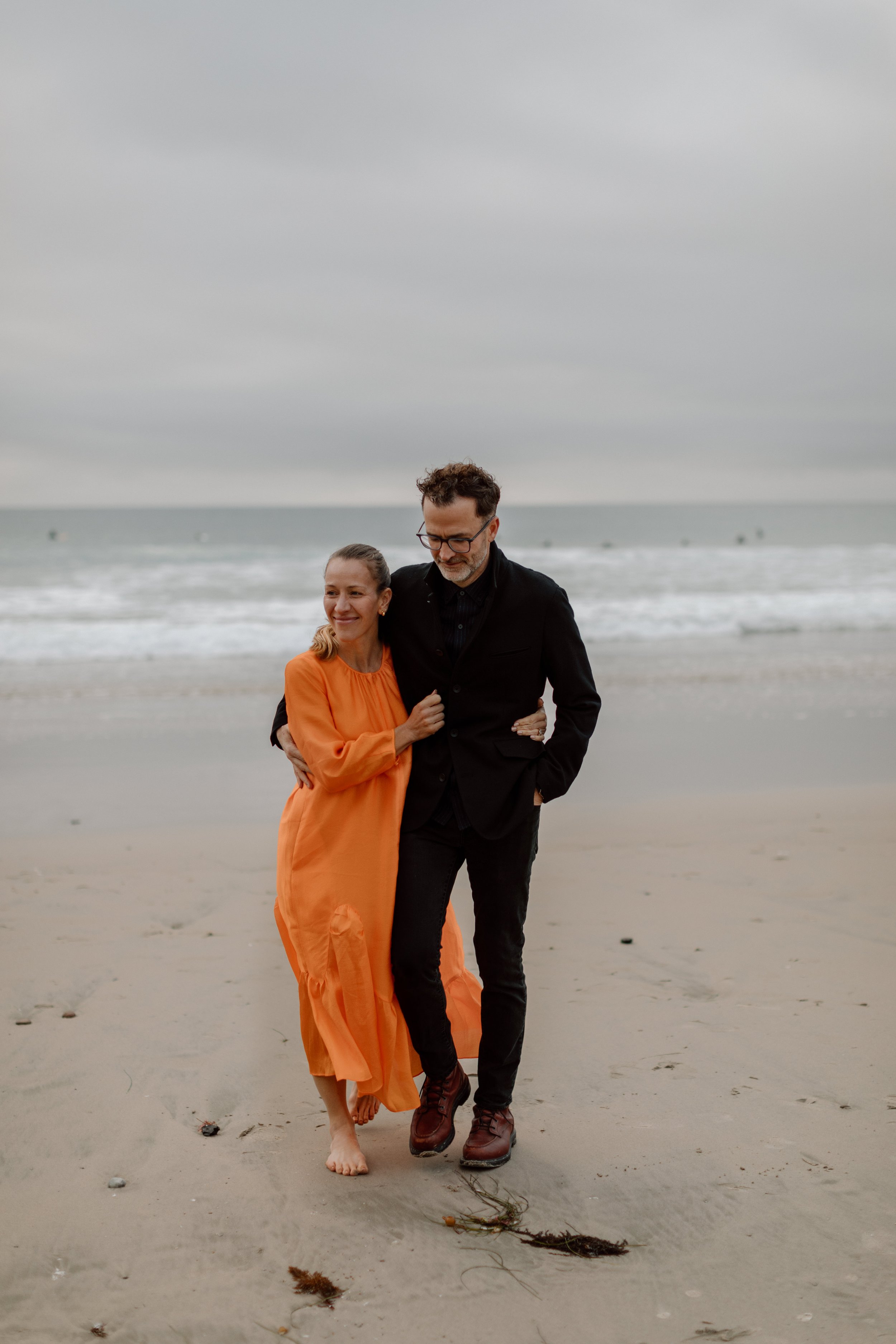

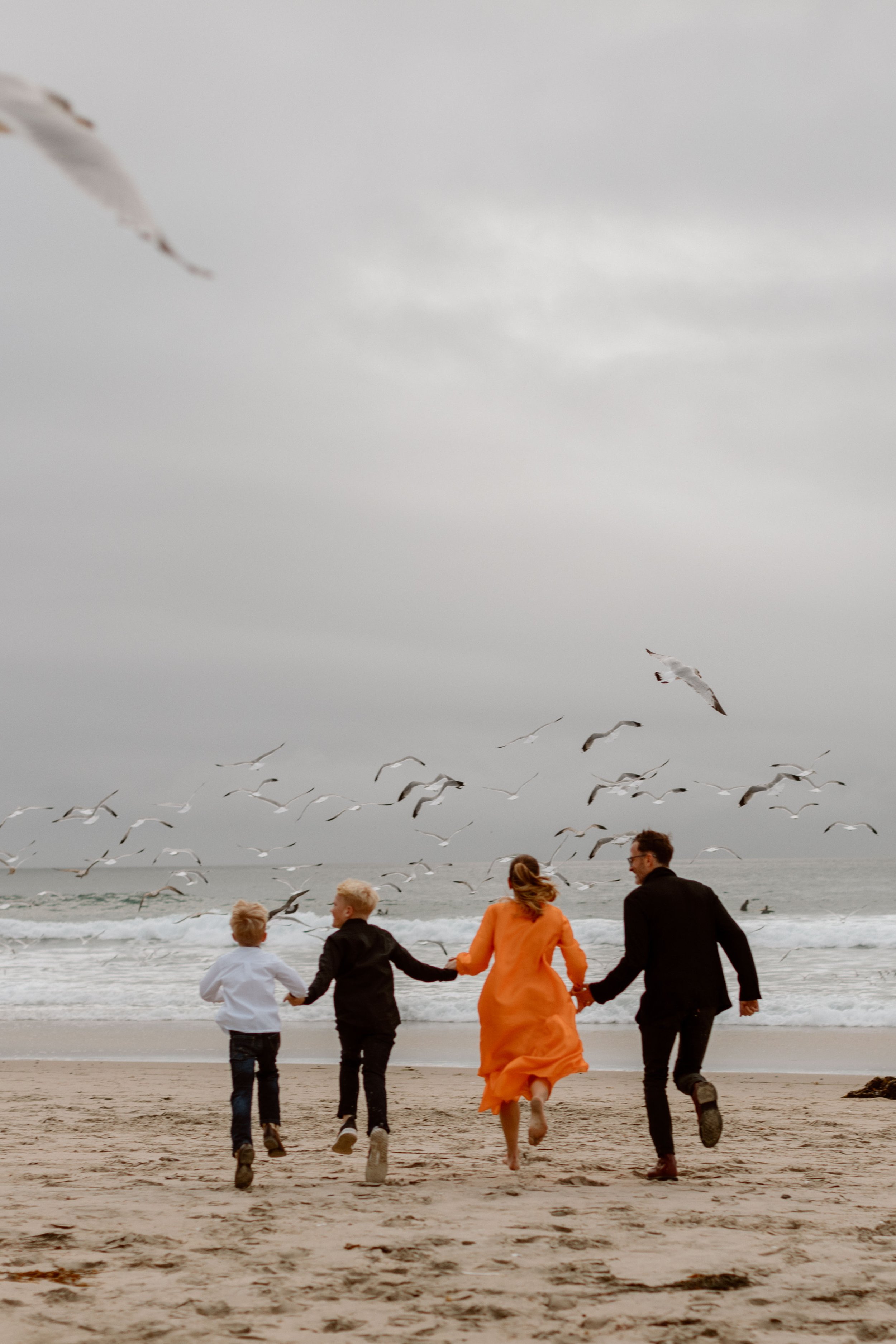
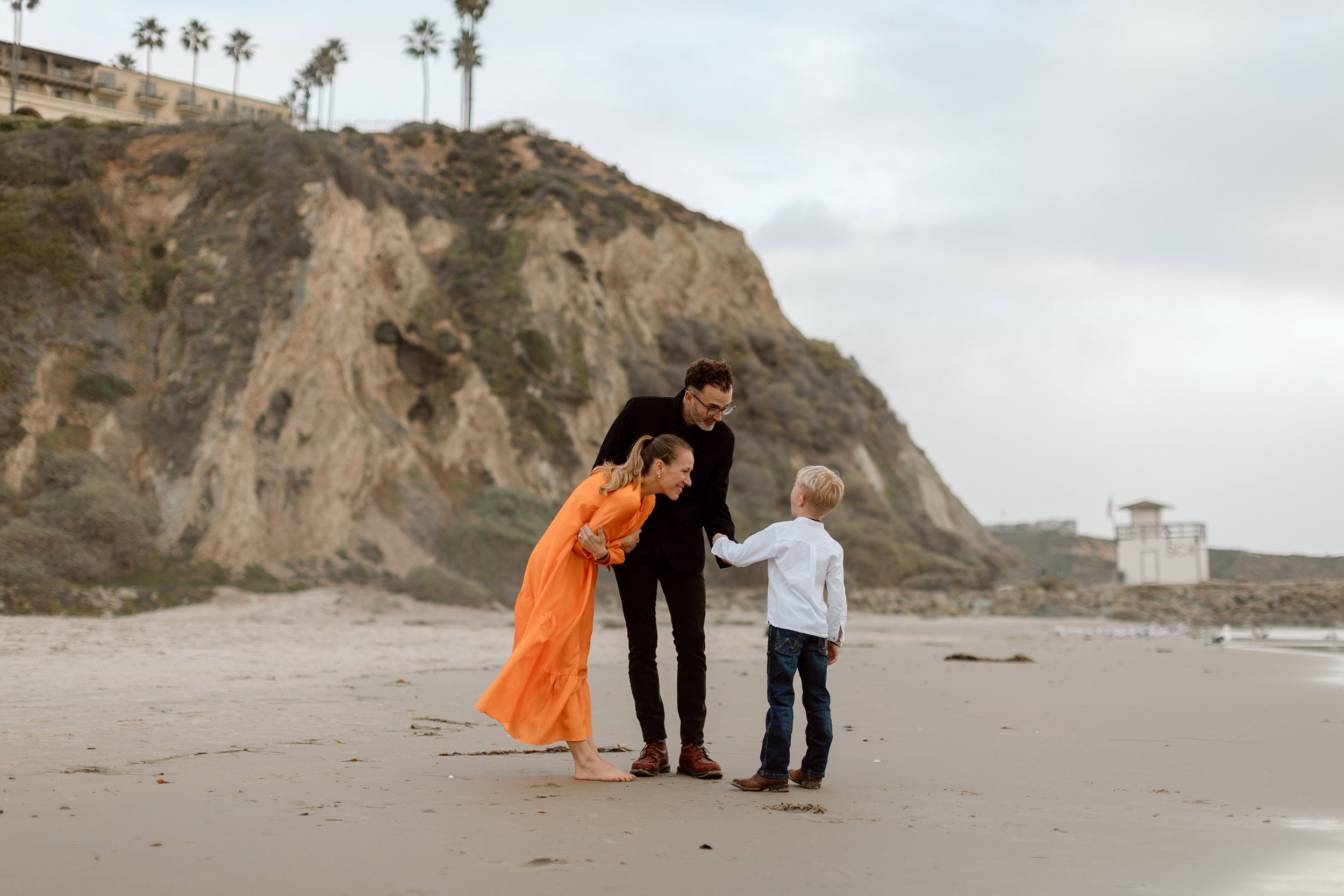
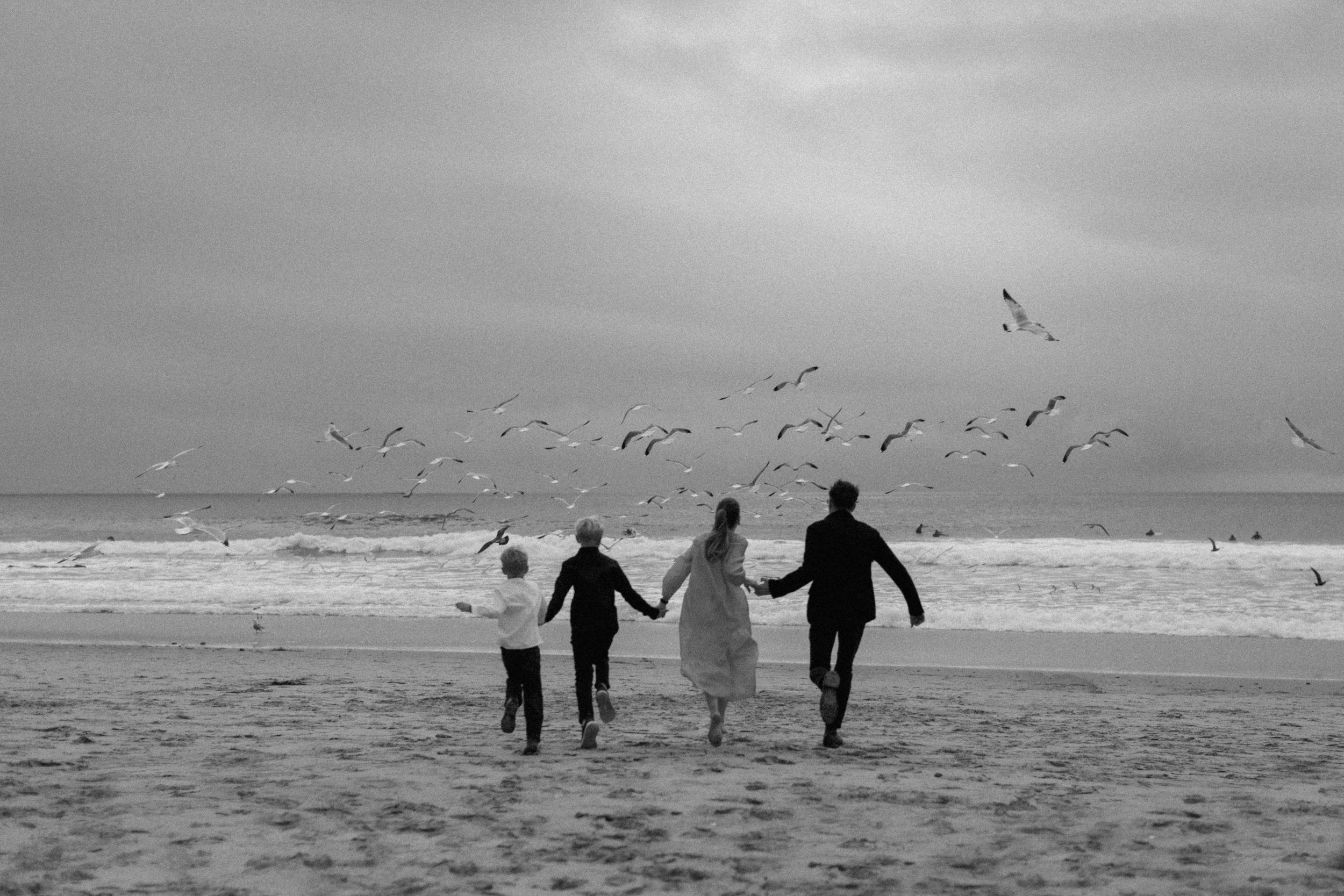



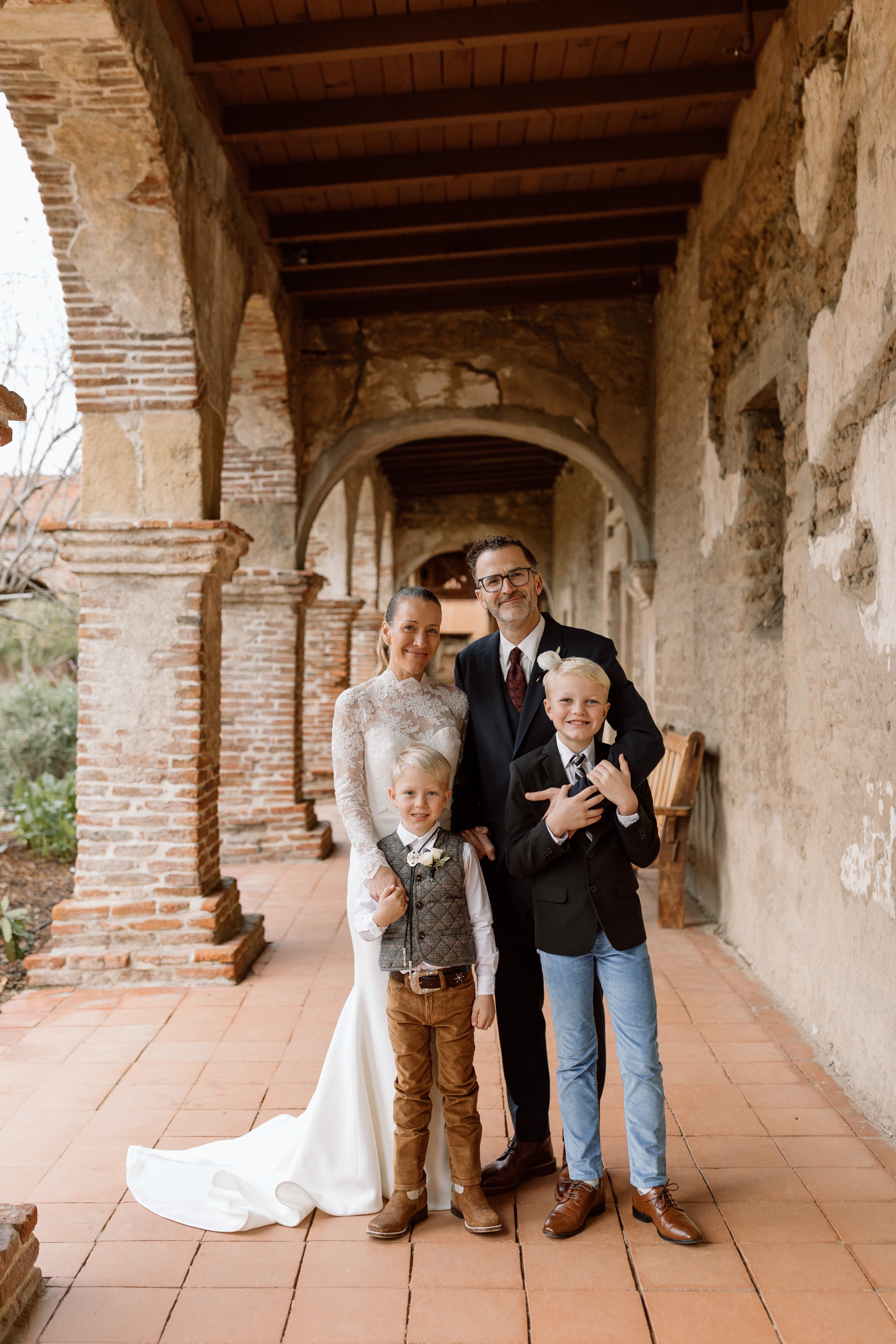
Our Wedding

December 29, 2022
Angela & Bobby George
San Juan Capistrano, California
Angela and I were married in a magical little ceremony, accompanied by family, at the Inn at the Mission, San Juan Capistrano, California.




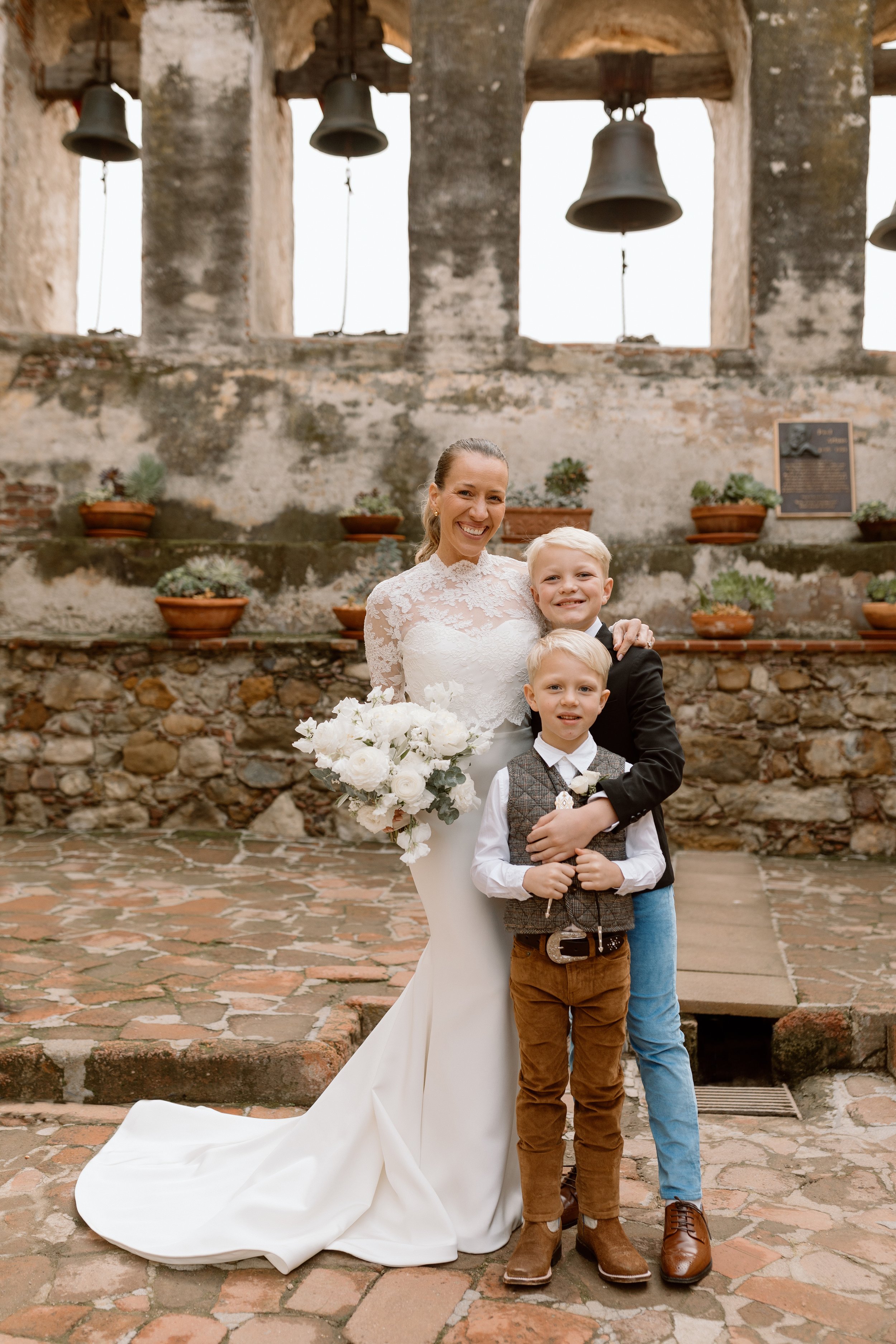

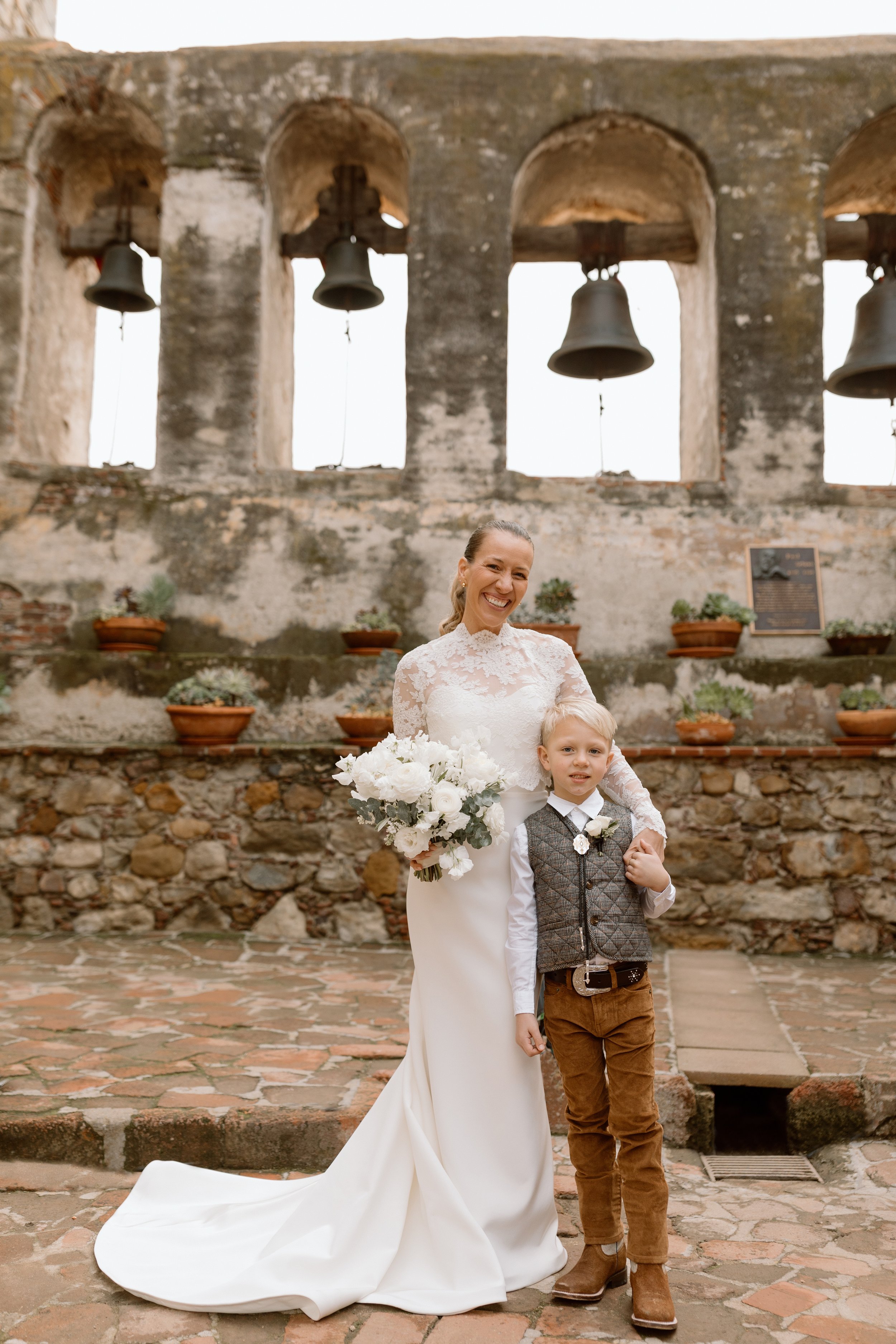





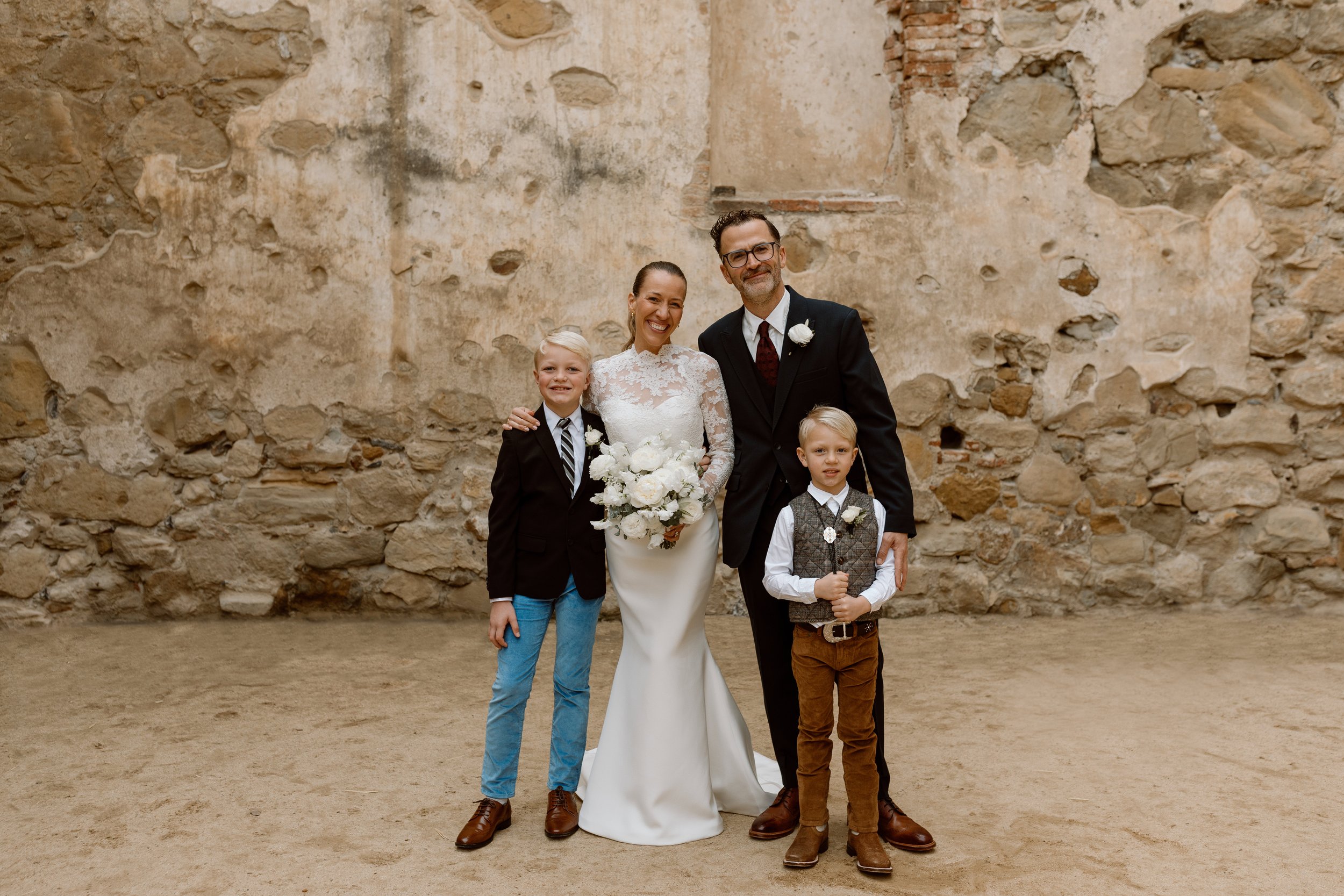













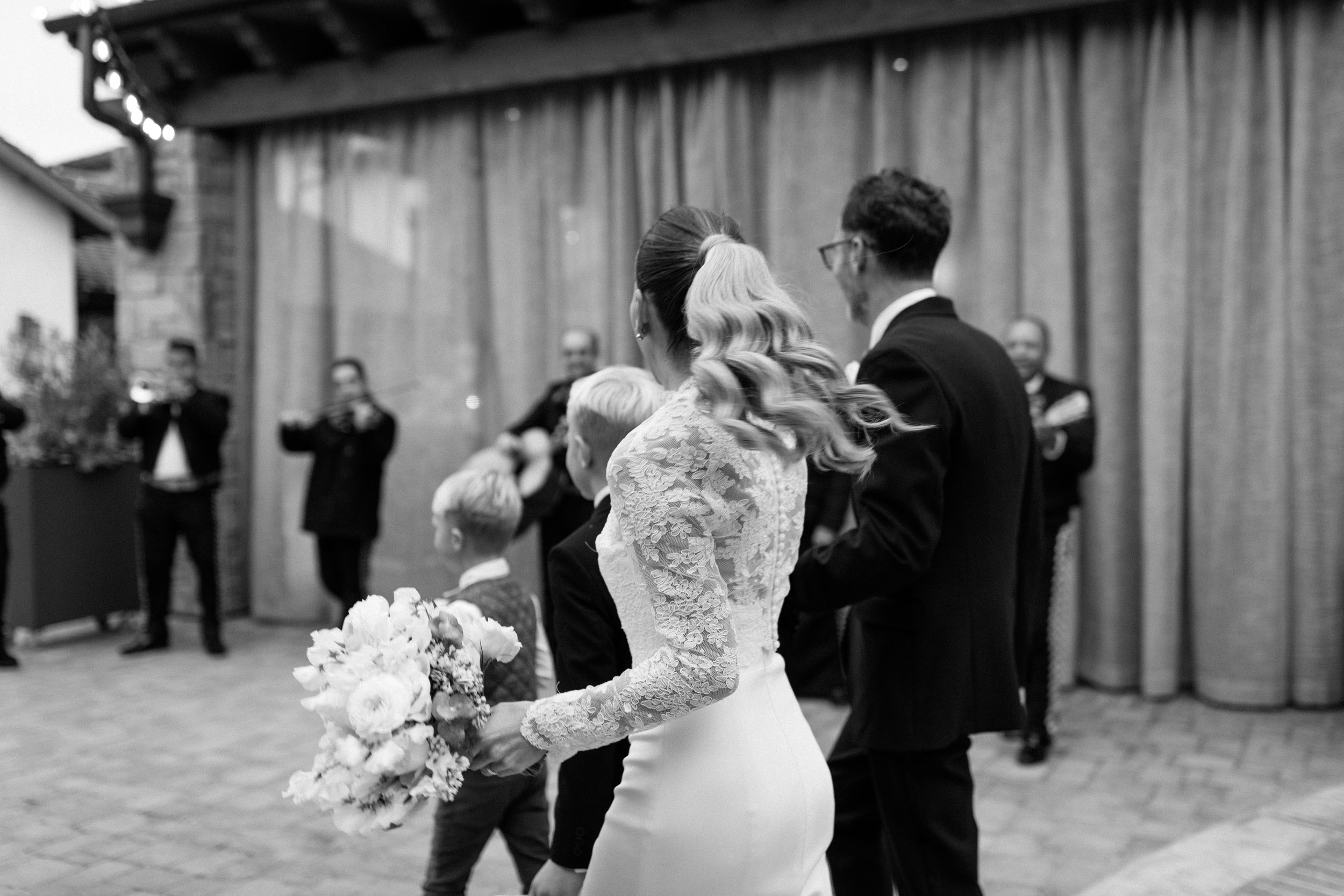







“There may be more beautiful times, but this one is ours.”
- Jean-Paul Sartre




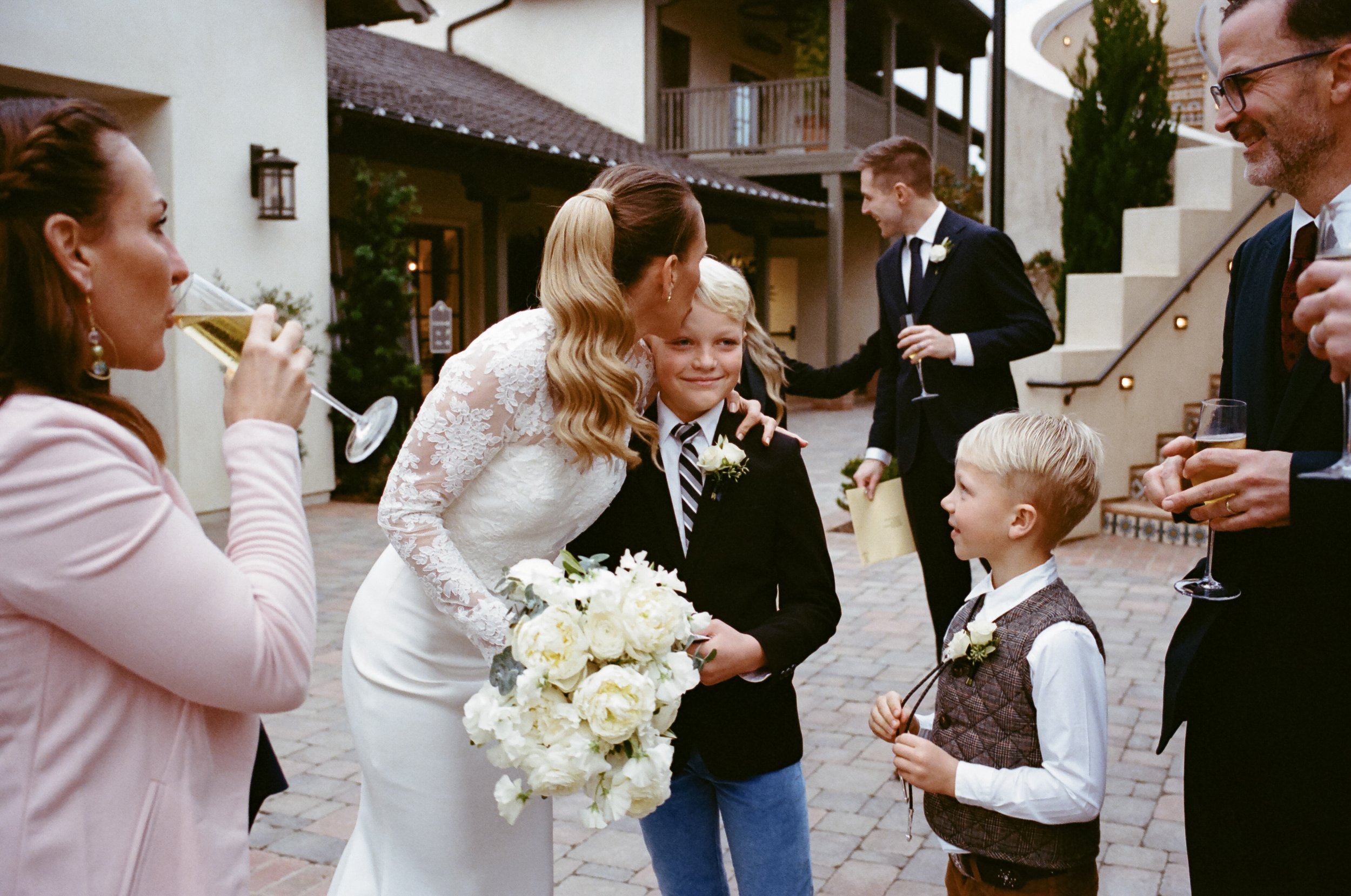
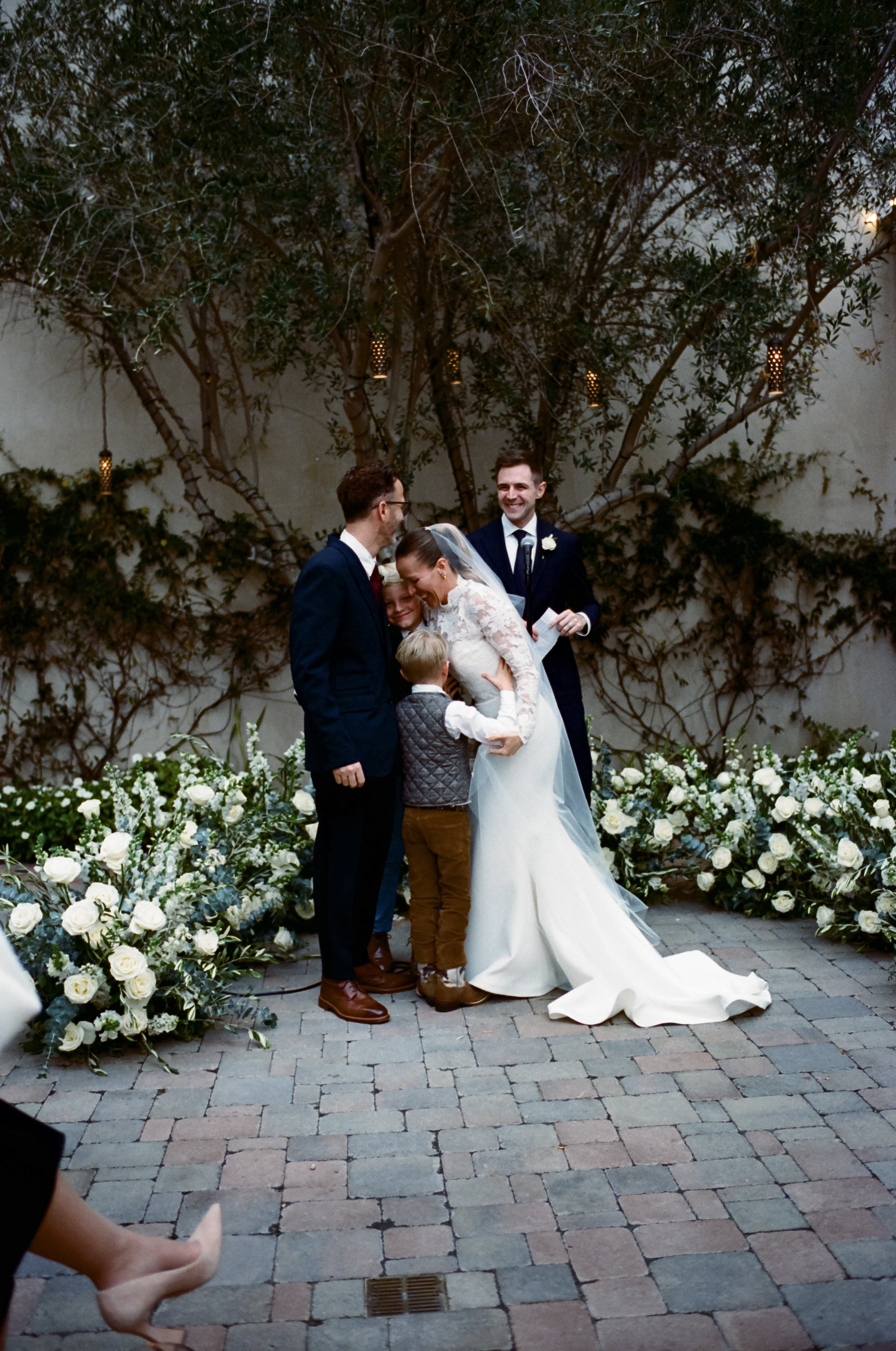

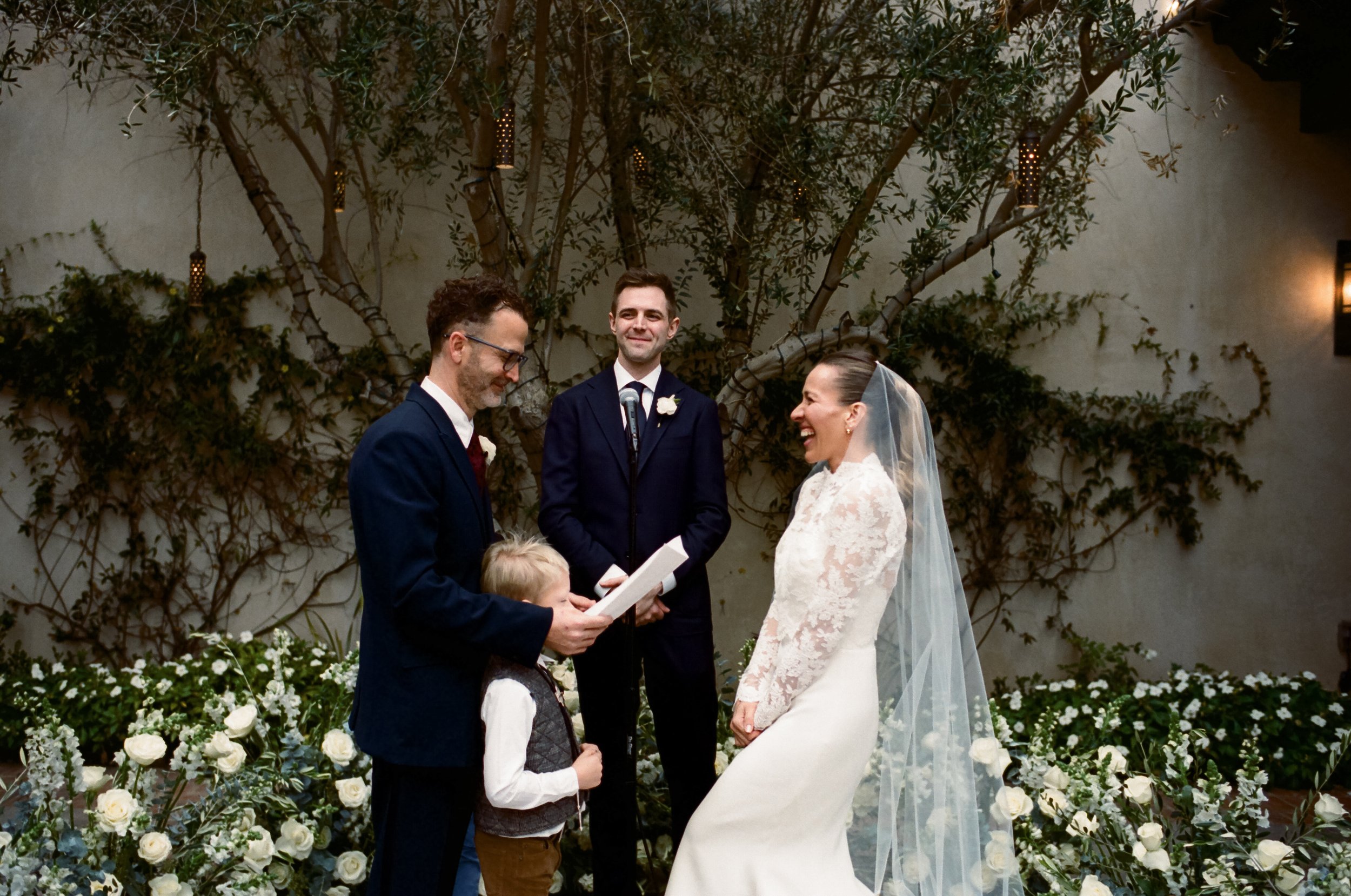
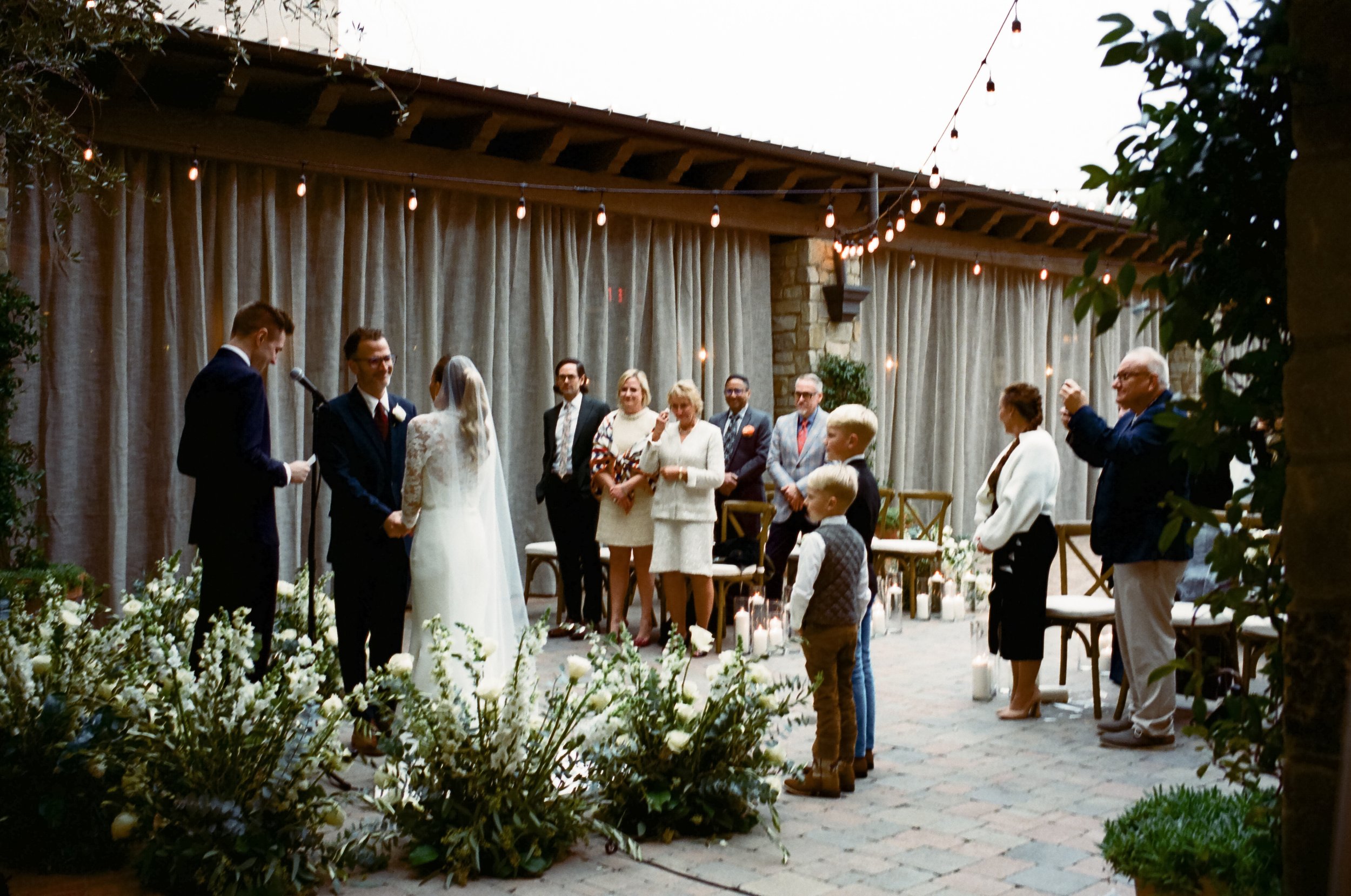
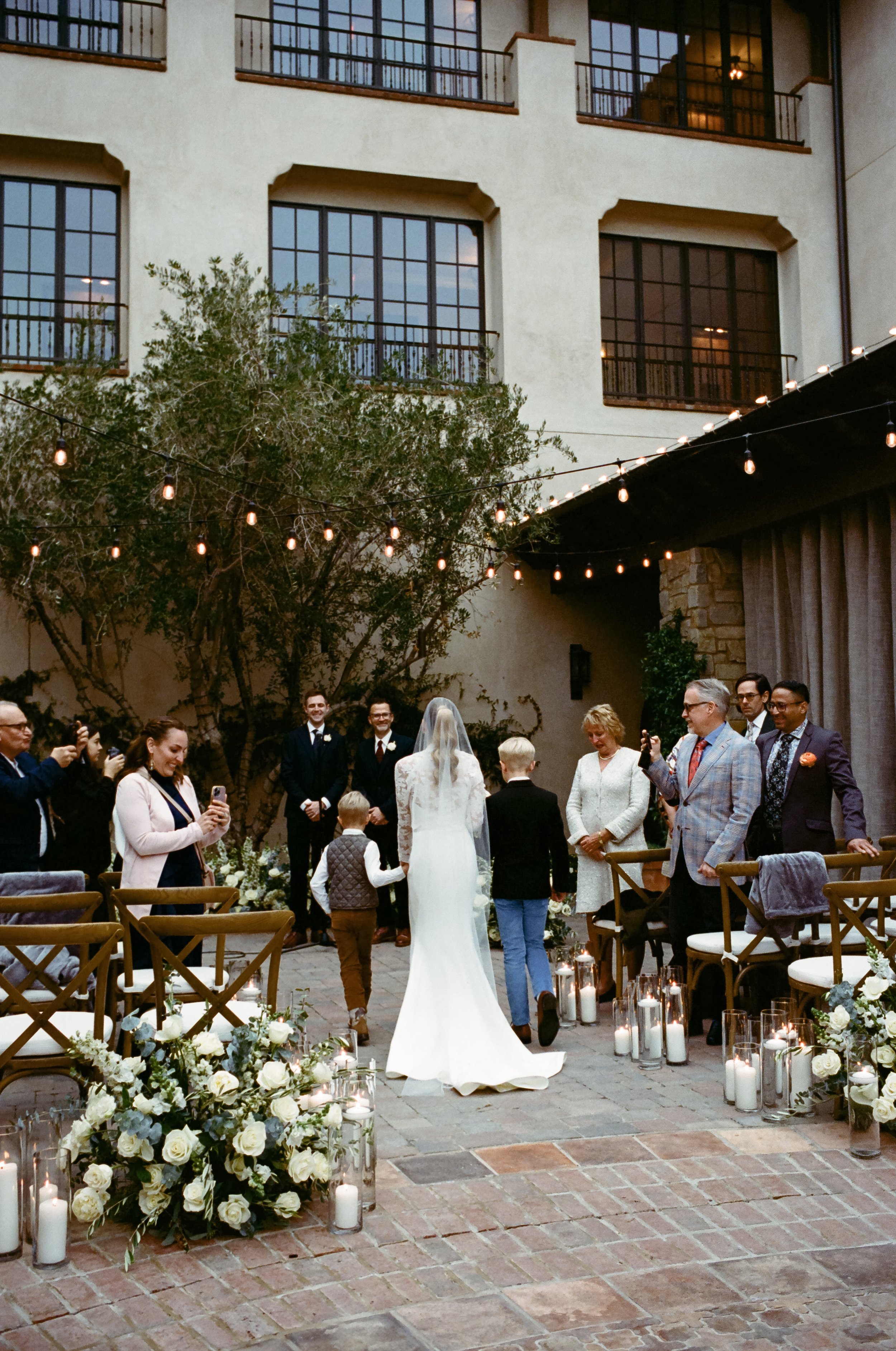

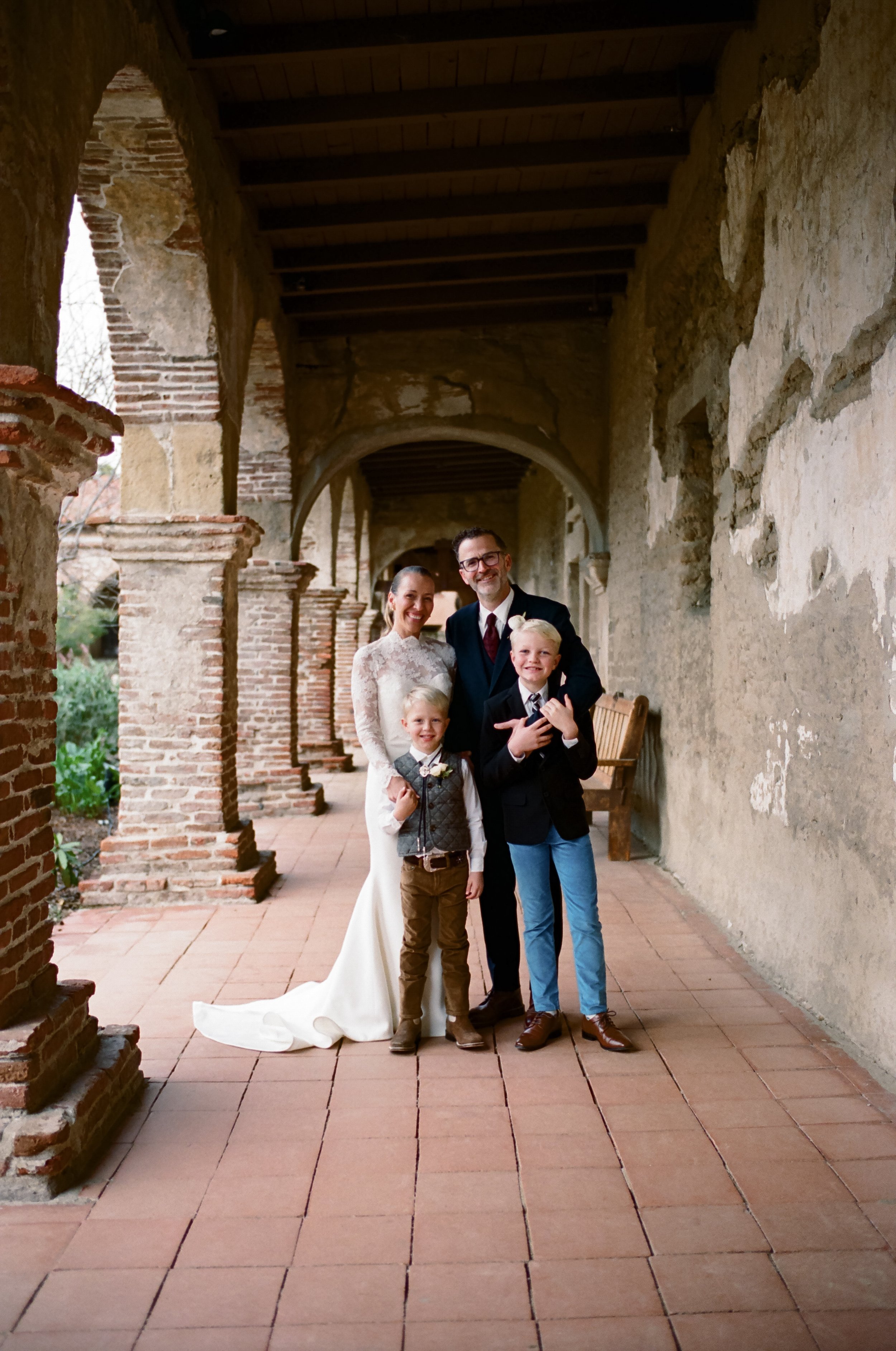
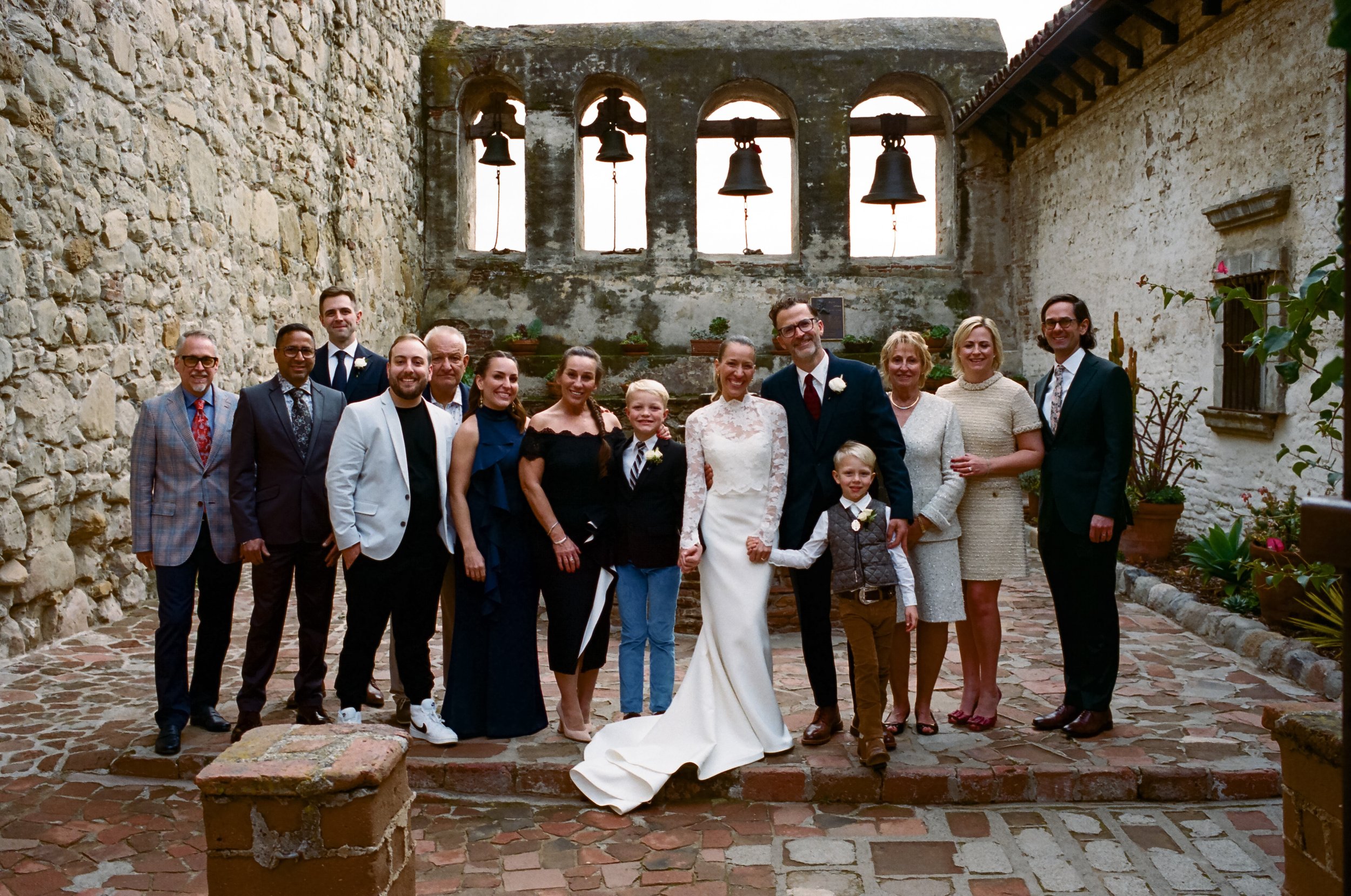


A special thanks to our two remarkable photographers.

November 25, 2021
We were engaged on the High Line in New York City on a Thursday.
New York City is the place of dreams, where people all over the world come to start their lives unabashedly anew. There is so much brazenness, honesty and conviction on every busy corner.
An old railroad track that once traversed the city and was set for demolition became an inspiration to transform unused space into something new. When Bobby stopped to change cameras around West Chelsea, he got down on one knee and we did the same thing.
Together, we started something new.

“Toi et moi”: The merging of two families.
In the spirit of Napoleon, who presented his bride-to-be with a “you and me” ring, we designed a special piece to symbolize two families, with separate and honored histories, coming together, as one, to invent a life together.

I’m Joining Microsoft

New decade, fresh start, same focus: I'm joining Microsoft.
I'll be working alongside the incredible team at Flipgrid, based out of Minneapolis.
I've always been deeply inspired by the Flipgrid community. It’s something special.
I'll be actively involved in design, product and community, collaborating with students, teachers and educators, working to empower every voice.
I'm extremely humbled by the opportunity. 🤗

Gordon Bearn
Photo by Bobby George. Kodak Portra 400 + Leica M2
After nearly twenty years away, I returned to Bethlehem, Pennsylvania, where I attended school at Lehigh University.
Going back was cathartic. It was a Proustian experience. Everything was more diminutive than I remembered. The campus was smaller, even though the trees were larger. In this experience, the twists and turns down memory lane, memories expanded in the most rich and unexpected of ways. Layers upon layers unfolded.
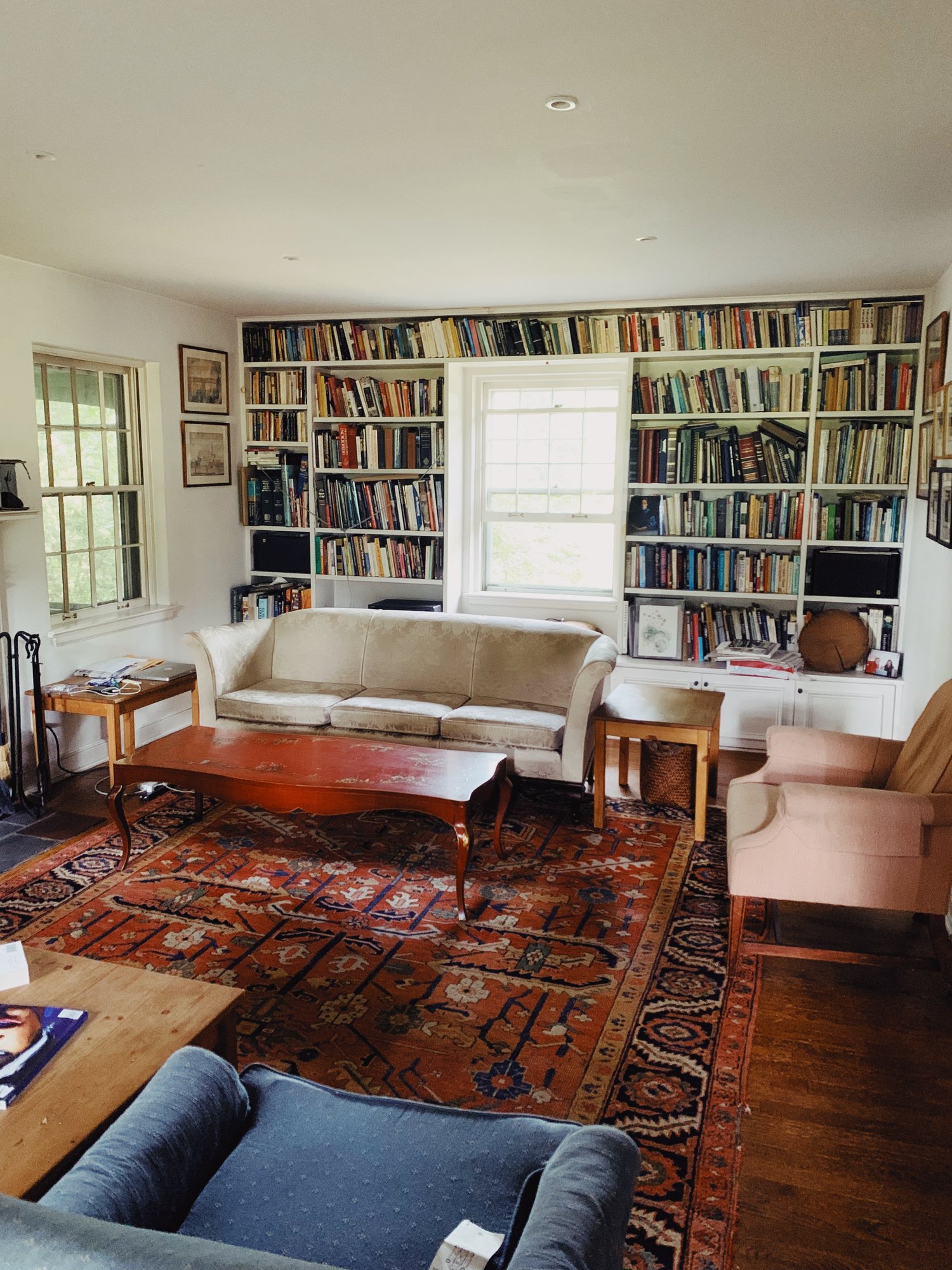
I returned, after all these years, to visit Gordon Bearn and his beautiful wife, Ellen. We had brunch and dinner and oh so many conversations and we walked along the Monocacy Creek, stopping at gardens and bends, following the railroad tracks.

Professor Bearn introduced me to philosophy, showcasing what it means to think and learn. In our time together, we explored so many thinkers: from Wittgenstein and Nietzsche to Klee and Deleuze. More than anything, he demonstrated the philosophical way of life: modesty, humility and humor, compassion and a passion for life.

What a beautiful man.
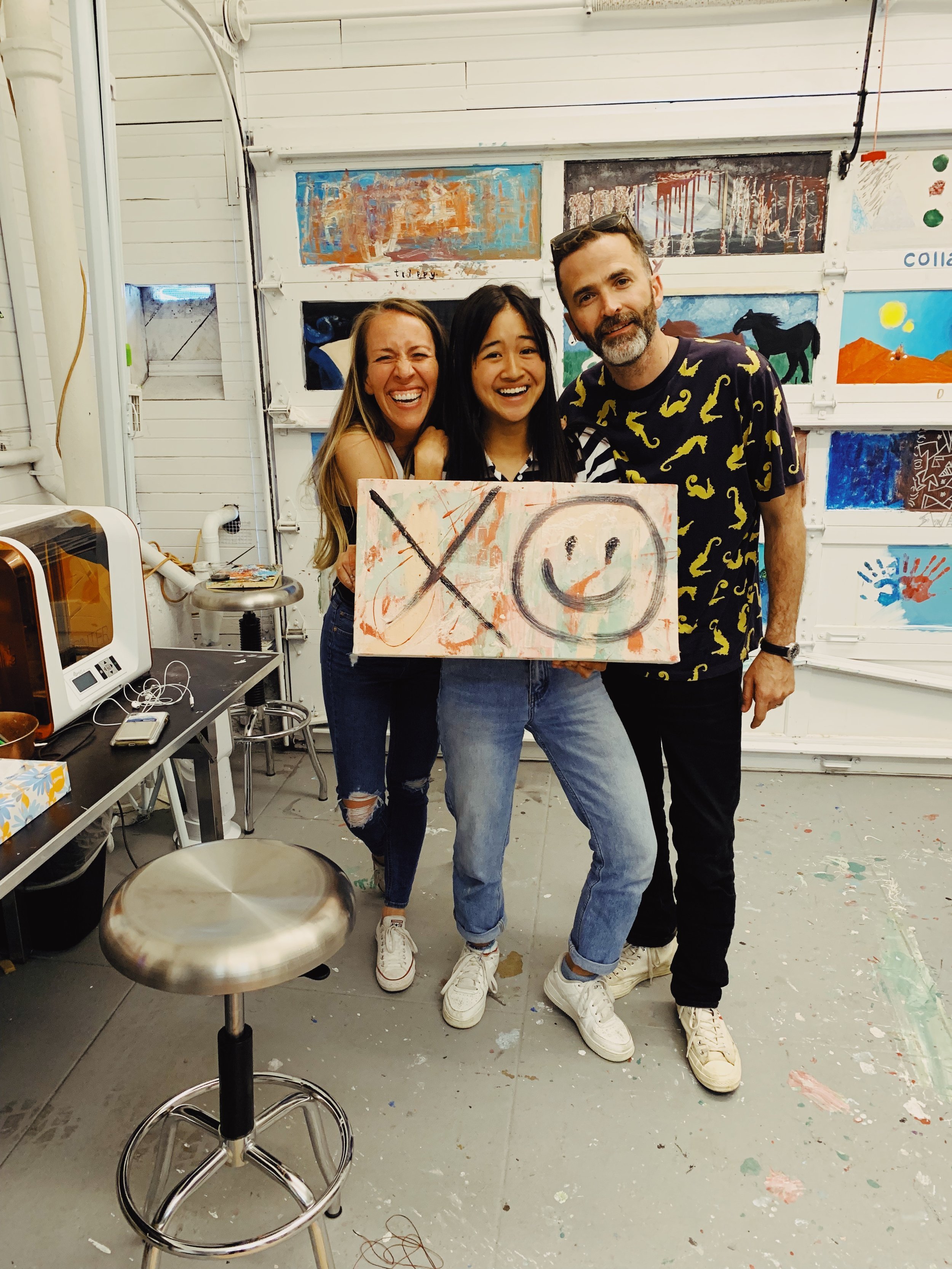
Dancing with Students
While shooting a brand film at the Academy of Thought and Industry, one of the students, Mica Manotoc, described painting as "entering into a dance". We were instantly captivated by her wherewithal and sensibilities. We wanted to learn more.

Her mind clears, she said, and everything slows down and makes sense. She talked about Pollock, and how he liberated her from the easel, freeing her to see the world differently. Of course, we asked if we could watch her work!
Moments later, we’re heading into the studio, and as any collaborative artist, she prompted us to select a color palette. Carefully choosing the paint, we helped her lay them out. Then, the magic started. We witnessed her "dance".

When she was finished, which she described as "just knowing when it's done", she handed the brush to us, asking us to leave our mark. The first thing that came to our minds was an x and an o with a smiley face.

She loved it! Almost as much as we loved her.
Upon leaving, she handed us the painting as a token of her appreciation, inscribing her gratitude on the back. 😍

I had to turn it into a logo. It's my new favorite thing!

A Son’s Love for His Father

My father would have turned seventy this year. He passed away when he was only fifty six. His untimely death seemed so unjust, the type of injustice that is deeply felt but never fully understood. All these years later, on the anniversary of his death, I wanted to share a few thoughts.
Losing someone isn't easy. Learning how to deal with it is even harder. Grief never leaves you. You may overcome it for a moment or learn how to incorporate it into your life, but it never truly leaves.
Sometimes grief appears in silence. It builds up through the day, or month or year. Other times it shows itself in sudden and unexpected outbursts of joy or sadness. Maybe a song comes on the radio or a memory comes rushing in. There's no sidestepping these moments.
We all have our own expressions of grief and we invent corresponding mechanisms to cope. We struggled then, in the moment of his death and in the immediate aftermath. We struggle today, but in very different ways. We've learned to articulate our emotions.
But, we've never forgotten.
I have a heartfelt appreciation for the time my father and I spent together and all the gifts I continue to realize he afforded.
I simply cannot imagine my father as an older man. He was so full of life - a seemingly inextinguishable vitality.
If he were alive today, would he need help walking or remembering? Would he still be working? Would he take more time to fish and do the things that he loved? Actually, I wonder if he'd still be alive. Or, if something else would have taken him instead.
I'm reminded of Rimbaud, and his venerable lines,
"A thousand Dreams within me softly burn:
From time to time my heart is like some oak
Whose blood runs golden where a branch is torn."
Growing up in Oak Grove, Alabama my father earned the nickname "oak", presumably for his steady resolve and because he never forgot his roots. He always knew where he came from and he always knew where he was going. We just didn't think it would be to his grave. Not then. Maybe not ever.
The flame of my father's life runs through our veins.
I see him in my sister. In her gestures and actions, in her indefatigable sense of purpose. It's as clear as day.
My wife tells me she sees my father in my wrinkles and in my smile and the way I fold my arm across the table as I eat. When old photos surface of my father as a younger man, my wife is captivated by the resemblance.
I imagine my father's life before me. I remember the life that we shared.
I also see him in my dreams, vivid, intoxicating dreams. The type of dreams where memories intermix with times unknown. Betwixt, you awake, alarmed and unsteady. You smile and look around the room. Is he still alive or was that just a dream?
A branch was torn from our life the day he passed away, but our dreams still burn, cascading golden rays of hope and promise. I'd like to think he saw these dreams kindle. Actually, I know he did. He was the one who ignited so many of them.
My memories of him are as alive today as they ever were. It's not so much that the grief has subsided.` We've learned how to accept it and found ways to express ourselves in healthy and productive ways. We've taken stock of its importance.
Sometimes we are overwhelmed. Sometimes we are at peace. We're conflicted in our emotions. We take comfort in affirming fate and acknowledging the splendors of life. Yet, taking a step back, we also recognize the pain.
I often wonder what I'd say to him now, after all of these years. More than anything, I think I'd just like to sit in the same room and feel his presence once again.
The bond between a father and son is often unspoken. The way we showed our affection was through a handshake, or a reassuring smile, always with a profound sense of mutual respect.
My favorite memories are actually rather simple: playing catch when he returned home from work, hoping to get one more throw in before the sun set or mom called us to dinner; or, riding quietly in the car as we headed out on a fishing trip, watching the sun chase us in the rear view mirror as we sped across a hazy morning sky, inching ever closer to our destination.
It struck me only the other day. My father came from nothing. He gave us everything. I know he'd be proud of our family. The strength we have mustered despite the pain we've endured. He'd be particularly proud of my mother and the way she has united the family in her thoughtful embrace.
My father never would have wanted any of us to suffer, to feel his loss. He'd simply wish that we went on, with our heads up and the wind at our back, reassured that everything was going to be okay.
Everything is okay, dad. But, we miss you just the same.