
Journal—
Musings & Observations
I’ve written for The Atlantic, Huffington Post, Forbes, Warwick and my mom.
You can also see the Magazine view.

How I Discovered Arakawa and Gins

Image of St.Kitts.
Note: I completed a PhD in Philosophy at the University of London on the work of Madeline Gins and Arakawa. Supervisor: Howard Cagyill.
On the island of St. Kitts, the gentleness of the Caribbean is always met with the restlessness and violence of the Atlantic. It is a strange and tense mixture, divided only by a small parcel of land.
Originally discovered by Christopher Columbus in 1493, who sailed by the island on his second expedition to the New World, the island has a rich and arduous history, peppered with unfortunate and extreme British and French colonialism. The once prosperous and deadly sugar plantations, that at one time made St. Kitts the richest colony in the entire British Empire, are but mere relics of a more imperial and inhabited history.
Whilst the precise paternal ancestry of Thomas Jefferson is unknown, it is believed that he is directly descended from the Jefferson family that resided on St. Kitts, as is the First Lady of the United States, Edith Roosevelt. On the north and east side of the island, you feel the disquiet and abandon of the Atlantic, and on the south and west side, you feel the tranquility and calmness of the Caribbean. In either case, you always feel as if you are on the cusp of a great adventure, or perhaps a majestic and unpleasant disaster.
We were staying on the windward side of St. Kitts, with views of the emerald green Atlantic, only sixteen hundred miles to New York and four thousand miles from London. After a week of relaxation, we had started to prepare, at least in our minds, to return home, to our jobs, to our studies, to our routines. Only one more night, and then it was back to our individual lives, our own friends, our own passions, our own modes of existence. But at that time, we were together, sharing in the same experiences, the same pleasures and the same frustrations. It seems that habits are never more rote than when witnessed by family members.
Each one of us was nourished, replenished, and rejuvenated in a different way; some by the sea and others by the sand, or the pool, or the casino. Two thousand six hundred and seventy nine miles to home, to Sioux Falls, South Dakota, seemed extremely far away, but at the time, it didn’t really matter. We were contented and we were together.
That night, as we traveled steeply up the winding and hilly terrain to procure a safe view of Frigate Bay, once the site of a sulfurous and deadly maritime battle between the French and British naval fleets, we could also see the palpable lights of the stars, both distinct and ubiquitous, oddly reminiscent of our experiences with the Northern Lights in Lac Seul, Canada, not so many years before. These fixed and luminous points are more than just nautical treasures, they are sparkles of inspiration, as if lost diamonds from sea wrecked ships were suddenly discovered in the skies, rather than in the depths of the dark and wondrous sea. Pirates, no more than merchants, slaves and wealthy land owners, haunt the seabeds, just as they do the now despoiled land. The higher we ascended, the more inclined we were to try to touch the stars, as if they could illuminate our troubles, our visions and whatever else it was that we needed to see. For whatever reason, vacations always elicit unbridled, if not warranted, sensations.
We had just sat down for a West Indian Cuisine at a local restaurant called Marshall’s, an island favorite, known both for the exquisite fresh seafood, but also for the poolside ambiance, which overlooks ‘The Narrows’ and neighboring Nevis, when we entered into a discussion of Nietzsche’s famous eternal return of the same. Our family has never been a heady, intellectual family, more of a reasoned, practical and matter of fact sort of family. But, on this particular night, we were all really quite lucid in our considerations of the promises and consequences of Nietzsche’s magnificent aphorism, ‘The heaviest weight’, as cited in The Gay Science (2001: 194). While it was merely paraphrased that glowing night, recited from a certain scholastic, academic memory, it is worth quoting in full, here:
“What if some day or night a demon were to steal into your loneliest loneliness and say to you: ‘This life as you now live it and have lived it you will have to live once again and innumerable times again; and there will be nothing new in it, but every pain and every joy and every thought and sigh and everything unspeakably small or great in your life must return to you, all in the same succession and sequence - even this spider and this moonlight between the trees, and even this moment and I myself. The eternal hourglass of existence is turned over again and again, and you with it, speck of dust!’ Would you not throw yourself down and gnash your teeth and curse the demon who spoke thus? Or have you once experienced a tremendous moment when you would have answered him: ‘you are a god, and never have I heard anything more divine.’ If this thought gained power over you, as you are it would transform and possibly crush you; the question in each and ever thing, ‘Do you want this again and innumerable times again?’ would like on your actions as the heaviest weight! Or how well disposed would you have to become to ourself and to life to long for nothing more fervently than for this ultimate eternal confirmation and seal?”
It was a balmy, tropical night. The air was dense but buoyant, clear enough to smell the salty ocean, ushered in by curious and seemingly exotic currents of wind. Mixtures are always far more mysterious. And, on Caribbean islands the smell of rum is never very far away. It was one of those nights, as Nietzsche describes, in which spiders could be seen spreading their silky webs in the moonlight, cast almost imperceptibly between the trees. On any other night we probably would have missed it. But there was something propitious in the air. We were very nearly ready to see Zarathustra climb down from the ‘Sleeping Giant’ of St. Kitts, Mt. Liamuiga. No one remembers the van ride over, only the fender bender the day before; no one remembers if it was the hotel concierge that recommended the restaurant, only that it was supposed to be good; and, just as interesting, no one remembers how the conversation on the eternal return started, only the conversation that subsequently ensued. Unlike dreams, memories are more scattered and less secret, more painful, but also infinitely more vicious. Life has a particular way of interpreting dreams. From time to time, it also transforms memories.
Our family is, and has always been, tremendously open and conversant, especially when it comes to contentious issues, delicate topics, and those seemingly intractable problems that require careful and measured responses: abortions, presidents and relationships, no less than emotions, anxieties and fears. This passionate and hopeful discussion of the eternal return was no exception, but there was something unique about the tone and the confidence exuded that night, a superiority, a vitality, an abundance of health. Nietzsche, no doubt, would have described it as noble, as free and light. There was almost a gentle reassurance in the conversations, that in the end, everything would be different, as Deleuze says of the eternal return, but everything would also be alright, precisely because there was always courage and always affirmation in the choices and decisions made and executed, even in the betrayals.
And by betrayals we mean, justice was always carried out, as long as it was the right thing to do. But sometimes the justice of time seems extremely unjust and just as unfair, as we will soon see.
We could all sense the ominous nature of our responses, however full of affirmation and joy and the compensations of the future. One by one, each of us had our turn. Around the table we went, as we expressed our beliefs, in nature, or forces, or heaven, and then formulated our respective arguments. Once more, no one remembers the specifics of our exchanges, of who said this or that, that is, until we reached our father, a larger than life character: generous, assiduous and humble, but also full of great pride and laughter. The sort of laughter that radiates through your being, making you feel intoxicated and warm, as if you’ve just been infected by a virus. As Alphonso Lingis notes, in Body Transformations (2005: 91), “Laughter is freedom. We laugh with everything new born that has not yet been harnessed to tasks.”
After carefully considering each of our sides, as he usually did, he simply said, leaning back in his chair, making himself more comfortable, “If I die tomorrow, I will have lived a wonderful life.” Probably everyone has heard this exact statement uttered a thousand times, but not everyone has seen it truly lived. It is quite rare, if not something to perpetually aspire towards. Despite the cultural productions of such exclamations, often such exclamations exceed the cultural productions. There were no deep sighs, or contradictory gestures, or trite remarks that night. Only postures of life, of truth, and of love. Was this not precisely Nietzsche’s point? The ultimate Nietzschean affirmation? To become equal to the weight of the eternal return is to display great strength and fortitude, to overcome what it means to be human, to willingly accept and attempt to incorporate the infinite force of time into your finite and mortal structure. Not only when ‘demons steal into your loneliest loneliness’, but when you are at the grocery store and the lettuce doesn’t seem to be very fresh, or when you just changed the flat tire last week and it is flat again, or further still, when you discover that your eight year old son has leukemia.
Perhaps we have seen this expression in the contempt of death, or in our encounters with the thought of death, but we have all seen it, and probably uttered it, as well. Sometimes we say it for the justification of an unworthy existence, or for the consolation of a loved one we are about to lose, or maybe even because we made an inconsiderate and foolish decision. Very rarely do we utter these fateful words because we truly believe it. Amor Fati. “My formula for greatness in a human being is amor fati: that one wants nothing to be other than it is, not in the future, not in the past, not in all eternity.” (1979: 37) We always feel as if one more breath can accomplish one more task, however meaningful, or meaningless. Destiny, in this sense, has always taken on a special resonance. Nietzsche alters destiny and not just as a concept. “Only after me will there be a grand politics on earth.” (1979: 97) Our reactions to our father’s declaration were very different, but each of us was attentive to the magnitude of the implications, and ultimately, the idea of the death of our father. We couldn’t quite incorporate the thought, even with the truth we knew.
One of us remained silent, almost stoic but jokingly dismissive of the idea. Another one of us suddenly burst into tears. Lastly, one of us remained inquisitive and naive, playing along with the thought of the eternal return of the same, if only to keep the conversation headed in another direction. Each of us, however, was complicit in the thought: the event of our father’s death. Abruptly, it was interjected, rather insouciantly but also curiously, “But, don’t you want to see Japan, or the rest of south east Asia? Or what about Africa? These are the two most populous continents in the entire world and we haven’t even stepped foot on them. At least, not yet.” Solemnly, and with that deep, cheerful sincerity in his eyes, he responded quickly, “When I was a boy, growing up in Alabama, I never thought I’d even see West of the Mississippi.”
He always had a way of putting things in beautiful perspective, and this precipitated the second part of our conversation on the eternal return, the thought of regret. Of sadness, and missed opportunities, of unpleasantness and unfortunateness, a feeling of contriteness, of decisions made, and moments lost. Promises, it is certain, are always much easier than regrets, especially when they address the future, and that which remains to come. Regret and ressentiment might be twin sisters, but they are wholly different concepts, as both Kierkegaard and Nietzsche knew. Whereas ressentiment is bound to an envy and hatred that cannot be acted upon, regret has more to do with missed opportunities, failed actions and disappointment upon inopportune circumstance. Whereas ressentiment can be defined as that which is not acted but felt, as presented in the case of Deleuze, regret too can be understood as a reactive force that prevails over active forces because action is escaped, but in a different register.
Nonetheless, as Deleuze reminds us, “Everything takes place between reactive forces: some prevent others from being acted, some destroy others.” (1983: 114) Both, however, can be treated as reactive forces, forces that can lead to self-abasement, destruction and existential despair. The eternal return of the same displaces ressentiment and highlights the promises and consequences of regret. The thought of regret, when confronted with the thought of the eternal return, can inform the active forces of existence, in a way that ressentiment can only lead to bad conscience. Ressentiment breeds a hostility to life, a sense of weakness and inferiority. As a matter of fact, etymologically, regret is more tied to death, to bewailing death, than ressentiment is, but you would never know it from the way ressentiment festers the mechanisms of death.
Our father said he had done everything that he had wanted to do, accomplished things he never thought he would have been able to accomplish, and that he had absolutely no regrets in the courses of action that he pursued. No shame. No embarrassment. He even went so far as to say, “If I had to do it all over again, I would not change a thing.” Our father had a philosophy of the will to power, of the will to life. Silence ensued as we measured his response. The eternal return, the thought of the eternal return, our conversation of the eternal return, was complete, at least for that night. Primarily, we had addressed the ethical component of the thought of the eternal return, “whatever you will, will it in such a way that you also will its eternal return”. (Deleuze 1983: 68)
Only later would we be consumed by the cosmological principles and interpretations of the eternal return. We headed down the lofty hill, towards the Atlantic Ocean. Emeralds seemed everywhere in abundance. Towards our sprawling beach front hotel we proceeded. There was a slight, awakening breeze in our face that night, a satisfaction and unease, tenterhooks.
The next day, our father died, suddenly and unexpectedly. It was our last day of vacation, the longest vacation our father had taken in over thirty years. He took a nap and simply did not wake up. The afternoon was sufficiently hot, and the local authorities insufficiently friendly. In retrospect, the details hardly matter; whether it was a heart attack or that the police callously and inconsiderately questioned us on the circumstances; what is important is the consolations to be found in our orientations towards life. Each of us had a different and unique perspective, a singular way of responding to this event, whether it was effective or not. The traumatic nature of death, in any encounter with death, is always violent. There is a violence that upsets the temporality of existence, if only momentarily. However hasty and hostile the interruption, it is only ever for a brief, inconsolable moment, despite our inclinations to think otherwise.
In Creative Evolution (2007: 3), Henri Bergson claims,
“Memory, as we have tried to prove, is not a faculty of putting away recollections in a drawer, or of inscribing them, in a register. There is no register, no drawer; there is not even, properly speaking, a faculty, for a faculty works intermittently, when it will or when it can, whilst the piling up of the past upon the past goes on without relaxation. In reality, the past is preserved by itself, automatically. It its entirety, probably, it follows us at every instant; all that we have felt, thought and willed from our earliest infancy is there, leaning over the present which is about to joining it, pressing against the portals of consciousness that would fain leave it outside. The cerebral mechanism is arranged just so as to drive back into the unconscious almost the whole of this past, and to admit beyond the threshold only that which can cast light on the present situation or further the action now being prepared - in short, only that which can give useful work.”
Memories are, more often than not, not the best modes of existence in which to deal with these thoughts and encounters with death, especially if they are personal and intimate. On one end of the spectrum, to witness death is to remember sickness, ailments, frailties, those brutal and troublesome memories of assassinations, executions, massacres and end of life terminal situations; on the other end of the spectrum, to witness death, is often to experience an abundance of life, a palpable and memorable robustness of animation and exuberance, a singularity suddenly extinguished. It is as if a once-in-a-lifetime comet flashed across the sky and you were one of the fortunate ones lucky enough to glimpse it, if but for a moment. Alphonso Lingis will name this, in The Community of Those Who Have Nothing in Common (1994), a pledge of life. Not the obedience to thought but the commitment to creating life differently, anew.
Of course, it takes courage, it requires great moxie to remember life, the vitality of a life, as it was lived. In this sense, perhaps it could be said that memories are contemporary, as Giorgio Agamben (2009: 46) so beautifully and poetically relates. “In the firmament that we observe at night, the stars shine brightly, surrounded by a thick darkness. Since the number of galaxies and luminous bodies in the universe is almost infinite, the darkness that we see in the sky is something that, according to scientists, demands an explanation. It is precisely the explanation that contemporary astrophysics gives for this darkness that I would now like to discuss. In an expanding universe, the most remote galaxies move away from us at a speed so great that their light is never able to reach us. What we perceive as the darkness of the heavens is this light that, though traveling towards us, cannot reach us, since the galaxies from which the light originates move away from us at a velocity greater than the speed of light. To perceive, in the darkness of the present, this light that strives to reach us but cannot - that is what it means to be contemporary. As such, contemporaries are rare. And for this reason, to be contemporary is, first and foremost, a question of courage, because it means being able not only to firmly fix your gaze on the darkness of the epoch, but also to perceive in this darkness a light that, while directed toward us, infinitely distances itself from us. In other words, it is like being on time for an appointment that one cannot but miss.”
Whilst Bergson’s philosophy is undoubtably a philosophy of life, centered on the principles of life, the problem of death doesn’t inform his philosophical enterprise in the way the meditation on death informs the philosophy of Plato, for instance. How does death affect the function of memory? In Bergson, there are no sustained, widely definitive and absolute meditations on the concept of death. Instead, the problem of death is addressed uniquely, positively and almost dismissively. In The Two Sources of Morality and Religion (1979: 165), for instance, Bergson claims that “Before any man can philosophize he must live.” There is no specific account of death. Or what posture one should adopt in a relationship to death. Dichotomies, however, are never very far away, and it is quite possible that death informs many of Bergson’s discussions, as the other side to his investigations. Nevertheless, his commentaries are very careful and measured, almost tentative in their declarations, and always focused on questions of life.
That is, Bergson does not want to underscore the role that death plays on life, but to attribute life to the more creative powers, to the forces of life, than to the encounter with the thought of death. Philosophy itself is defined as a way to think life beyond the human condition, not just in terms of the survival of life, but also the survival of the individual. (Bergson 2007: 120) “We are seeking only the precise meaning that our consciousness gives to this word “exist”, and we find that, for a conscious being, to exist is to change, to change is to mature, to mature is to go no creating oneself endlessly. Should the same be said of existence in general?” (2007: 5)
In a continuation of his discussion on the role memory plays, prior to the meaning consciousness exerts on existence, Bergson states, almost in direct conversation with the thought of the eternal return, that, “We could not live over again a single moment, for we should have to begin by effacing the memory of all that had followed. Even could we erase this memory from our intellect, we could not from our will.” (2007: 4) Memories remain subject to our will. They cannot be so easily removed and erased, however temporarily, as in the case of our intellect, especially as concerns death. Death often forces our intellect to help us forgot, so as to survive. Our will, however, forces our memories to stay alive. The will of our father, the will of the memory of our father, the will of the earth, is everywhere sensed. The memory of our father remains, in our gestures, in our voices, in our decisions, in our open hearts, hearts unburdened and alive. As Deleuze asks (1983: 79), “A will of the Earth, what would a will capable of affirming the Earth be like? What does it want, this will without which the Earth itself remains meaningless? What is its quality, a quality which also becomes the quality of the Earth?” Nietzsche replies: “The weightless...”
In a way, we suppose, our father is still alive, on vacation, relaxing on the beach, his hands behind his head; or perhaps in The Royal Beach Casino, escaping the penetrating rays of the sun, his eyes on the score of the college football game, his glasses on top of his head. At least in our memories, those beautiful, rich and positive memories that we are able to muster up and restore, he is vivid and alive. Stay alive memories, stay colorful and true. If only... But, without the ability to recede from the view of memories, to cast aside those other memories, the memories that cause you to wake in the middle of the night, sweaty and confused, we would be lost amidst anguish and despair. To learn how to forget is to learn how to remember. As Nietzsche (1979: 11) describes it, such a person “believes in neither ‘misfortune’ nor in ‘guilt’: he knows how to forget - he is strong enough for everything to have to turn out for the best for him.”
In Nietzsche and Philosophy (1983: 134), Deleuze states, in a ‘resemblance between Nietzsche and Freud’, the power of memory.
“Culture endows consciousness with a new faculty which is apparently opposed to the faculty of forgetting: memory. But the memory with which we are concerned here is not the memory of traces. This original memory is no longer a function of the past, but a function of the future. It is not the memory of the sensibility but of the will. It is not the memory of traces but of words. It is the faculty of promising, commitment to the future, memory of the future itself. Remember the promise that has been made is not recalling that it was made at a particular past moment, but that one must hold to it at a future moment. This is precisely the selective object of culture: forming a man capable of promising and thus of making use of the future, a free and powerful man. Only such a man is active, he acts his reactions, everything in him is active or acted. The faculty of promising is the effect of culture as the activity of man on man; the man who can promise is the product of culture as species activity.”
Not too long ago, we couldn’t have even written these words, without tears streaming down our cheeks, getting in the way of the keystrokes, and now the distance is somewhat comforting. Perhaps distance too, is the antithesis of decadence, ‘I made out of my will to health, to life, my philosophy...”, says Nietzsche. (1979: 10) In any case, distance has an unexpected way of comforting a person, in a way that time cannot. A new science of man awaits, a philosophy of the will to power.
As we drove into the capital city of Brasserie the next morning, to identify our father’s body, of course, everything was entirely different, more abstract and yet, somehow, more visceral. The rather short drive through the impoverished city center seemed rather endless and surreal, but perhaps it was just the remnants of our restless and sleepless night, the night before. There were children in the streets without shoes playing soccer; an elderly woman weathered by the sun impatiently trying to sell bananas, as cars slowly approached the cities only roundabout; and there was the undeniable and inescapable smell of exhaust, mixed with sweat and dirt and tiredness. Our minds wandered and raced, especially in an attempt to procure rational explanations for events that are without metaphysical reason. For some of us, such questions remain, even today, seven years later. At the time, the biology hardly seemed to matter. And yet, we felt that we needed to know, precisely, what caused his death, what forced him not to wake up from his nap, as if that supreme piece of knowledge would comfort us beyond our mournfulness. We wondered if there was such a thing as a world-memory, as advanced in Gilles Deleuze second volume on the cinema, or if our father’s fraternal twin brother had already sensed the loss. (1989: 5) Of what would a world-memory consist? We pondered further, would it be comprised of petite madeleines or brutal massacres?
Walter Benjamin, one of the most incisive readers of Proust, and overlooked readers of Bergson, states, “Language shows clearly that memory is not an instrument for exploring the past but its theater. It is the medium of past experience, as the ground is the medium in which dead cities lie interred. He who seeks to approach his own buried past must conduct himself like a man digging.” (Walter Benjamin, 'A Berlin Chronicle', p. 25-26) The city of Brasserie, the capital of St. Kitts, disappeared beneath the pain of our memories and the solitude of our tears. Benjamin’s metaphor of the city is more than just an example, it is a statement of the ways in which cities are torn asunder, just like memories, only later to be restored to life, to the grandeur they once knew, once they are ready. Once we are ready.
As Michael Taussig notes, in Walter Benjamin’s Grave (2006: 7), in his ‘Proustian Marxist’ interpretation of Benjamin, ‘Death is an awkward business. And so is remembrance.”
We arrived at our destination on Market Street and slowly exited the car. The funeral home director, a native of St. Kitts, welcomed us generously, but no differently than anyone else. Jenkins Funeral Home was operated by Mrs. Jenkins, a second generation family run business. We could see why the US Embassy in Barbados had recommended her. She spoke of our father fondly, as if he were still alive, merely resting his eyes in the back of the room. She eased our apprehensions and treated us as if she had expected us for years. In return, we did the same. What she didn’t expect was our friendly and cordial reactions, our strength of character and our hardiness. Our transportation remained in the parlor, while she escorted us into her personal, working domain. We meditated on how many tourists had ever visited her here. We were not ready to see our father. Not there. Not then. Not ever. In a certain sense, the space of death has been replaced by the time of death, in our contemporary philosophical landscape.
Sometimes we can still see him floating in our memories, not firmly fixed and positioned on the cold, metallic table. The recesses of time are just as nebulous as the outlines of the future. Death, in certain, key respects, is the temporary loss of memory, the abolition of what is true and painful, of what is real and of what can be felt. That is, the encounter with death, especially by those that bare witness to the event of death, is only experienced later, in the cessation of memories. Perhaps this is the reason death is never explicitly discussed in Bergson. Often, the very suspension of memory, the memories that surround the circumstances of the death, persist for months, or years, or decades. Sometimes, they even become permanent, solidified and petrified, stolen moments of time, forgotten and abandoned. Ancient, lost, unknown species remain buried beneath common ground. That is, until, in due course, a smile slowly returns, or a gesture suddenly appears, or perhaps the handwriting on an old birthday card triggers a response. And then, everything changes. But, for whatever reason, it is the voices of the dead that are so perpetually silent, so awkwardly composed and quiet, reserved in their historic place. The dead routinely remain imprisoned in time.
We remembered reading somewhere, and it wasn’t in the latest travel brochures or in an official statement from the ministry of tourism, that at one time, in the late 1920’s, over fifty percent of the entire population of St. Kitts was infected with syphilis. Apparently, the prostitutes and beggars would frequent the sailors, no less than the tourists, on the docks and piers and in the bars and restaurants, just to earn enough to feed their children. Local economic and living conditions were so abhorrently low, while mortality rates of infants and adults were so unacceptably high, that a Royal Commission was created to investigate. At the same time, and despite these conditions in the West Indies, the Governor of the Leeward Islands ‘spoke out against educating the working classes in the islands as it raised their expectations to a level which could not be met.’ (2002: 133) Eventually, a riot spread throughout the Caribbean, and a voice was found, public education and health concerns were addressed and restored, but not until the silence was sufficiently heard. Estate production on the numerous sugar plantations ceded as mainstream tourism was birthed. Mrs. Jenkins seemed fully aware of these historical imputations. Any of a number of our anticipations, evaporated beneath the weight of her awareness. Her awareness of death was not a source of fear, but rather a state of physical ease and freedom, both from pain and constraint. She tried to relay those feelings to us in our discomfort and unease.
The capitalists had already visited the island centuries before. Their presence was everywhere felt and suffered, except in the funeral home. It was an unspoken but understood presence. Of course, it first came in the appearance of colonists and explorers. Then, almost miraculously, if not simultaneously, in the apparent generosity of the priests. Civilization entered these exotic, savage territories to stay. St. Kitts was slowly and methodically colonized. At least until its interests were served and made sufficient, or the resources had been sufficiently squandered. Capitalism didn’t birth poverty and malnutrition, destitution and prostitution, diseases and disasters, but it produced it, in its excesses. “As long as this excess can be dispersed by scissiparity, death is not invented; it is not necessary to the essence of life.” (Lingis 1983: 73) By now the dirt on the island is completely pillaged. The soil rendered nearly useless. There are a few small farms, but they are mainly for pigs and cattle. The local inhabitants are overworked and underpaid, but the capitalists have prepared the beaches for the tourists, the plantations for the tour buses and relegated the islanders to their own remote locations. The tourists don’t venture far, except when they are forced, or prompted by forces beyond their control, as when a visit to the funeral home becomes necessary. It is hard to imagine that St. Kitts was once the pride of the entire British empire.
St. Kitts declared its independence from the colonial subjugation of the United Kingdom in 1983. Together with Nevis, where Alexander Hamilton was born, they formed a federation. The St.Kitts and Nevis Federation comprise one of the smallest countries in the entire western hemisphere, both in terms of geographic size and population. As of 2009, the island is 69 square miles with a population of roughly 31,000. St. Kitts, perhaps no less destitute, but certainly less glamorous than certain more prolific neighbors, such as Haiti, is but one single, solitary example, of oppression and colonialism, as compared to thousands.
Despite the fragmented nature of the Caribbean, the historical richness and consistency of the islands is tremendously abundant, if not forlorn. Hubbard (2002: 75) remarks, “It is interesting to note that the number of slaves carried into the Leewards in the eighteenth century averaged 6000 per year, approximately the same number as came into North America. The death rate in the Leewards was far greater than in North America. It was calculated that on the Middle Passage journey from Africa to the islands, 22 percent of the slaves dies, and upon arriving in the islands another two-fifths would die within a year. Migrating whites died at a rate of 7 percent coming over from Europe, but fare no better than slaves after arriving and died at approximately the same rate.” When you think about it, the fact that the same number of slaves entered St. Kitts as the whole of North America, which includes South Carolina, Virginia, Georgia, amongst others, is truly remarkable and equally disturbing. The busy maritime ports, so full of commerce and exchange, turned into more than just entrances. They turned into summations of death.
Our father’s death was but one single incident when compared to millions. One mere breath, extinguished beneath the weight of time. Actually, in the year 2006, two-million-four-hundred-and-twenty-six-thousand-and-two-hundred-and-sixty-four Americans died. How paltry and meaningless the death of our father truly seems in parity with those numbers, and yet, his singularity was so encapsulating, to be anything but commonplace. Extreme mortality rates hardly seem to impact our exponential population growth, but catastrophic deaths, whether in obscene numbers or outlandish proportions, resonate deeply and strongly. Natural disasters, like the hurricane St. Kitts experienced in 1623, that completely devastated the first tobacco crop the British planted on the island, affect us immensely, especially when capital is interrupted. The full extent of the social, political and economic ramifications of September 11, 2001, for example, still remain to be seen, despite the relatively low numbers of causalities. The proportionate response is often disproportionate. If an accurate world mortality rate would ever be published, we would all become hypochondriacs, before we obliviously returned to our separate lives. That fateful day, as we departed the rundown funeral home and headed back to the hotel, our first thought was of finding new airplane tickets. We simply couldn’t stay on that island one more day. The longer we stayed the more real his death became. Our vacation had ended the moment our father had passed away. Now, he was safely in the learned hands of Mrs. Jenkins. The second thought we had, was of our conversations of the eternal return of the same. This time, we were more concerned with the cosmological interpretations. Not an unquestioned acceptance of metaphysics, but a metaphysical inclination to question further, into new and unknown foundations.
In our estimations, one aspect Nietzsche failed to address adequately enough, is not how the eternal return effects us individually, our personal choices, our decisions, our affirmations, but how it effects us collectively.
That is, the impact that our choices, admissions and trusts, to paraphrase Nietzsche, exert on those we love, on those we respect, and even those we abhor. It is a strange aspect of the eternal return, a formulation that implicates the collective, individually. Our father had lived the life of the eternal return, and yet, here we were, miserable and alone. How could we find the affirmation in this tragedy? Each of us needed to find our own modes of acceptance and ultimately affirmation, but we seemingly did it collectively, with each others support and encouragement, consanguineously. Perhaps the abyss, the darkness and nihilism that looms over the precipice, is always found in only knowing how to say ‘I’, in the reconciliation of difference? The eternal return is not contradictory, it is the being of becoming.
Georges Bataille (1992: 140) perspicuously notes of the eternal return that our species must remain ‘open to the abyss, to nothingness,’ but then he adds, almost as a conceit or an inspiration, ‘[w]e ourselves have to make an effort.” Is it not the same argument Maurice Halbwachs, in On Collective Memory (1992), attempted to extend to Bergson, from individual memory to collective memory? “There is in short no object upon which we reflect that cannot serve as a point of departure, through an association of ideas, to retrieve some thought which immerses us again, in the distant or recent past, in the circle of our family.” (1992: 61) Is a greater effort required when it is more than just oneself, or are we already more than oneself? Life demands an effort in a mode death cannot. A family is often stronger than any individual.
The eternal return of the same, to be sure, conditions life affirmatively. It is perpetually active. Life, however, is an entirely different mode of collectivity, a multiplicity of collectivities perhaps, than the plurality mentioned here. This is not an attempt at Hegelian individuality, which is the synthesis of particularity and universality.
Individuals are determined by the eternal return; but the one that selects, the one that has the will to power, that affirms both enhancement and preservation, directly affects the lives of others, and not just in terms of perspective. Perspective is a mere representation of the collectivity, of the force implicated in the affirmation of the plurality. And, as Deleuze (1983: 81) remarks, ‘representation poisons philosophy’. Pluralities, on the other hand, or groups, as Halbwacks (1992) names them, suffer the same fate, but differently. Perhaps more distress and concern, or compensation and inconvenience. Why is the eternal return primarily formulated to address the individual? Or is this just an ethical interpretation? The collectivity informs the individuals averments in a way that the individual cannot inform the collective. There is an alternative framework. Nevertheless, the collectivity does not speak solely in the name of Being. This plurality is, perhaps, one step between beings and Life, but it definitely informs the eternal return, regardless of its status.
As Nietzsche describes it, “The basic conception of the work, the idea of eternal recurrence, the highest formula of affirmation that can possible be attained - belongs to the August of the year 1881: it was jotted down on a piece of paper with the inscription: ‘6,000 feet above sea level and much higher above all human things!” (Nietzsche 1979: 69 - trans. modified.) Nietzsche had just discovered Spinoza and was walking through the woods near the lake of Silvaplana, in the upper Engadine valley, when the thought of the eternal return of the same quickly and unexpectedly came upon him, or at least that is how the story is related. How Nietzsche encountered the thought has been the subject of great speculation, partly because Nietzsche himself routinely offers a mystical appreciation.
On the island of St. Kitts, Mt. Liamugia, formerly known as Mount Misery, is located on the Northern end of the island. It is the youngest and most active volcano, 3,792 feet above sea level. It last erupted in 1620 and requires quite an arduous and cumbersome journey even to visit. Recent earthquakes throughout the area have affected descents into the mouth of the open crater, but from the Summit one can clearly see the majestic beauty of the Caribbean. Light never bathes more freely on the surface of the sea, than when viewed from above. Green verve monkeys, transplants to the island, run freely in abundance, especially in the tropical rainforest. They are often aggressively caught in scenes reminiscent of those as depicted on the Island of Dr. Moreau, as we witnessed in our outdoor Land Rover journey through the jungle.
Was it a premonition that our father had discussed the eternal return of the same in such mute detail the night before he died? Had he heard the voice of the demon at his door? Had our father practiced the thought of the eternal return? Was that why he was so comfortable in his opinions of our conversation? Had he lived the life of the eternal return? Was he prepared? Can one be prepared for the thought of the eternal return? Is the eternal return a revelation experienced at the moment of death? Is it something sensed before the final breath is extinguished? Or, is it a life practice? The enigmatic character of the eternal return can be troublesome and intense. One thing is certain, however, it is apparent that the time of death, the ‘loneliest loneliness’, is a moment for deep pause, a singular, unique and companionless time. The moment of death is often silent and secret. The encounter with death from the demon is not one of consolation or comfort, let alone a release from life, as in the case of Socrates. Rather, it is a confrontation with the weight of one’s own life, conceived in a joyous state, that affirms and wills the entirety of the past. ‘It is one’s joy that one believes and must believe’, claims Alphonso Lingis. In Deathbound Subjectivity (1989: 86), he continues this thought:
“The Dionysian joy is capable of embracing all things, entangled, ensnared, enamored, because it holds togehter in a ring, in a round dance, all its own fragments, enigmans, accidents, because it contains and crowds into a singl feeling all the oldest, the newest, losses, hopes, conquests, and victories of humanity, the thought of eternal return arises out of the abysses of that joy; it is the thought with which the soul opens itself in depth to the compulsions of nature in its nature, with which it opens itself for the return of all the dreams and intoxications of history. Is it then a thought, itself beyond truth and falsity, which first makes the veridical soul possible?”
It could be said, in part, that the significance of the eternal return of the same is to reconnect with the forces of the earth, in a manner that not so much harnesses the powers of the circle, but relays the electric nature of the circuit. The projection of the eternal return is not to bear witness to our personal self, so much as to become. That is, to dispense with oneself, to avail oneself, cheerfully and gaily, as if a person actually belongs to oneself, and not to the earth. To learn how to lose oneself, bravely, to connect our external bodies to that which exceeds our internal bodies, becomes a central, if not guiding task. How to live the thought of the eternal return. To escape the conditions of oppression and create oneself continuously anew. Always becoming. After all, is the thought of the eternal return not a test, an experiment, a thought meant for us to literally wrestle with and box? “What if...”
As Georges Bataille notes, our vitality, our effervescence, our effort, is what becomes of critical and crucial import. No one arrogates the eternal return, but the eternal return can result in irreparable collective consequences. Alternatively, to affirm the past, the entirety of the past, is to present oneself to the collective. As Nietzsche confirms, “On one occasion Zarathustra strictly defines his task - it is also mine - the meaning of which cannot be misunderstood: he is affirmative to the point of justifying, of redeeming even the entire past.” (1979: 80)
The nature of the eternal return of the same is cyclical. If the circle returns, it returns for all of us, for we are all implicated in the memories and fissures of the world, however overlooked and forgotten. The closest that Nietzsche comes in his descriptions of a collective eternal return is in his elucidations of his ‘monstrous atavism’ and his inherent relationship to his parents. (1979: 12) “Higher natures have their origins infinitely farther back, and with them much had to be assembled, saved and hoarded. The great individuals are the oldest: I don’t understand it, but Julius Caesar could be my father - or Alexander, this Dionysos incarnate...” (1979: 12) But, perhaps this is in the name of “life” itself?
Two things are certain. Memories are more powerful and lurid than characteristic of a particular person; they are also more dangerous and communal than previously understood. The link between freedom and memory remains to be explored. As does the relationship between the eternal return and collectivity. What role does memory play in the eternal return? Lowith (1997: 160) states, “Only because man has a memory can everything he has ever apperceived and experienced become meaningful and remain unforgettable for him; for he thus apperceives it once and for all.” Are memories required to address the eternal return? There is freedom in memory, but there is also freedom from memory. To learn to interpret and select, to adopt a certain pathos and posture, is to become abundantly healthy, to become a creator of your own existence. It is this existence, this creation, in learning how to stay alive, that remains the focus of this dissertation. How to think life beyond the human condition. Whilst this dissertation was originally formulated in terms of an aesthetics, an aesthetics of existence, an aethetics of the earth, as inspired by Nietzsche’s geophilosophy, which Deleuze and Guattari attend to, it mutated into something entirely different on January 11, 2006.
Whilst we had studied the architecture of Arakawa and Gins and tasted the pleasures of their thought years before, we had never considered their work seriously.
That is, we had never taken seriously the affirmation - “We Have Decided Not to Die’ - not until the event of our father’s death, and the lonely, awkward plane ride home. We suppose, it was not that we didn’t believe them, or in their project, but rather that we had no reason to. Paradoxically, it took the event of our father’s death, to start to see the implications of Arakawa and Gins philosophy. This is not to say, however, that encounters with death launch investigations into architecture procedures. Nothing could be further from the ambitions of Arakawa and Gins. Reversible destiny has always already begun.
Suddenly, an entirely new panorama of questions opened up before us. Why is our species mortal? Is there a way to promote and increase longevity so as to go on living, perhaps indefinitely? What are the biological considerations behind these estimations? Architecture never really has been afforded the opportunities it deserves, outside of metaphors?
Why not support the efforts of Arakawa and Gins? Could Arakawa and Gins, in their attempt to ‘recast or reconfigure’ life, be on the verge of something? How would this impact philosophy? What if death, the concept of death, was eradicated as the ultimate plane of resonance for thought, of what would philosophy become? “Who or what are we as this species?” ask Arakawa and Gins, in a tone reminiscent of Nietzsche. “Puzzle creatures to ourselves, we are visitations of inexplicability.” (2002: xii)
As a matter of fact, we had the most recently published book by Arakawa and Gins on the beach in St. Kitts, tucked under the umbrella, protected from the sand and waves, but not from the curious and random interlocutors. The Architectural Body (2002) dedicated, ‘To those who have wanted to go on living and been unable to and therefore even more so To transhumans.’ We had even discussed the chances, eventualities, and probabilities of overcoming death, however arbitrarily and unmethodical, with strangers, and passerby's. Our father, in fact, a physician, with a wealth of medical knowledge and involvement, had more than a passing interest in the concepts of Arakawa and Gins. In the least, he listened to the arguments on our frequent, transatlantic phone conversations. But at the time, our thought and energy was consumed by the forces of the eternal return of the same. If needed, we also entered into discussions of the “Overman”. How different things sounded in London, than in Sioux Falls. How different they are remembered in St. Kitts. Today, one can’t help but wonder, just as Nietzsche chose his madness, did our father choose his death? As Nietzsche describes in, Thus Spoke Zarathustra (2005: 62) in a section entitled, ‘On Free Death’. “My death I praise to you, the free death, which comes to me because I will it.”
The strength of Nietzsche, no less than Heidegger, seemed insuperable on this account. Substantially, because they seemed to have the weight of history on their side. Besides, how could one formulate a sustainable position, beyond the parameters of our finite structure? If the eternal return, in its infinite structure, had not created an escape route for our species, why Arakawa and Gins, why now? Nietzsche’s eternal return and Heidegger’s being towards death. The purpose and thought of the eternal return didn’t seem extinguishable at the time.
In many respects, Nietzsche’s eternal return is an aberration within modern thought itself. It draws on an ancient and mystical tradition, but in an entirely new and convoluted way. That is not to say that the thought of the eternal return is preposterous, only that it is difficult and complicated, a formulation that becomes bearable, only after a certain period of time. Have we even reached that point? Perhaps the best way to characterize this, is that when that which returns eternally recurs it is enmeshed in the nature which returns with it. Of course, there are at least two interpretations of the eternal return. For Nietzsche, the intensification of the eternal return of the same, the overcoming of the self by the affirmation of the self, is a positive operation, a joy, a natural condition of life. Heidegger (1987: 210), for his part, depicts the eternal return thus:
“What is strange in this thought, which Nietzsche himself in a multiple sense called the “most burdensome thought,” can only be grasped by one who is first of all concerned to preserve its strangeness; indeed, to recognize that strangeness as the reason why the thought of the “eternal return of the same” pertains to the truth concerning beings as a whole. Almost more important at first than the explanation of the content, therefore, is insight into the context within which alone, the eternal return of the same, as the definition of beings as whole, is to be thought.”
And yet, despite this interpretation, and Nietzsche’s conception, it also seems that the eternal return is the culmination of a certain mode of thought, a certain way of thinking about death, in spite of its ‘strangeness’. Has death not shaped thought more than any other concept in the history of our species? Has death not also shaped our evolution? Is Nietzsche, no less than Heidegger, not the peak of a certain historical, Western philosophical tradition?
“Humans are those who are mortal, and transhumans/bioscleavists/posthumans are those who are learning how not to be mortal.”
-Arakawa and Gins (2006: 158)
As we approached the island of St. Kitts, on the small, dual-propeller aluminum aircraft, the bright lights from the tiny island suddenly appeared in the night, and we slowly finished reading, Manuel Puig’s Eternal Curse of the Reader of These Pages.
While the descent now seems like a distant memory, cast aside on the shores of the island itself, where the ocean methodically laps up the sand and beats against the rocks, the vividness of our departure a few days later remains supreme.
The front page of The New York Times, dated January 12, 2006, read, ‘Die at your own Risk Mayor Proposes’. The headline alone warranted further examination, especially on this particular day, the day after our father had died. The overly polite stewardess had offered the paper, as if to comfort our sadness. So as not to act conspicuous, we cordially accepted. Anything to remain anonymous in our grief. She must have sensed our particularly serious and turbulent hearts amongst the rest of the distracted and disheveled passengers. Outbound flights from tropical locations contain the remnants of the beach, and the pool, and the sun; burnt foreheads covered by newly purchased panama hats, worn out sunglasses, and neatly pressed Hawaiian shirts. They express none of the anxieties and anticipations of the inbound flights the crew experienced the night before. We continued to read the article, “There is no more room in Biritiba Mirim, a city in a preservation area of rich farmland, to bury the dead, and environmental rules bar a new cemetery and cremation. So the mayor, Roberto Pereira da Silva, has proposed a solution: outlaw death. His proposal to the city council urges residents to ''take good care of your health in order not to die.''
Only later would we read this exact same headline captured in the contents of Making Dying Illegal (2006), by Arakawa and Gins. The circumstances of this coincidence seemed apparent and troublesome. Everywhere we looked and felt, we could sense the freshness of death; the thoughts of our own death, the thoughts of other peoples death. We could see the wings of the airplane catching on fire, hear the sounds of the pilot as he chocked. At the same time, we felt that death would not reach us, not then. The statistics were too high. The probability too low. Physicians and morticians and ambulance drivers and those unexpected witnesses caught at the scene of someone else’s death, must learn to adopt a far more congenial relationship with their environment. Or maybe they just learn to forget. Not to remember. Death, however, is not easy to dismiss, as our father knew all too well, as he finished his oncology residency in Minneapolis, Minnesota. What does the earth remember?
In a way, our father had prepared us for his death. He had been preparing us from our birth. The Nietzsche in me, the Heidegger in me, the Deleuze in me - the entire history of philosophy, in fact - reassured me. And yet, I couldn't quite take comfort in the event. Needless to say, I relish the memories now. Of time lost. Of time spent, idle and transparent to my father. When I think about some of our conversations, they all seems so trivial and meaningless, as if compositions from somebody else's life. But of course, they are mine, and they compose my relationship with my father, the strength it had, the endurance it had, the persistence it maintains. For instance, I can still feel myself shaking his hand, firmly, un-hesitantly. I can feel the warmth from his hands, the infinite reassurance in his grip, the friendliness and compassion in the duration of our exchange. But, most of all I can still feel the nurse of confidence in his release. It was his way of saying, "Son, I'm proud of you. Don't be afraid. You can do it. I know you can. You don't need me to tell you." And, of course, it didn't matter what it was. It didn't need to. It was him who truly believed.
My father taught us many things, many lessons of life. He might have even taught us that learning how to die, is learning how to live. You see, he was a great Nietzschean. Our father had made his peace with the formulation of the eternal return. He knew the demon. He'd met him many times before. Yet, for some reason, we were uncomfortable with that posture. The peace of that moment unsettles us still. In our estimations, and following Arakawa and Gins, we believe that we must ask, and take seriously, the question: what would it mean to learn how not to die?

Bento’s Sketchbook

My book of the year award goes to Bento's Sketchbook, by John Berger. Here's the official blurb about Bento's Sketchbook: "The seventeenth-century philosopher Baruch Spinoza, also known as Benedict or Bento de Spinoza; spent the most intense years of his short life writing. A sporadic draughtsman, he also carried with him a sketchbook. After his sudden death, his friends rescued letters, manuscripts, notes;but no drawings."
"For years, John Berger has imagined finding Bento's sketchbook without knowing what its pages might hold, but wanting to see the drawings alongside his surviving words. When one day a friend gave Berger a beautiful, virgin sketchbook, John said, "This is Bento's!"; and he began to draw, taking his inspiration from the philosopher's vision."
"The result is Bento's Sketchbook, an exploration of the practice of drawing and a meditation on how art guides our gaze to the world: to flowers, to the human body, to the pitilessness of the new world order and the forms of resistance to it."
With moments of resounding clarity and insight, Berger reveals that which remains imprisoned and mysterious. He strives to capture the ephemeral and fleeting. "I began to make drawings prompted by something asking to be drawn." What is aloof, but speaking to us, he actively tries to present.
"We who draw do so not only to make something observed visible to others, but also to accompany something invisible to its incalculable destination."
Berger is our contemporary. As if accidentally, but that's not quite right, Berger sets out to provide a new type of book, a book with images, texts, and quotes. Images of his own construction, quotes of the great Spinoza, salted with Berger's stunning text and prose.
Further still, Berger sets out to articulate the conditions of exposition, of creation, and juxtaposition. "You lose your sense of time when drawing. You are so concentrated on scales of space." It is with Berger, that we wish to share. "I'm taking my time, as if I had all the time in the world," shares Berger.
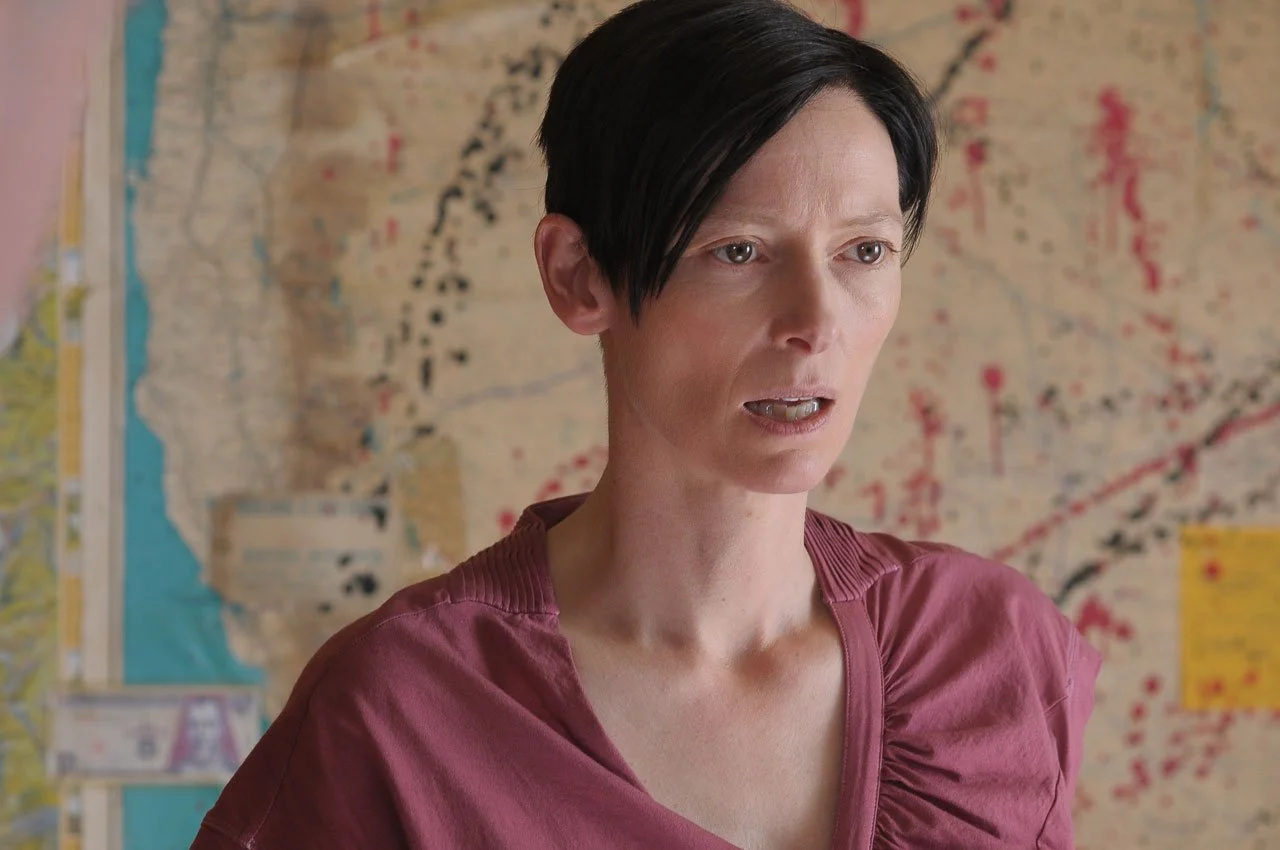
We Need to Talk about Kevin
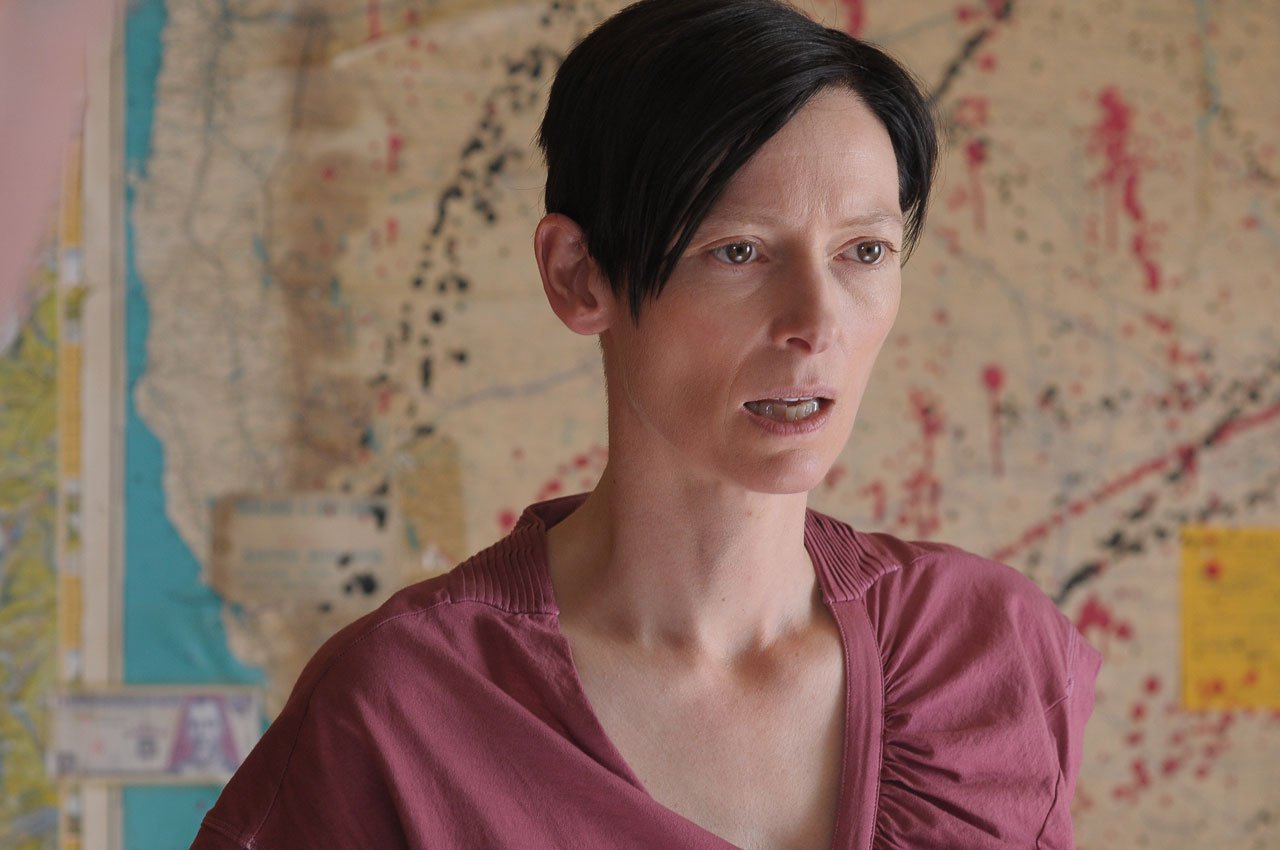
We Need to Talk about Kevin, directed by Lynne Ramsay, is a wonderfully dark, contemporary and morose film. Perhaps better than any, it manages to address the deceptively raucous currents of disaffected youth, in a manner that befits our current cultural landscape. The screams of violence are nascent, riddled with destructive outbursts and furry, and yet, no one, not even those closest, can hear their clashes and cries.
With that in mind, the film is surprisingly tonic, composed of complex notes of life: messy and complicated; and death, just as exhausting and exhilarating. It's not so much that We Need to Talk about Kevin captures our conscious, as it develops and reveals a collective apathy towards that consciousness. In short, it works to reveal that which remains woefully neglected, overlooked and, to use a turn of phrase, misdiagnosed.
What an incredibly alarming and stark portrait. The darkness is unapologetic, if not humorous. Which is to say that the film is masterfully dutiful and ripe, but not with complacency. Instead, it's concocted, in equal parts, of triumph and despair. Most of all, and in a very necessary acumen, it conveys a precocious sense of hope, understanding and optimism. The way the film is told, it's less that the narrative contains the seeds of authorship, as much as the viewer is placed in a position of nourishment.
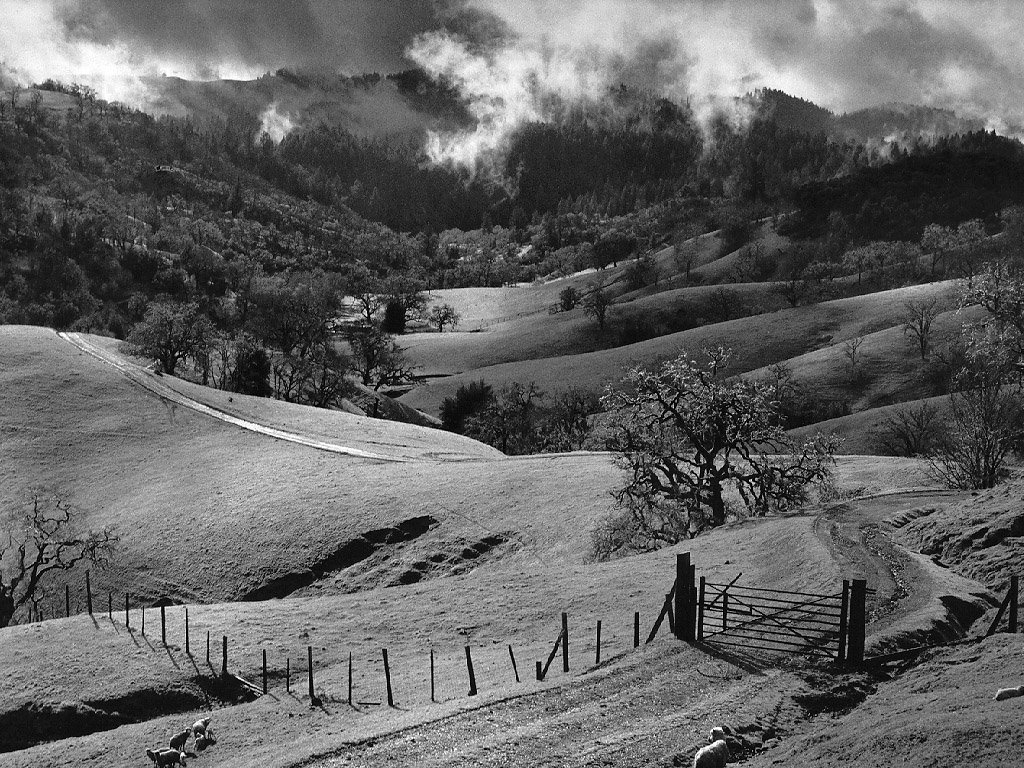
Ansel Adams
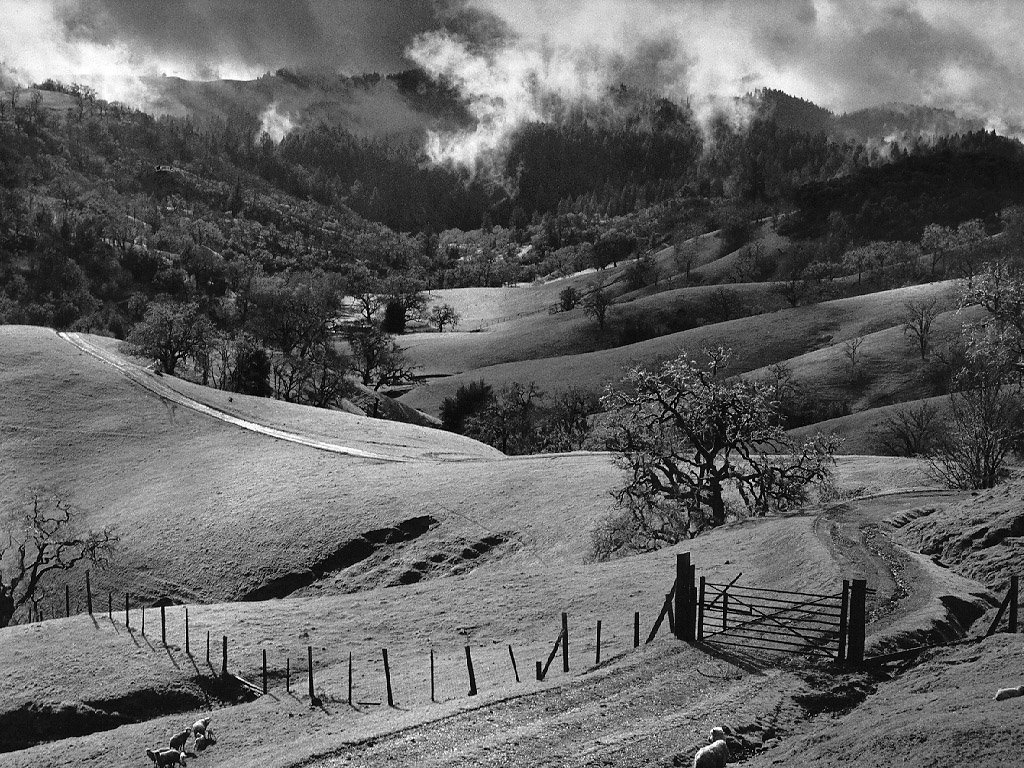
With the advent of the iPhone, and perhaps even before that, yes, before that, we've started, as a culture, to gain a new found appreciation for photography. In my estimations, we're coming to better understand, not only shot, composition and subject matter, but also post-production, execution and treatment. As Annie Leibovitz claims, following the old adage, the best camera is the one with you. You see, for us, that's pretty easy. Most of us carry our iPhones in our pockets or purses or have them readily accessible. The iPhone has changed the way we view the world.
Capturing a scene or a moment didn't use to be as spontaneous. When the great American photographer Ansel Adams desired to shoot a scene at Yosemite National Park, he would trek off into the wilderness, searching for the great unknown: the location as much as the subject. For a century that was defined by the cinema, photography wasn't so much as neglected, as not fully realized or endorsed. And yet, Ansel Adams found a way to reveal new possibilities for the medium.
Recently, I had the chance to catch the Ansel Adams retrospective, curated by himself. I was really struck by the breadth and depth of the work. As with most characterizations, I was presumptuously negative about the expanses of his work, but the import of Ansell Adams is spectacular. We're all increasingly coming to know and understand photography, and Adams still points the way.
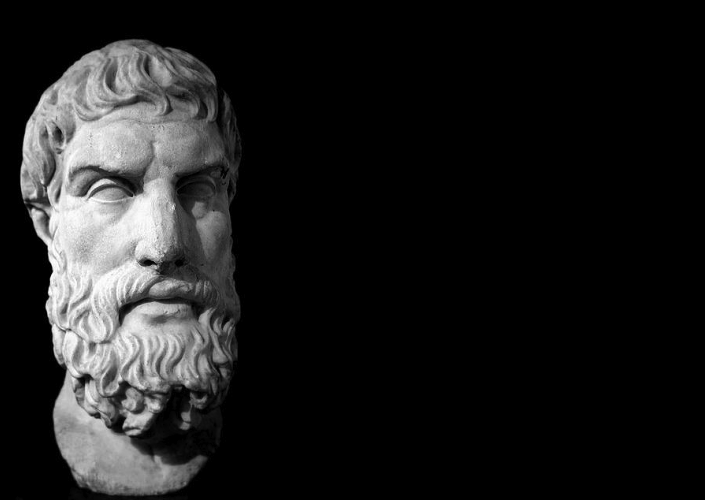
Philosophical Therapeutics
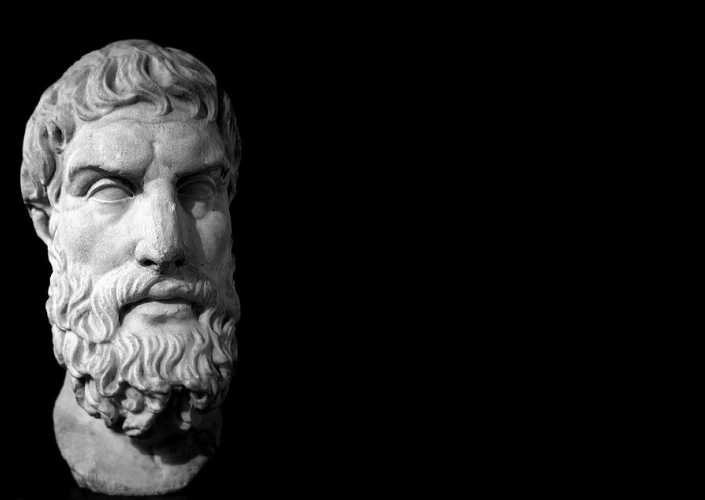
Here's Keith Ansell-Pearson:
"Dawn can be read in part, and on an existential or therapeutic level, as an attempt to revitalize for a modern age ancient philosophical concerns, notably a teaching for mortal souls who wish to be liberated from the fear and anguish of existence, as well as from God, "metaphysical need", and romantic music, and are able to affirm their mortal conditions of existence."
Whereas for Nietzsche, who sought to cultivate a philosophical therapeutics, as Keith Ansell-Pearson advances, Arakawa and Gins, thinkers of reversible destiny, strive to afford a pedagogical aesthetics. Epicurus's fundamental insight: "For there is nothing fearful in life for one who has grasped that there is nothing fearful in the absence of life...the wise man neither rejects life nor fears death." For Arakawa and Gins, this line of thinking misses the crucial point, of great ethical concern, which is that we must cultivate a new attitude towards existence: death itself can and must be overcome.
Nietzsche, instead, attempts to utilize this ancient philosophical tradition, which stages existence in terms of our mortal condition, to afford the modern age an existential appreciation of life. Nietzsche hopes to teach the affirmation that is required to embrace a new type of life without fear and torment, one that is liberated from any metaphysical needs. Of course, Arakawa and Gins would endorse this form of philosophical therapeutics, "centered on a concern with the healing of our own lives, so as to return us the pleasure and joy in existing", but they would want to take it one step further.
Nietzsche himself is concerned to address the transitional humanity, "moving from a heritage of religions and moralities to something new, in fact, to uncharted conditions of existence". The pedagogical aesthetics that Arakawa and Gins establish, is one of self-discovery, and self-exploration, an education based on an aesthetics of existence. Yet, following Arakawa and Gins, we wonder if this new humanity is not already underway, in the thought of reversible destiny. But, as Keith Ansell-Pearson rightly reminds us, "Our task is now to take our time in our search; we are no longer looking for a single answer to our questions or some ultimate solution to the riddles of existence."
Dawn has just been released as part of the Nietzsche Collection.

Meagan Bennett
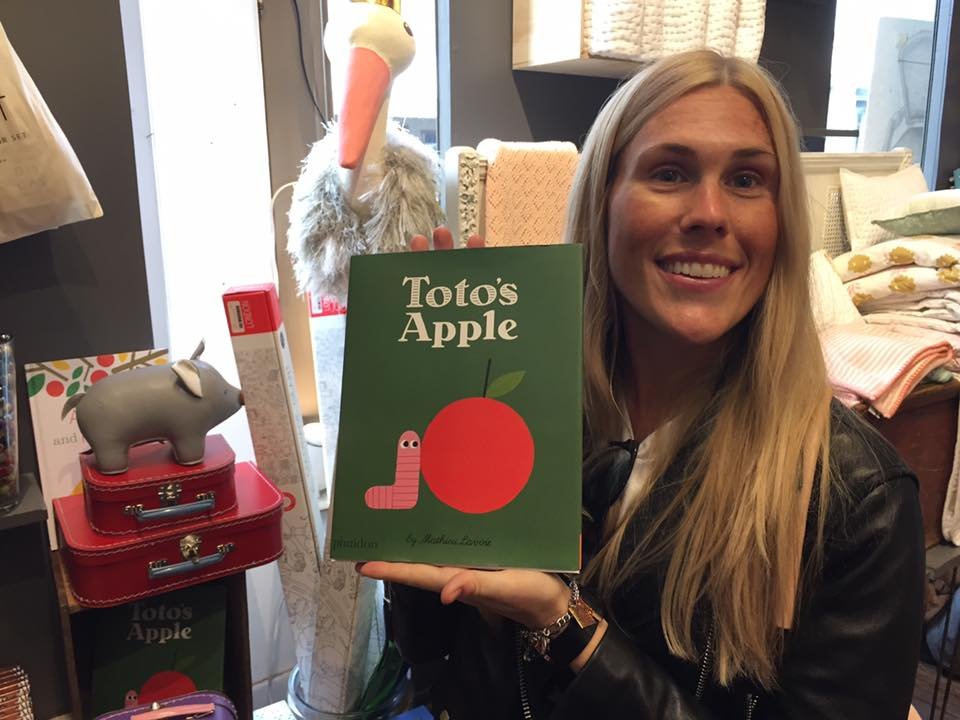
Meet Meagan Bennett, designer at Abrams Appleseed.
"Well I do declare," that Meagan is the type of person that defines her work by her life. Which is to say, that she is one of those rare individuals that is constantly striving to make her life a work of art. You see, for her, it's not about the product, so much as the "creative process that intuitively reflects a childlike sensibility". If the process is adequately constructed and diagrammatically mapped out, then the product is but the expression of those intuitions and sensibilities. You have to trust your selves. Or, in her enticing words, "this open-ended definition of self (as the possibility for transformation) is something that I try to emulate on a daily basis". Nothing is ever a "done deal", until it finally is...but 'is' is not a word that Meagan enjoys, at least not on the surface. She'd rather follow the path of the 'and', of conjunctions and disjunctions, inventing the rhythm as she creates her own lines of flight.
In a terribly unformuliac structure (read positively), Meagan inspires four practically possible practices. Now, that was a tongue twister: 1) Exhibit Fearlessly Curiosity 2) Rediscover a Sense of Wonder 3) Make Non-Linear Connections 4) Be Passionate. As she explains, "while this process is not rocket science, these are immeasurably important practices that are easily lost as we move further away from childhood". In childhood, and later as adults, "true creativity lies outside" this tripartite zone of fear, disapproval and absence. (Picture a scary inveigling triangle.) How to combat this? Through the perspective of a child. "If we approach our lives from a child's point of view, we can widen our thoughts, remove the barriers we've created, and, in turn, glean inspiration from the most unexpected places."
"Curiosity is not a byproduct of the luxury of childhood leisure; it's a necessity for creativity." If anything, this post was written as a love letter, as an ode to that form of creativity: to life, to work, to an ethic of inspiration and imagination. Meagan's beauty, which is radiant and electric, can be found in each of her carefully crafted and executed decisions, and in the sense of community and curiosity that she imparts, by her candidly unique expressions. As she reminds us, "Curiosity and awareness encourage spontaneity and improvisation, which results in a fluid creative process." Creativity is nothing if but the expressions of love blossoming. And, I feel her love...and I know you do too!

Two Titans
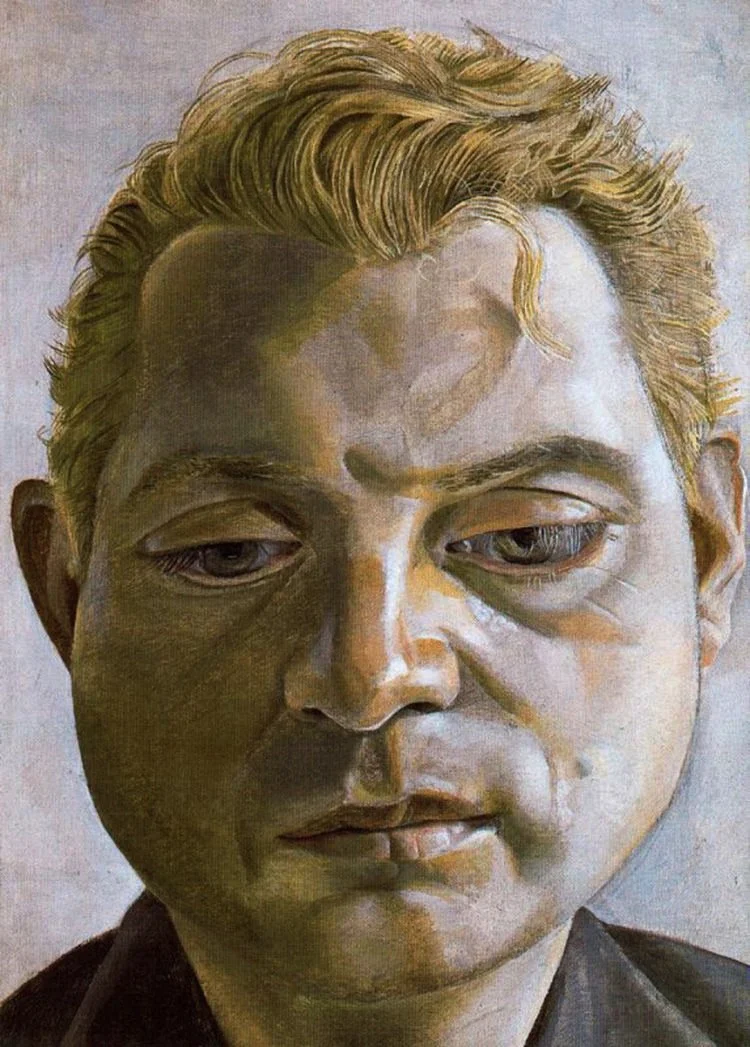
Two titans of the twentieth century: Francis Bacon and Lucian Freud.
The critic, writer and curator Martin Gayford once wrote that Bacon's famous phrase, "the brutality of fact", applied to the work of Lucian Freud. David Sylvester disagreed, and responded, "Bacon hit upon that phrase when trying to define a key quality which he found in Picasso but found wanting in Matisse, a quality that clearly involves a sense of the human condition, which in turn demands a measure of universality. Freud seems to see the world at close range through his own eyes only, painting attractive or repulsive sights according to his personal whim."
In turn, Gayford formulated his riposte, in his exceptional book, "Man with a Blue Scarf", "It is exactly Lucian Freud's treatment of the world as made up entirely of unique individual things - people, animals, objects - that is his greatest strength. He has resisted the tendency of modernist art to subdue the complexity of the world to a style or a concept. But maybe the 'brutality of fact' isn't a phrase that precisely suits what he does. Perhaps, the 'awkwardness of truth' would be nearer the mark."
These two friends operate and explore the world at vastly different ends of the spectrum, especially in terms of technique, style, and execution. Yet, in many respects, they couldn't be more inapposite allies in a battle against the banal. The fixed, the stable, the inert, especially the inert, is called into question, in a radical and germinal fashion. Take, for instance, Freud's criticism of Vermeer, "It isn't a matter of incompetence. It is that in a funny way his people just aren't there."
Don't be mistaken, though, it's not the theater of art that interests Freud and Bacon. Instead, it's the un-theatrical. Here's Freud on 'why he doesn't like taking drugs'. "People say such things as, "Oh, they make me see such marvelous colors" - which to my mind is a horrible idea. I don't want to see marvelous colors. I want to see the same colors, and that is hard enough. Then they say that they are taken out of this world, but I don't want to be out of this world, I want to be absolutely in it, all of the time."
Which, takes us to Freud's remarkable definition of imagination. He defines it, as such: "A great deal of what is normally thought of as intelligence, he points out, is actually imagination - that is, an ability to see things as they truly are." On this model, imagination is active, and engaged, as it participates in the world, leaving no room to confuse intelligence with imagination.
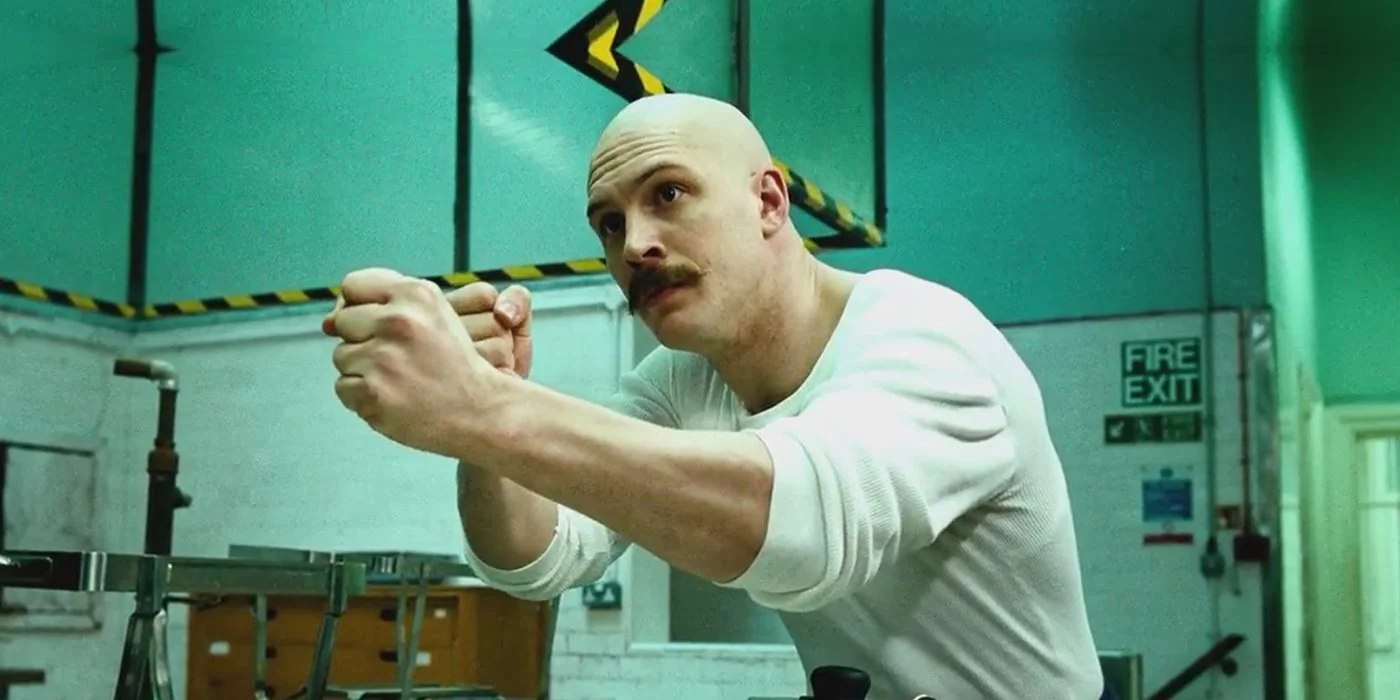
Living the Movie
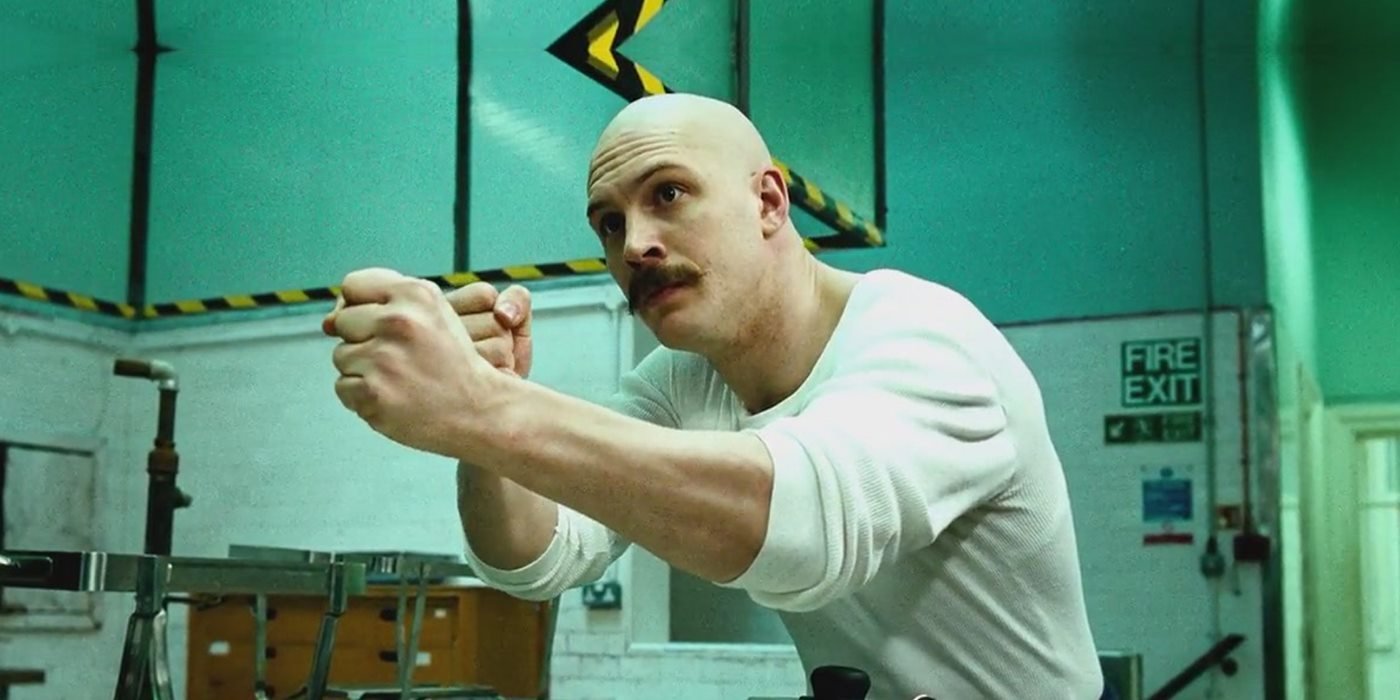
Alright, so I've been a fan of Nicolas Winding Refn since I first viewed Pusher (1996) in the late 1990's. The Pusher Trilogy is brutal, sincere and smarts of humanity. There's a reason it's a cult phenomenon: in an age of inauthenticity and righteousness, it's aggressive, honest, and to the point.
Bronson (2008) pushes in this direction, and extends the rage: forcefully, compassionately and wholeheartedly. There's a dreamlike quality to the sumptuousness of the images, rich and fertile in their splendor and violence. The camera becomes intoxicated, caught up in the moment, and the sudden outbursts of expression and indignation. It's as if justice cries forth amidst the insanity of it all. Valhalla Rising (2009), on this exact same trajectory - of madness, compulsion and intensity - delves further into an exploration of the living dream. Existence is put on stage so as to deliver a performance.
EnterNicolas Winding Refn latest film, Drive (2011), which has been described as a "neo-noir": a combination of Fante and Bukowski. Featuring Ryan Gosling (more about him in a future post) Drive is poised to explode the noir genre. There's a lovely interview with Ryan Gosling and Nicolas Winding Refn in the WSJ, that serves as a compliment to the video posted above. Totally fascinated by the creative process they describe, as "living the movie".
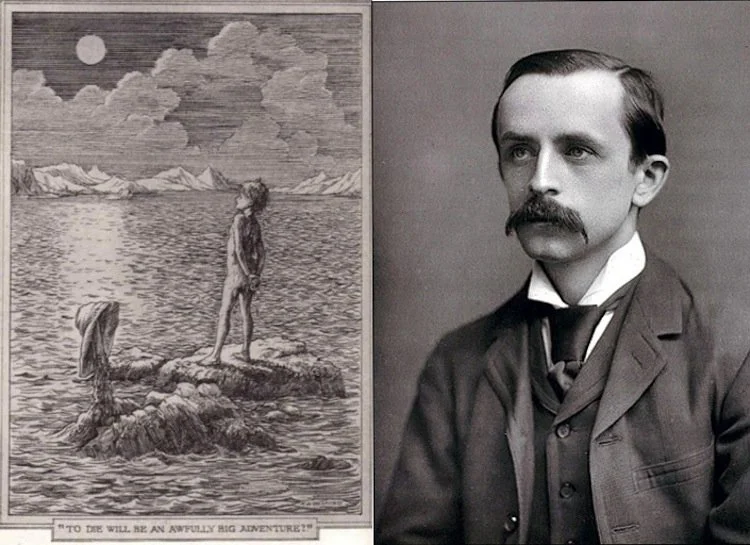
Switch Hands
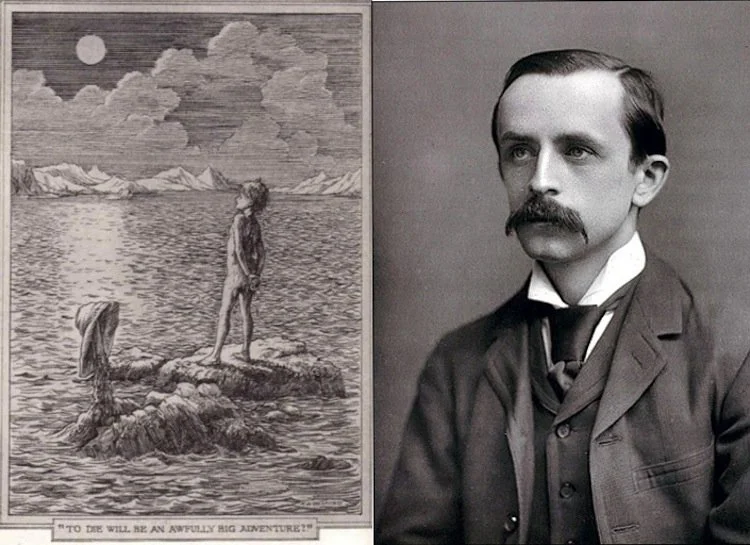
In the notebooks of J.M. Barrie, the left-handed person is described:
"I find the person who writes with his left is quite another pair of shoes from the one who employs his right; he has other standards, sleeps differently, has novel views on the ontology of being, and is a more sinister character.” - J.M.Barrie, Letters of J.M. Barrie, 1917, pg.38.
In a remarkable turn of events, when Barrie sat down to write Peter Pan, he struggled. He just couldn't write. So, what did he do? How did he overcome this obstacle? He switched hands.
Here's a little interpretation of this reversal: J.M.Barrie implemented the innovative practice of switching hands when confronted with the impossible; for it is no longer a matter of facing the absolute, but of escaping the plane of representation and entering the flatbed ontology of ‘becoming without being’. Turning to his left like an adult turns to the child of the present.
How, in turn, can one describe such a left-handed person? asks Barrie. As one that forms rifts and shocks, perturbations that resonate throughout chronological time, allowing, in this case, Peter Pan to become formless: that is, immersed in the pure, empty form of time. A non-pulsed, floating time, seething with the potential of an event; assembling connections and flows, turning things into vibrations that are released at the site of confrontation. This non-metric continuum demands experimentation.
Or as Barrie witnesses, "it is as if you had played it until you tired of it, and tossed it in the air and gored it and left it derelict in the mud and went on your way singing other songs; and then I stole back and sewed some of the gory fragments together with a pen-nib. That is what must have happened, but I cannot remember doing it. I have no recollection of having written it."
Switch hands. See the world anew.

iA Writer

When Oliver Reichenstein, and the incredible team behind Information Architects first launched Writer for iPad, I was as eager to test and experiment with the app, as I was to start a new writing project. I felt inspired. Of course, a few months later, and with unabated interest, Writer for Mac was introduced, and my world was completely upturned. Since then, these two writing apps, iA Writer for iPad and Mac, have become my definitive writing tools. They're simple and effective.
Here's why: Writer removes the obstacles of perfection from the task of writing. Let me explain.
Since finding Writer, I've decided to write my entire PhD dissertation, tentatively entitled, "Arakawa and Gins: Philosophers of Life", solely using Writer. Is it any surprise that Oliver Reichenstein has a background in philosophy? He's aware of, and asks, tough philosophical questions. "What happens to thought in relation to writing?" "Will the user interface precipitate new modes of production?" "In an age of distraction, how can we concentrate and focus the user?" Here's Oliver, with a little twist: "With Writer all your thought goes into what you write, not how your writing looks."
When I first started my dissertation, I was more interested in ontology and mereology, than I was aesthetics and pedagogy. But things have changed, and I've developed an interest in typography and design, largely thanks to . Our experiences with Montessorium have opened new possibilities for what encounters are possible with such aesthetic and pedagogical interactions. A new way of learning, and engaging with thought, is already here.
As this personal interest continues to grow and mutate, I continue to think about the ways in which we encounter the world, and the way the world encounters us, both in terms of making your life a work of art (aesthetics) and in terms of learning how to educate oneself endlessly (pedagogy). Is the task of education not one of self-education? This intersection, so timely and essential, has become the primary focus of my thinking.
Enter Writer.
Writing in a clean and uncluttered environment, with a cursor so beautiful it's hard to be afraid of or afflicted by the blinking reminder to persist, despite the procrastination or absence of inspiration, Writer is a dream. It lets one go on, and on, as Gertrude Stein illustrated so majestically with the comma. Writer offers a radically new writing experience, primarily because it creates a space in which to write, one devoid of the constraints of perfection. Perfection, in this, and many other respects, limits construction. These are lessons we have learned from Graham Harman, amongst others.
Writing everywhere else just isn't the same. Not since I first learned how to put pen to paper, which, incidentally, I can never read have I been so thrilled to actually "sit down" and write. It helps to alleviate some of the pain and frustration of bringing something new into the world. I've always been on the look out for writing experiences. When I wrote a paper on Bataille, for instace, I ordered a typewriter to address the violence and brutality of the topic. The pages literally bled. The ink soaked through. With Writer, however, it's a completely unique experience. The words seem to conspire.
When I opted to use Writer for my dissertation, a number of questions were immediately presented. "Who will read my dissertation?" "In what format, and in what environment - not only on what device, but in what climate and geographical location - will they work through my chapters?" Before Writer, I also thought, "What font would best capture or convey the spirit of my work on Arakawa and Gins?" Knowing, in particular, that Madeline Gins had used Courier in the past, and that Arakawa had a disposition towards capitalization, these seemed like relevant and necessary lines of inquiry.
But this is how Writer works:
"Our goal was to create a writing app without settings. When opening Writer, all you can do is write. The only option you have is full screen and FocusMode." Of course, it helps, and is crucial, that 1) the environmenet is unencumbered, but also 2) that it's beautiful. Writer accomplishes both of these traits, in equal measure. Writer purrs in ways that only your fingers will learn.
Is Writer the perfect writing tool? In our estimations, it comes pretty close. Only thing better? If it'd write for you. Of course, there are other writing tools. We've seen Phillip Roth, for instance, seated before his special device, and boy does he have quite the outpouring. Speaking of which, I'd be curious to learn what Joyce Carol Oates uses to write. Maybe she'd like to try out Writer?
My biggest criticism of Writer, and it isn't a critique, so much as a feature request, would be to include the capability to add video and images. The reason? Perhaps it's more philosophical, than practical, but I would find the incorporation of media helpful. For better or worse, we've increasingly become accustomed to using and relying on these forms of interaction to help articulate and emphasize how we write, and what subjects we choose to address.
P.S. A little update for Mom: Four chapters down. Two to go. I plan to be finished before the end of the century. I promise. And, yes, no more long blog posts.