
Journal—
Musings & Observations
I’ve written for The Atlantic, Huffington Post, Forbes, Warwick and my mom.
You can also see the Magazine view.

Bento’s Sketchbook

My book of the year award goes to Bento's Sketchbook, by John Berger. Here's the official blurb about Bento's Sketchbook: "The seventeenth-century philosopher Baruch Spinoza, also known as Benedict or Bento de Spinoza; spent the most intense years of his short life writing. A sporadic draughtsman, he also carried with him a sketchbook. After his sudden death, his friends rescued letters, manuscripts, notes;but no drawings."
"For years, John Berger has imagined finding Bento's sketchbook without knowing what its pages might hold, but wanting to see the drawings alongside his surviving words. When one day a friend gave Berger a beautiful, virgin sketchbook, John said, "This is Bento's!"; and he began to draw, taking his inspiration from the philosopher's vision."
"The result is Bento's Sketchbook, an exploration of the practice of drawing and a meditation on how art guides our gaze to the world: to flowers, to the human body, to the pitilessness of the new world order and the forms of resistance to it."
With moments of resounding clarity and insight, Berger reveals that which remains imprisoned and mysterious. He strives to capture the ephemeral and fleeting. "I began to make drawings prompted by something asking to be drawn." What is aloof, but speaking to us, he actively tries to present.
"We who draw do so not only to make something observed visible to others, but also to accompany something invisible to its incalculable destination."
Berger is our contemporary. As if accidentally, but that's not quite right, Berger sets out to provide a new type of book, a book with images, texts, and quotes. Images of his own construction, quotes of the great Spinoza, salted with Berger's stunning text and prose.
Further still, Berger sets out to articulate the conditions of exposition, of creation, and juxtaposition. "You lose your sense of time when drawing. You are so concentrated on scales of space." It is with Berger, that we wish to share. "I'm taking my time, as if I had all the time in the world," shares Berger.
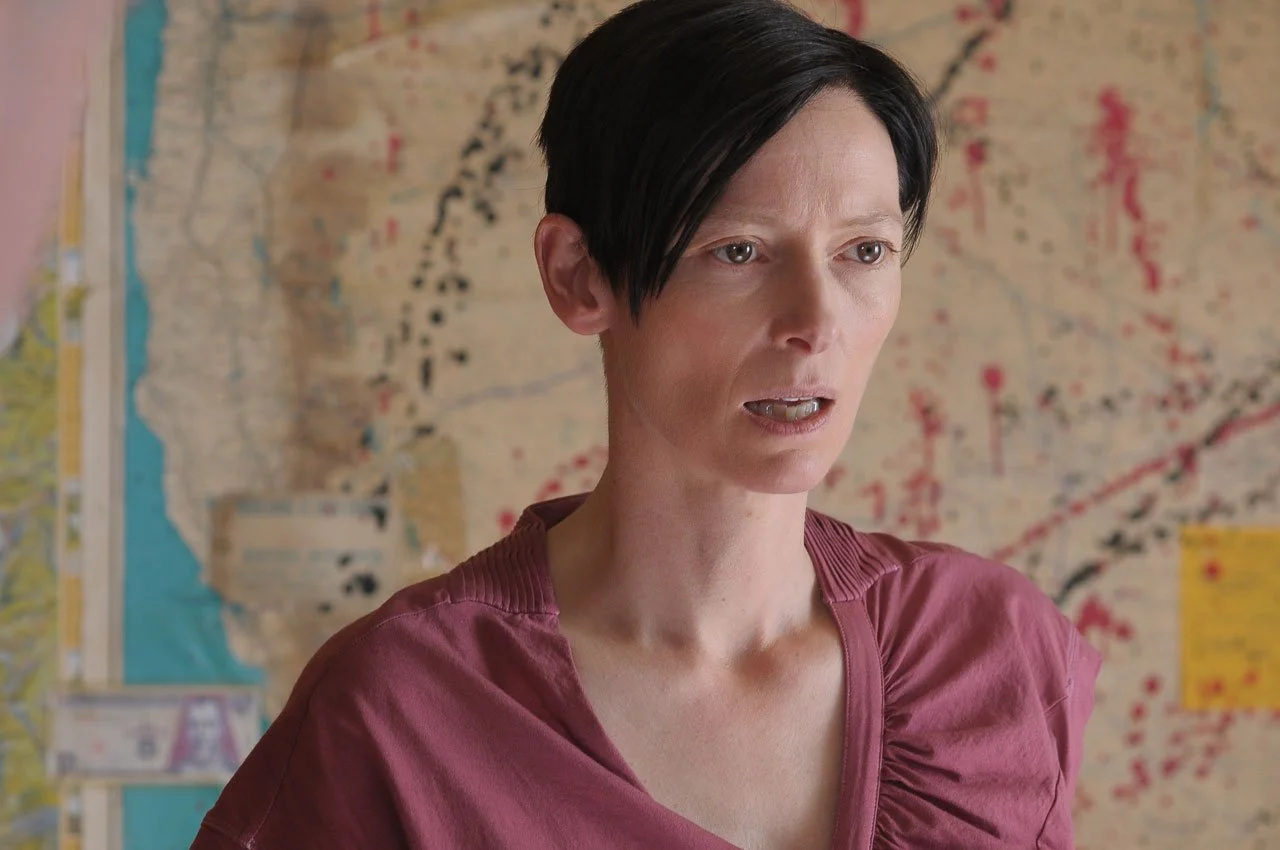
We Need to Talk about Kevin
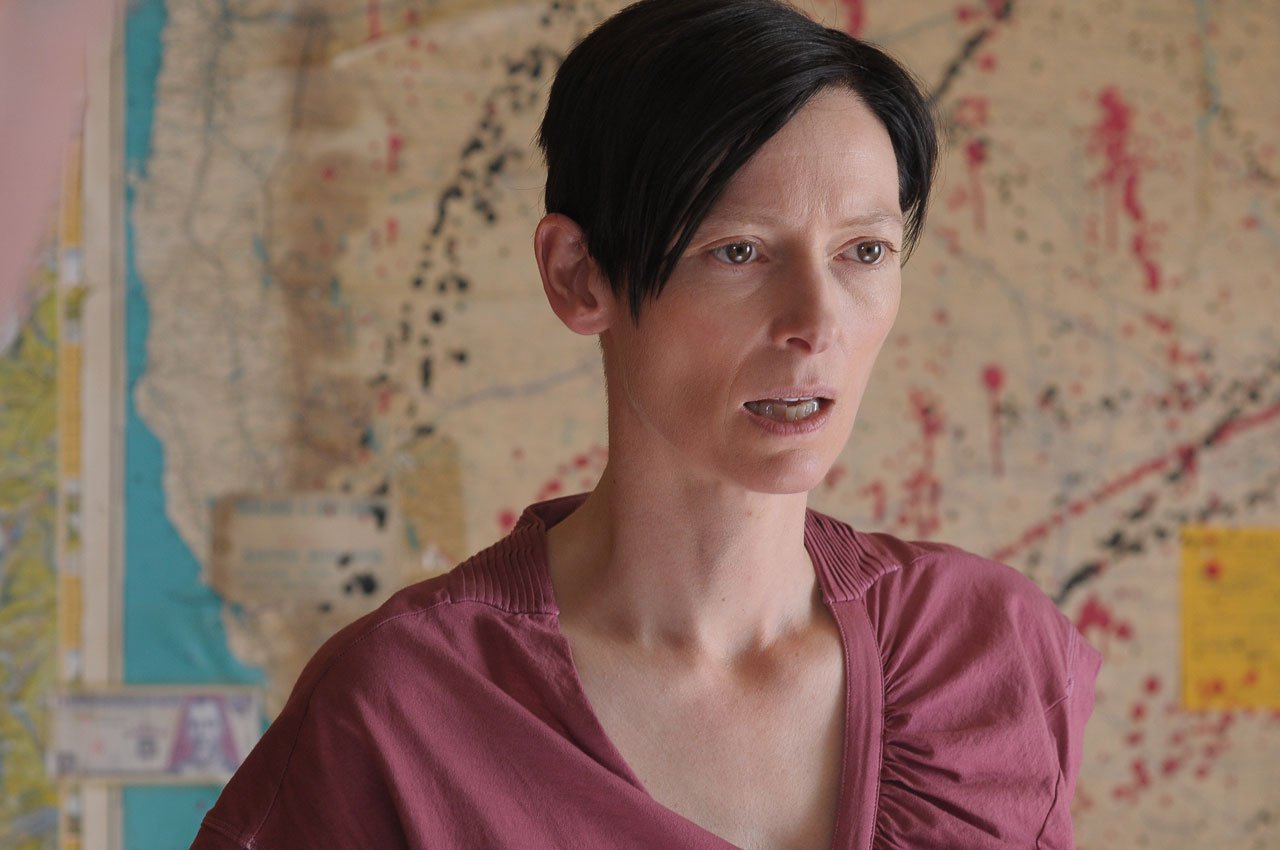
We Need to Talk about Kevin, directed by Lynne Ramsay, is a wonderfully dark, contemporary and morose film. Perhaps better than any, it manages to address the deceptively raucous currents of disaffected youth, in a manner that befits our current cultural landscape. The screams of violence are nascent, riddled with destructive outbursts and furry, and yet, no one, not even those closest, can hear their clashes and cries.
With that in mind, the film is surprisingly tonic, composed of complex notes of life: messy and complicated; and death, just as exhausting and exhilarating. It's not so much that We Need to Talk about Kevin captures our conscious, as it develops and reveals a collective apathy towards that consciousness. In short, it works to reveal that which remains woefully neglected, overlooked and, to use a turn of phrase, misdiagnosed.
What an incredibly alarming and stark portrait. The darkness is unapologetic, if not humorous. Which is to say that the film is masterfully dutiful and ripe, but not with complacency. Instead, it's concocted, in equal parts, of triumph and despair. Most of all, and in a very necessary acumen, it conveys a precocious sense of hope, understanding and optimism. The way the film is told, it's less that the narrative contains the seeds of authorship, as much as the viewer is placed in a position of nourishment.
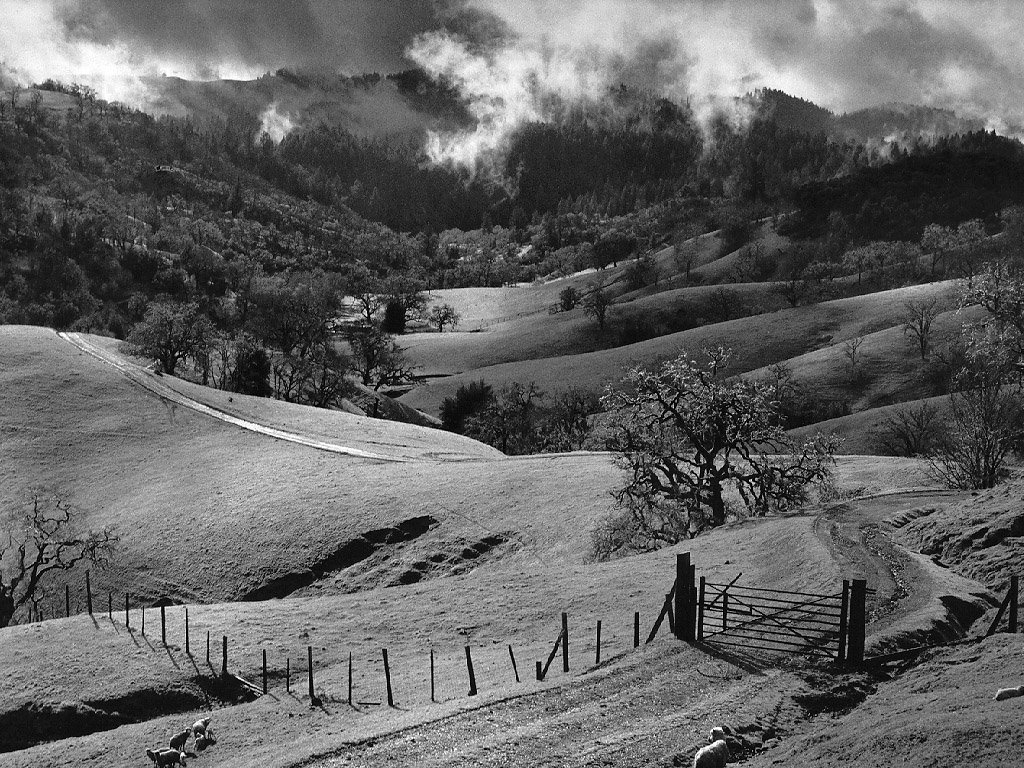
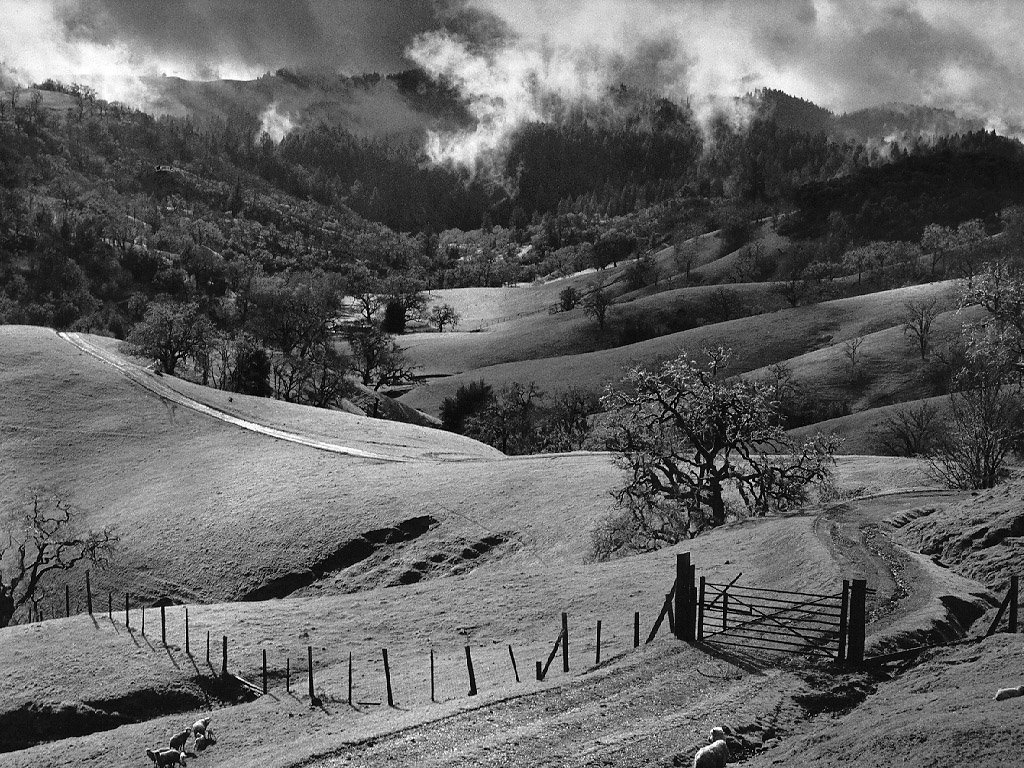
Ansel Adams
With the advent of the iPhone, and perhaps even before that, yes, before that, we've started, as a culture, to gain a new found appreciation for photography. In my estimations, we're coming to better understand, not only shot, composition and subject matter, but also post-production, execution and treatment. As Annie Leibovitz claims, following the old adage, the best camera is the one with you. You see, for us, that's pretty easy. Most of us carry our iPhones in our pockets or purses or have them readily accessible. The iPhone has changed the way we view the world.
Capturing a scene or a moment didn't use to be as spontaneous. When the great American photographer Ansel Adams desired to shoot a scene at Yosemite National Park, he would trek off into the wilderness, searching for the great unknown: the location as much as the subject. For a century that was defined by the cinema, photography wasn't so much as neglected, as not fully realized or endorsed. And yet, Ansel Adams found a way to reveal new possibilities for the medium.
Recently, I had the chance to catch the Ansel Adams retrospective, curated by himself. I was really struck by the breadth and depth of the work. As with most characterizations, I was presumptuously negative about the expanses of his work, but the import of Ansell Adams is spectacular. We're all increasingly coming to know and understand photography, and Adams still points the way.
Philosophical Therapeutics
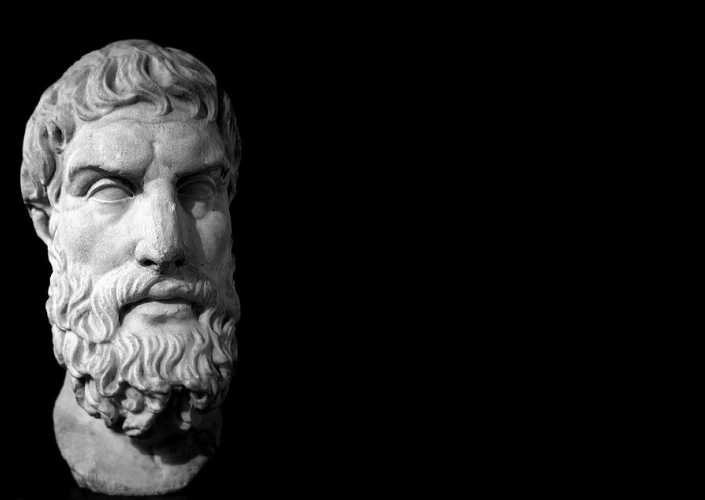
Here's Keith Ansell-Pearson:
"Dawn can be read in part, and on an existential or therapeutic level, as an attempt to revitalize for a modern age ancient philosophical concerns, notably a teaching for mortal souls who wish to be liberated from the fear and anguish of existence, as well as from God, "metaphysical need", and romantic music, and are able to affirm their mortal conditions of existence."
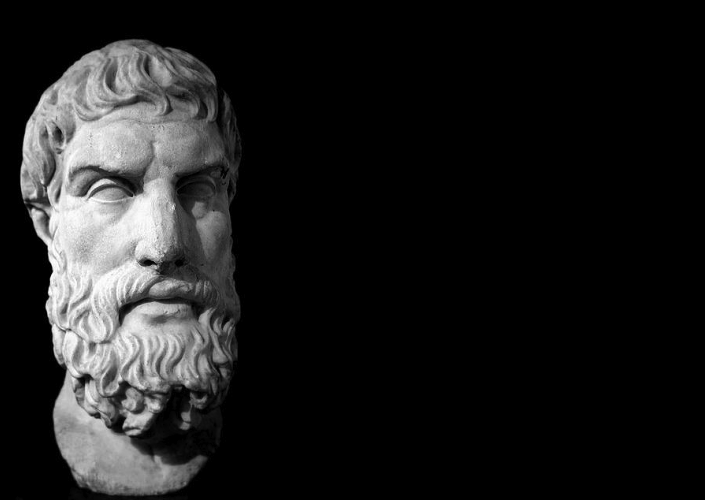
Whereas for Nietzsche, who sought to cultivate a philosophical therapeutics, as Keith Ansell-Pearson advances, Arakawa and Gins, thinkers of reversible destiny, strive to afford a pedagogical aesthetics. Epicurus's fundamental insight: "For there is nothing fearful in life for one who has grasped that there is nothing fearful in the absence of life...the wise man neither rejects life nor fears death." For Arakawa and Gins, this line of thinking misses the crucial point, of great ethical concern, which is that we must cultivate a new attitude towards existence: death itself can and must be overcome.
Nietzsche, instead, attempts to utilize this ancient philosophical tradition, which stages existence in terms of our mortal condition, to afford the modern age an existential appreciation of life. Nietzsche hopes to teach the affirmation that is required to embrace a new type of life without fear and torment, one that is liberated from any metaphysical needs. Of course, Arakawa and Gins would endorse this form of philosophical therapeutics, "centered on a concern with the healing of our own lives, so as to return us the pleasure and joy in existing", but they would want to take it one step further.
Nietzsche himself is concerned to address the transitional humanity, "moving from a heritage of religions and moralities to something new, in fact, to uncharted conditions of existence". The pedagogical aesthetics that Arakawa and Gins establish, is one of self-discovery, and self-exploration, an education based on an aesthetics of existence. Yet, following Arakawa and Gins, we wonder if this new humanity is not already underway, in the thought of reversible destiny. But, as Keith Ansell-Pearson rightly reminds us, "Our task is now to take our time in our search; we are no longer looking for a single answer to our questions or some ultimate solution to the riddles of existence."
Dawn has just been released as part of the Nietzsche Collection.

Meagan Bennett
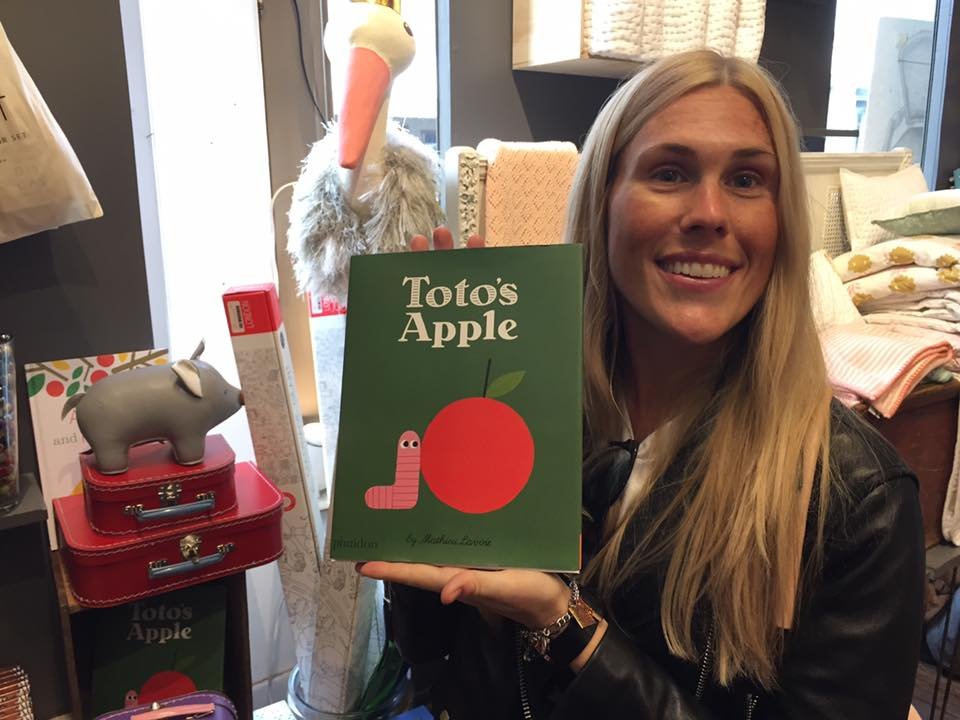
Meet Meagan Bennett, designer at Abrams Appleseed.
"Well I do declare," that Meagan is the type of person that defines her work by her life. Which is to say, that she is one of those rare individuals that is constantly striving to make her life a work of art. You see, for her, it's not about the product, so much as the "creative process that intuitively reflects a childlike sensibility". If the process is adequately constructed and diagrammatically mapped out, then the product is but the expression of those intuitions and sensibilities. You have to trust your selves. Or, in her enticing words, "this open-ended definition of self (as the possibility for transformation) is something that I try to emulate on a daily basis". Nothing is ever a "done deal", until it finally is...but 'is' is not a word that Meagan enjoys, at least not on the surface. She'd rather follow the path of the 'and', of conjunctions and disjunctions, inventing the rhythm as she creates her own lines of flight.
In a terribly unformuliac structure (read positively), Meagan inspires four practically possible practices. Now, that was a tongue twister: 1) Exhibit Fearlessly Curiosity 2) Rediscover a Sense of Wonder 3) Make Non-Linear Connections 4) Be Passionate. As she explains, "while this process is not rocket science, these are immeasurably important practices that are easily lost as we move further away from childhood". In childhood, and later as adults, "true creativity lies outside" this tripartite zone of fear, disapproval and absence. (Picture a scary inveigling triangle.) How to combat this? Through the perspective of a child. "If we approach our lives from a child's point of view, we can widen our thoughts, remove the barriers we've created, and, in turn, glean inspiration from the most unexpected places."
"Curiosity is not a byproduct of the luxury of childhood leisure; it's a necessity for creativity." If anything, this post was written as a love letter, as an ode to that form of creativity: to life, to work, to an ethic of inspiration and imagination. Meagan's beauty, which is radiant and electric, can be found in each of her carefully crafted and executed decisions, and in the sense of community and curiosity that she imparts, by her candidly unique expressions. As she reminds us, "Curiosity and awareness encourage spontaneity and improvisation, which results in a fluid creative process." Creativity is nothing if but the expressions of love blossoming. And, I feel her love...and I know you do too!

Two Titans
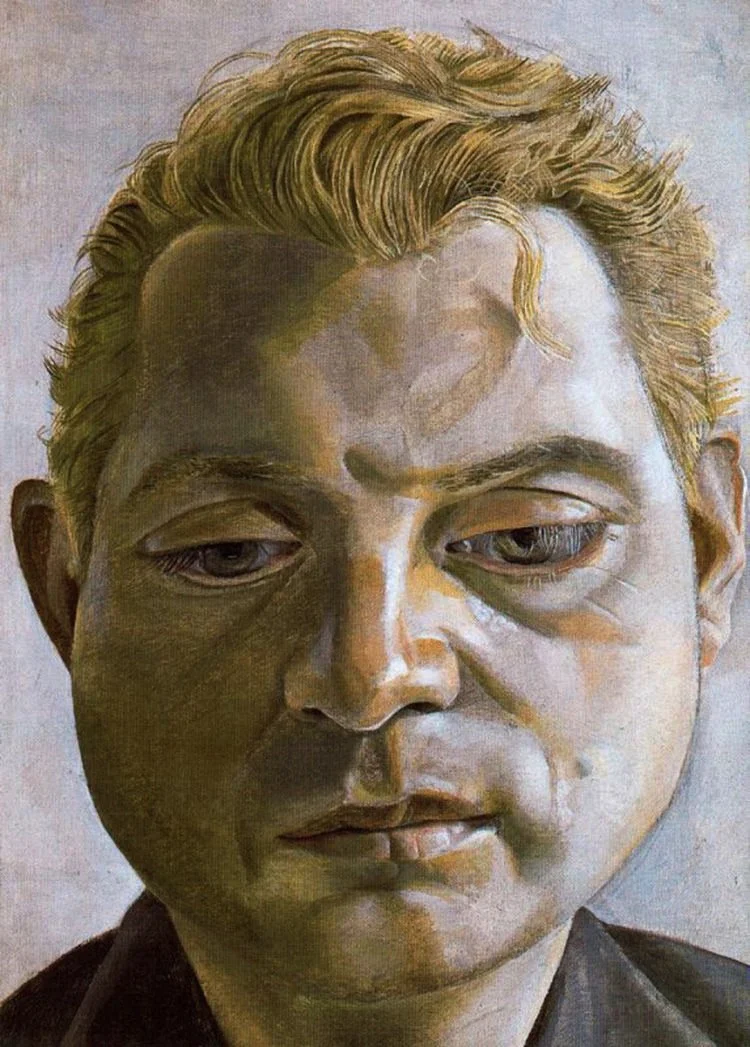
Two titans of the twentieth century: Francis Bacon and Lucian Freud.
The critic, writer and curator Martin Gayford once wrote that Bacon's famous phrase, "the brutality of fact", applied to the work of Lucian Freud. David Sylvester disagreed, and responded, "Bacon hit upon that phrase when trying to define a key quality which he found in Picasso but found wanting in Matisse, a quality that clearly involves a sense of the human condition, which in turn demands a measure of universality. Freud seems to see the world at close range through his own eyes only, painting attractive or repulsive sights according to his personal whim."
In turn, Gayford formulated his riposte, in his exceptional book, "Man with a Blue Scarf", "It is exactly Lucian Freud's treatment of the world as made up entirely of unique individual things - people, animals, objects - that is his greatest strength. He has resisted the tendency of modernist art to subdue the complexity of the world to a style or a concept. But maybe the 'brutality of fact' isn't a phrase that precisely suits what he does. Perhaps, the 'awkwardness of truth' would be nearer the mark."
These two friends operate and explore the world at vastly different ends of the spectrum, especially in terms of technique, style, and execution. Yet, in many respects, they couldn't be more inapposite allies in a battle against the banal. The fixed, the stable, the inert, especially the inert, is called into question, in a radical and germinal fashion. Take, for instance, Freud's criticism of Vermeer, "It isn't a matter of incompetence. It is that in a funny way his people just aren't there."
Don't be mistaken, though, it's not the theater of art that interests Freud and Bacon. Instead, it's the un-theatrical. Here's Freud on 'why he doesn't like taking drugs'. "People say such things as, "Oh, they make me see such marvelous colors" - which to my mind is a horrible idea. I don't want to see marvelous colors. I want to see the same colors, and that is hard enough. Then they say that they are taken out of this world, but I don't want to be out of this world, I want to be absolutely in it, all of the time."
Which, takes us to Freud's remarkable definition of imagination. He defines it, as such: "A great deal of what is normally thought of as intelligence, he points out, is actually imagination - that is, an ability to see things as they truly are." On this model, imagination is active, and engaged, as it participates in the world, leaving no room to confuse intelligence with imagination.
Living the Movie
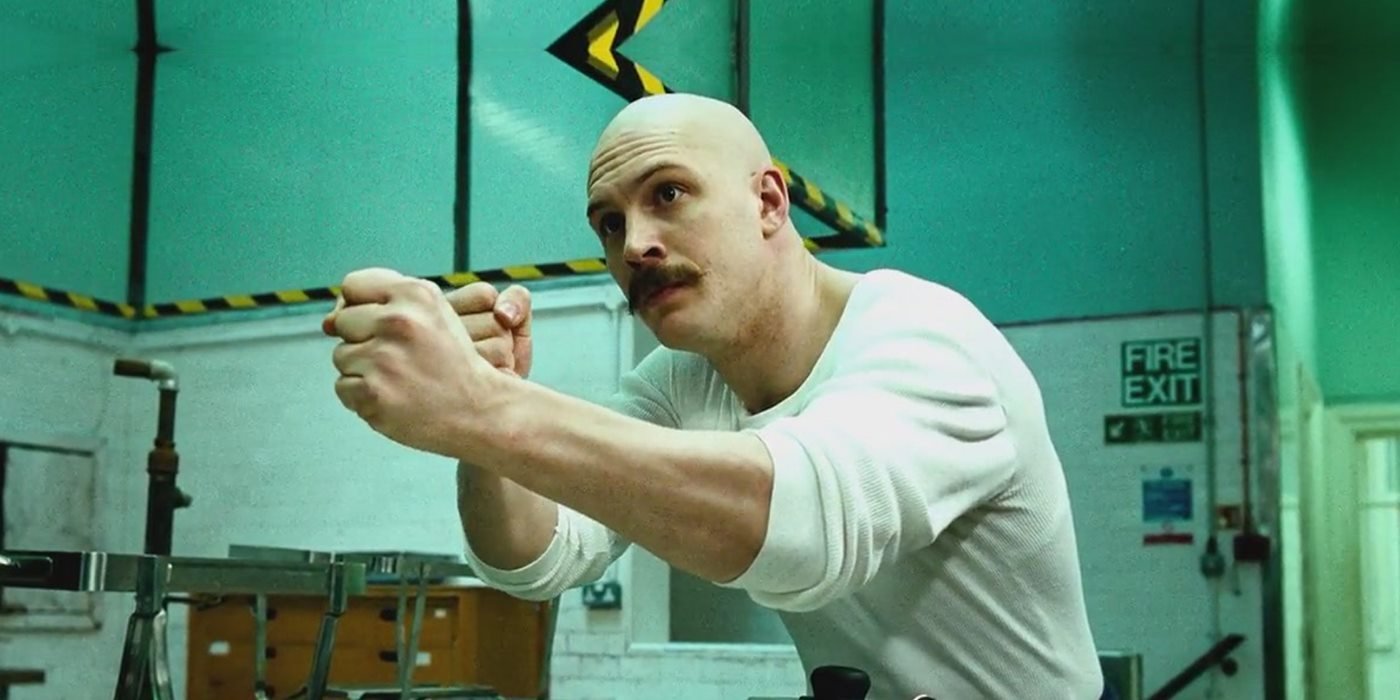
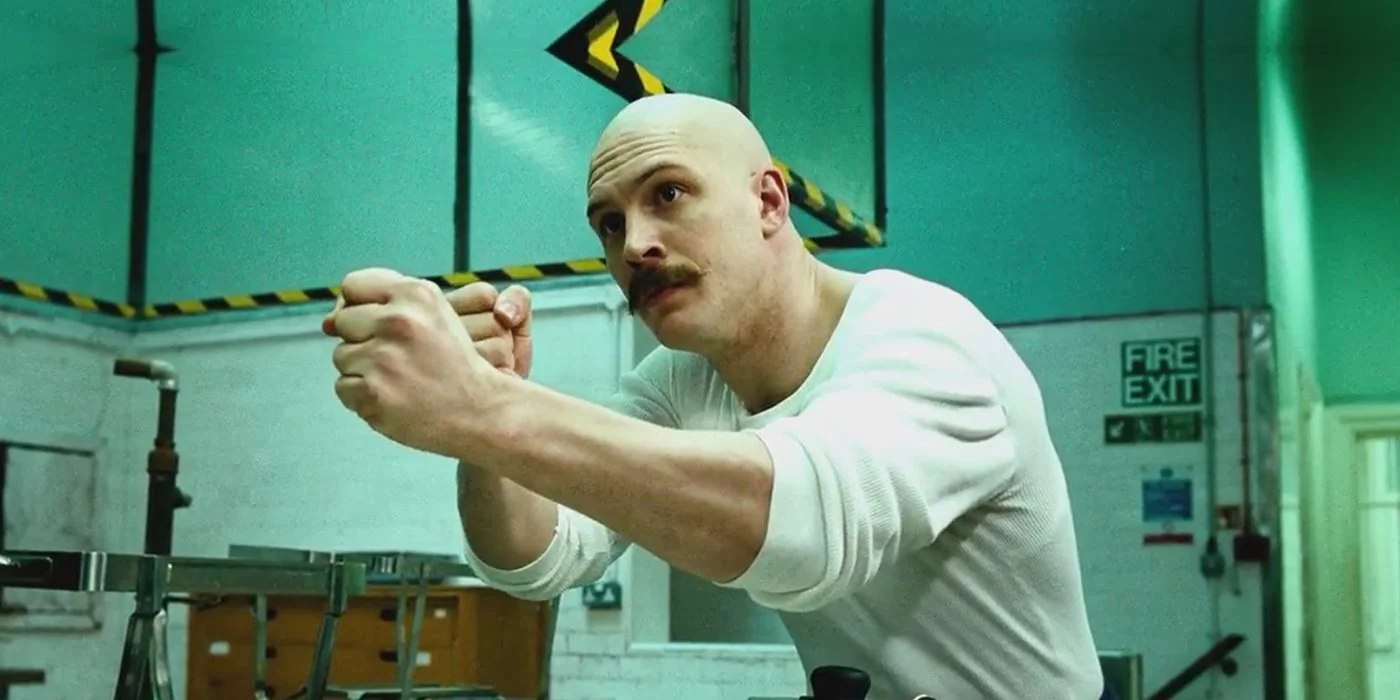
Alright, so I've been a fan of Nicolas Winding Refn since I first viewed Pusher (1996) in the late 1990's. The Pusher Trilogy is brutal, sincere and smarts of humanity. There's a reason it's a cult phenomenon: in an age of inauthenticity and righteousness, it's aggressive, honest, and to the point.
Bronson (2008) pushes in this direction, and extends the rage: forcefully, compassionately and wholeheartedly. There's a dreamlike quality to the sumptuousness of the images, rich and fertile in their splendor and violence. The camera becomes intoxicated, caught up in the moment, and the sudden outbursts of expression and indignation. It's as if justice cries forth amidst the insanity of it all. Valhalla Rising (2009), on this exact same trajectory - of madness, compulsion and intensity - delves further into an exploration of the living dream. Existence is put on stage so as to deliver a performance.
EnterNicolas Winding Refn latest film, Drive (2011), which has been described as a "neo-noir": a combination of Fante and Bukowski. Featuring Ryan Gosling (more about him in a future post) Drive is poised to explode the noir genre. There's a lovely interview with Ryan Gosling and Nicolas Winding Refn in the WSJ, that serves as a compliment to the video posted above. Totally fascinated by the creative process they describe, as "living the movie".
Switch Hands
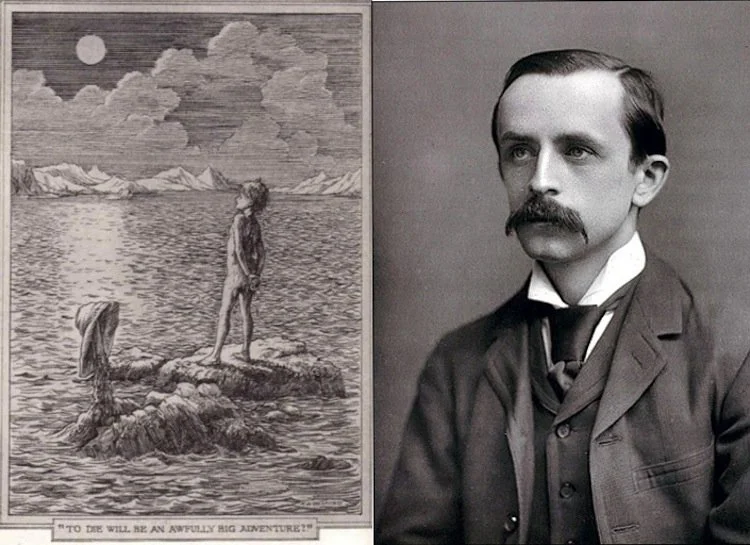
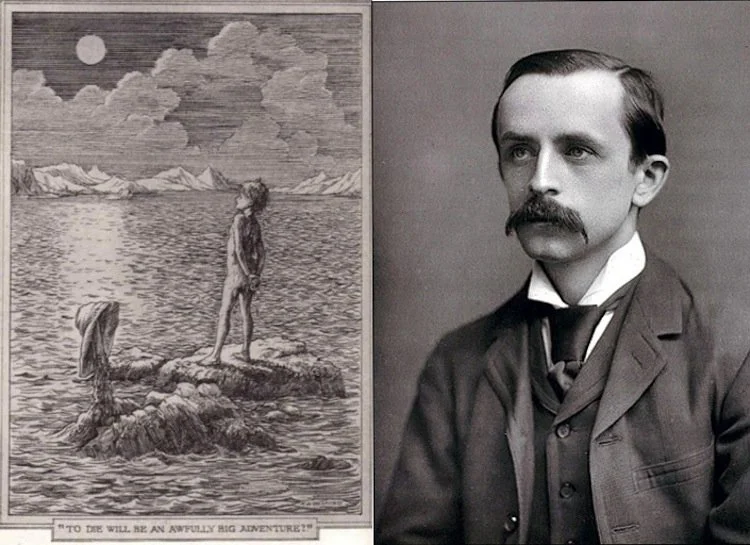
In the notebooks of J.M. Barrie, the left-handed person is described:
"I find the person who writes with his left is quite another pair of shoes from the one who employs his right; he has other standards, sleeps differently, has novel views on the ontology of being, and is a more sinister character.” - J.M.Barrie, Letters of J.M. Barrie, 1917, pg.38.
In a remarkable turn of events, when Barrie sat down to write Peter Pan, he struggled. He just couldn't write. So, what did he do? How did he overcome this obstacle? He switched hands.
Here's a little interpretation of this reversal: J.M.Barrie implemented the innovative practice of switching hands when confronted with the impossible; for it is no longer a matter of facing the absolute, but of escaping the plane of representation and entering the flatbed ontology of ‘becoming without being’. Turning to his left like an adult turns to the child of the present.
How, in turn, can one describe such a left-handed person? asks Barrie. As one that forms rifts and shocks, perturbations that resonate throughout chronological time, allowing, in this case, Peter Pan to become formless: that is, immersed in the pure, empty form of time. A non-pulsed, floating time, seething with the potential of an event; assembling connections and flows, turning things into vibrations that are released at the site of confrontation. This non-metric continuum demands experimentation.
Or as Barrie witnesses, "it is as if you had played it until you tired of it, and tossed it in the air and gored it and left it derelict in the mud and went on your way singing other songs; and then I stole back and sewed some of the gory fragments together with a pen-nib. That is what must have happened, but I cannot remember doing it. I have no recollection of having written it."
Switch hands. See the world anew.

iA Writer

When Oliver Reichenstein, and the incredible team behind Information Architects first launched Writer for iPad, I was as eager to test and experiment with the app, as I was to start a new writing project. I felt inspired. Of course, a few months later, and with unabated interest, Writer for Mac was introduced, and my world was completely upturned. Since then, these two writing apps, iA Writer for iPad and Mac, have become my definitive writing tools. They're simple and effective.
Here's why: Writer removes the obstacles of perfection from the task of writing. Let me explain.
Since finding Writer, I've decided to write my entire PhD dissertation, tentatively entitled, "Arakawa and Gins: Philosophers of Life", solely using Writer. Is it any surprise that Oliver Reichenstein has a background in philosophy? He's aware of, and asks, tough philosophical questions. "What happens to thought in relation to writing?" "Will the user interface precipitate new modes of production?" "In an age of distraction, how can we concentrate and focus the user?" Here's Oliver, with a little twist: "With Writer all your thought goes into what you write, not how your writing looks."
When I first started my dissertation, I was more interested in ontology and mereology, than I was aesthetics and pedagogy. But things have changed, and I've developed an interest in typography and design, largely thanks to . Our experiences with Montessorium have opened new possibilities for what encounters are possible with such aesthetic and pedagogical interactions. A new way of learning, and engaging with thought, is already here.
As this personal interest continues to grow and mutate, I continue to think about the ways in which we encounter the world, and the way the world encounters us, both in terms of making your life a work of art (aesthetics) and in terms of learning how to educate oneself endlessly (pedagogy). Is the task of education not one of self-education? This intersection, so timely and essential, has become the primary focus of my thinking.
Enter Writer.
Writing in a clean and uncluttered environment, with a cursor so beautiful it's hard to be afraid of or afflicted by the blinking reminder to persist, despite the procrastination or absence of inspiration, Writer is a dream. It lets one go on, and on, as Gertrude Stein illustrated so majestically with the comma. Writer offers a radically new writing experience, primarily because it creates a space in which to write, one devoid of the constraints of perfection. Perfection, in this, and many other respects, limits construction. These are lessons we have learned from Graham Harman, amongst others.
Writing everywhere else just isn't the same. Not since I first learned how to put pen to paper, which, incidentally, I can never read have I been so thrilled to actually "sit down" and write. It helps to alleviate some of the pain and frustration of bringing something new into the world. I've always been on the look out for writing experiences. When I wrote a paper on Bataille, for instace, I ordered a typewriter to address the violence and brutality of the topic. The pages literally bled. The ink soaked through. With Writer, however, it's a completely unique experience. The words seem to conspire.
When I opted to use Writer for my dissertation, a number of questions were immediately presented. "Who will read my dissertation?" "In what format, and in what environment - not only on what device, but in what climate and geographical location - will they work through my chapters?" Before Writer, I also thought, "What font would best capture or convey the spirit of my work on Arakawa and Gins?" Knowing, in particular, that Madeline Gins had used Courier in the past, and that Arakawa had a disposition towards capitalization, these seemed like relevant and necessary lines of inquiry.
But this is how Writer works:
"Our goal was to create a writing app without settings. When opening Writer, all you can do is write. The only option you have is full screen and FocusMode." Of course, it helps, and is crucial, that 1) the environmenet is unencumbered, but also 2) that it's beautiful. Writer accomplishes both of these traits, in equal measure. Writer purrs in ways that only your fingers will learn.
Is Writer the perfect writing tool? In our estimations, it comes pretty close. Only thing better? If it'd write for you. Of course, there are other writing tools. We've seen Phillip Roth, for instance, seated before his special device, and boy does he have quite the outpouring. Speaking of which, I'd be curious to learn what Joyce Carol Oates uses to write. Maybe she'd like to try out Writer?
My biggest criticism of Writer, and it isn't a critique, so much as a feature request, would be to include the capability to add video and images. The reason? Perhaps it's more philosophical, than practical, but I would find the incorporation of media helpful. For better or worse, we've increasingly become accustomed to using and relying on these forms of interaction to help articulate and emphasize how we write, and what subjects we choose to address.
P.S. A little update for Mom: Four chapters down. Two to go. I plan to be finished before the end of the century. I promise. And, yes, no more long blog posts.

Gorilla in a Pink Mask

One of Banksy's early works, "The Gorilla in a Pink Mask", as pictured above, was recently and "unknowingly" a product of emulsification. Of course, that's the word the Guardian chose to describe the affair. We could probably come up with others, but it does a nice job of avoiding some crucial and categorical clarifications.
Basically, the famous gorilla from Bristol was painted over, and essentially destroyed, by the director of the new cultural center, who operates the building. When asked about his actions, he responded: "I thought it was worthless. I didn't know it was valuable. That's why I painted over it."
Needless to say, this raises a number of interesting questions, both on the nature of the "construction" of a work of art, and also, on the 'act of destruction'. What further complicates this interesting story, is that followers and admirers of Banksy are calling the act vandalism.
Update: Philosopher Timothy Morton weighs in here.