
Journal—
Musings & Observations
I’ve written for The Atlantic, Huffington Post, Forbes, Warwick and my mom.
You can also see the Magazine view.

Conversing Cameras
I had the pleasure of sharing a few thoughts on photography with Leica San Francisco.

Q: Tell us about yourself.
A: Hello, I’m Bobby George. My background is in architecture, design, and philosophy. I like to consider myself an apprentice. I live in Canistota, South Dakota, overlooking a beautiful lake and state park just outside Sioux Falls, our state's Queen City. Our views are expansive, with wild prairie grass in the foreground and endless skylines in the background. It’s the perfect place to take pictures. I subscribe to Shunryu Suziki’s notion that, “In the beginner's mind there are many possibilities, but in the experts there are few.” In that vein, I’m still learning how to take pictures. I’m extremely pleased by the opportunity to share a few thoughts about my passion for photography.
Q: What first sparked your interest in photography and Cameras?
A: My interest in design, and the physical beauty of cameras, coincides with my discovering the joys of photography and taking pictures. I’d always found myself attracted to the sheer mechanical precision, craftsmanship, and industrial thoughtfulness, not to mention attention to detail, of Leica and Hasselblad. Holding one of these early beasts in my hands transformed the way I see. It was as if everything came alive in a completely new, novel and refreshing way. Time itself was made witness. One of my favorite quotes is from Lucian Freud, the British painter, who shared that imagination is the ability to see things as they actually are.
Q: What Interests you in photography?
Photography as storytelling, as a way not to capture something, but rather, to set it free, interested me immensely. Time and memory are familiar bedfellows and strange and wonderful things happen in-between. I’m also deeply intrigued by the fact that philosophy, save a few rare exceptions, has never taken photography very seriously. There’s so much gaiety to be embraced and enjoyed in the interests photography affords and demands.
Q: Do you like to shoot film or digital?
I’m caught, like so many others of our time, in the middle of film and digital. My camera bag tells the story. Hands down, I prefer the experience of shooting film. There’s absolutely nothing like it. It’s revelatory for me. A spiritual exercise. There are times, however, when I throw my hands up, as a manner of speaking, and find myself completely enamored by digital. I relish the instantaneity. It’s immediately digestible. Then, however, I find myself longing for a five course meal.
Q: Who is your favorite photographer?
I’d like to consider myself a student of photography. I’m still learning about my heroes. I wish I could walk around The Rive Gauche at sunrise with Henri-Cartier Bresson, join Robert Frank on his journey across America, peer inside the upstairs room of Vivian Maier as she took a selfie, or, further still, witness David Hockney has he shot and arranged his magnificent Polaroid collages. With that said, my favorite photographers are those I know the most, my compatriots in photographic conversations and life, those whom I embark on not-frequent-enough photo walks with: Connor Burtis and Brett Bittner.
Inklings of light are stirrings of life.
Q: Do you have any favorite quotes about photography?
A: “Time eventually positions most photographs, even the most amateurish, at the level of art.” - Susan Sontag What I adore most about this particular quote is the sentiment that photography lends itself to a democratic experience. Everyone can take pictures.
Q: Who are some of your favorite Instagram photographers:
Johnny Patience @johnnypatience
Bijan @bijan
Joe Greer - @ioegreer
Q What’s your favorite camera?
A: While I subscribe to the well known and rather unrehearsed adage that the best camera is the one with you, I must confess that my entire being comes alive with the early Leica cameras. The weight of time itself seemingly folds beneath the elation and lightness of seeing - as if for the very first time. There’s nothing like the click of the shutter and the noise the camera makes as you advance the film, as if caressing the future with one smooth and assertive motion.
Q: What camera lens do you carry with you daily?
A: Given the above, and the dramatic response about altering my existence, you’d expect that I'd carry my Leica M2, permanently harnessed around my neck. I actually tend to carry my Leica SL2s and, of course, my iPhone is always nearby. I’m constantly torn between the readiness and responsiveness of immediately capturing the moment and the sheer pleasure and patience of waiting until the film develops - not knowing if the pictures turned out, if the conditions were right, if the film was exposed, etc.
Q: You’re heading on an adventure for a week and can only take one camera & one lens. What is it?
Well, let’s get the lens out of the way. That’s easy. I’ve become accustomed to only shooting 50mm. It’s just the way I see. I’m a huge fan of the Summilux. It’s what’s always on my camera(s). Actually, it’s the only lens I own for my rangefinders. Now, to the more difficult part of the question, the camera itself. If only afforded one option, are you sure there is only one option, I’d choose my Leica M2. I’d pack as much film as I could carry, and have complete trust and confidence that the camera would get out of the way, so time could flow through the lens.
Q: What next? Will you be adding anything new to your camera bag and why?
A: I love to experiment with cameras. Holding them, shooting them, enjoying their eccentricities. The convergence between the design of the camera and the experience of taking a picture is an ongoing dance that’s always teaching me new moves.

Photography: Constructing a Life
I'm merely a hobbyist, an enthusiast, an amateur with a passion for photography. I like to take pictures. I enjoy the experience.
I took a fair amount of pictures this year.
My background is in philosophy, a discipline that has contributed much by way of thinking through the art and ontology of photography. Yet, philosophy often feels disconnected from the practicalities of actually taking a picture, removed from the motivations of the ordinary and the everyday.
Photography lends itself well to the commonplace.
In his journals, Andy Warhol, one of the first to truly democratize photography and address what it means to take a photograph, speaks of the prosaic nature of photography when he writes, "I didn't believe in art. I believed in photography."
Photography levels the field of art.
In thinking about the nature of photography, I often consider the similarities between a professional photographer and an amateur, wondering if there's any difference at all.
On the one hand, I relish the chance to talk with professional photographers, to learn their craft. Part of me seizes upon the conversations that center around cameras, lenses, and film stock. More than anything, I like to try to adopt their perspective, striving to see the world through their eyes. I'm energized by their passion and conviction, no less than their proficiencies. Through practice, dedication and experimentation, professional photographers diligently work to hone their profession.
On the other hand, I'm equally inspired by the everyday photographer, the casual photo taker, the one who carries an iPhone. I'm always reaching to better understand their sensibilities, their willingness and desire to take a photograph, at birthday parties and baby showers, at sunrises and sunsets. When the mood to take a picture strikes, I'm captivated by the motivations and, ultimately, everything else that ensues.
I'm reminded of Roland Barthes' remarks on the amateur:
"Usually the amateur is defined as an immature state of the artist: someone who cannot - or will not - achieve the mastery of a profession. But in the field of photographic practice, it is the amateur, on the contrary, who is the assumption of the professional: for it is he who stands closer to the noeme of photography."
Leave it to the philosopher to use big words while imparting a relatively simple concept: We are all photographers, seeking to document, capture or archive, memories, events, and landscapes. There's no distinction between the amateur and the professional. If anything, it's the amateur that drives the medium forward, pushing the limits. The polaroids of Andy Warhol exhibit this in spades.
The old maxim that the best camera is the one you have with you has never been more true. Annie Leibovitz speaks convincingly of this capacity to capture-the-moment, describing how opportunity demands spontaneity. Use whatever is at hand, she says, so as not to miss the moment. With the advent of the smartphone, and the increasingly sophisticated camera technology, everyone now carries a picture-maker in their pockets.
There's so much at play in taking a simple photograph: the light, the composition, the subject matter, and, of course, the dance with time.
For most of us, none of the technicality of taking a picture comes to mind. Even Henri Cartier-Bresson, the esteemed French photographer and pioneer of street photography, set his camera settings so as to minimize the need to make on-the-fly adjustments. He simply wanted to capture , what he called, the "decisive moment". He used his camera as a tool, an extension of his body-eye.
Opening ourselves to the moment requires removing ourselves from the moment.
I notice the light as it reflects off the surface of the ocean at sunrise. I am drawn to a particular object that calls to my attention. I see an unmistakable smile. I rush across the street in the middle of city traffic to document a man who looks like Colonel Sanders.
Something compels me to mark the occasion. I am awakened, just as what I choose to take a picture of awakens beneath the weight of my vision.
Instead of adjusting my camera settings, I simply take a picture, like everyone else. None of this is to say that we aren't implicitly aware of our surroundings, recognizing where the light is coming from or what camera we are holding in our hands or what film stock is loaded in our camera or positioning our bodies to frame the moment. It's only to say that the explicit recedes by the act of taking a picture.
What interests me most is this act of taking a photograph and the role that time assumes.
When I walk with a camera in my hands everything presents itself anew. I see differently. I move differently. I think differently. The world comes alive just as it disappears. I enter time, as time enters me. It's a rather paradoxical movement of thought. As I focus, positioning myself in relation to what I'm taking a picture of, everything else becomes a blur. I'm instantly caught in the moment, enraptured by the distance and perspective. The act of taking a picture commands a different set of relationships with the world. It changes me.
Photography isn't about the old stalwarts of philosophy, subjectivity and objectivity. It's about living time. It's about allowing yourself to become immersed in an entirely new perspective. My vision of the world enters the memories of the world. The world participates in the construction of my life. It grows and expands. It deepens. It is ameliorated by chance, welcomed by time. Time stops, imprinting itself upon our pictures, delivering a duration that courses through our veins, continuing to march on.
This is as true for the professional as the amateur. When I take a picture, subjectivity and objectivity fade away. Instead, an entirely new panorama, one without taxonomy, without prepositions, presents itself. The order of things works to categorize itself. It's not about appearance or representation or authenticity. It's about going beyond our habitual modes of engagement, seeing things as they see us, feeling things as they feel us, dancing with things as they dance with us - in a delightful, non-hierarchical exchange.
Photography requires a new lexicon by which to think and feel and experience.
Looking through the lens of a camera affords a heightened sense of sensibility. Choosing the moment, or, better yet, letting the moment choose you, is allowing yourself to participate in the construction of another form of time. The famous Russian cinematography, Tarkovsky, captures this thought precisely. He calls it, "sculpting in time".
Photography, to be sure, creates encounters - with landscapes, people and events. It carves out its own perspective. The camera establishes relationships, actively working to connect the disparate and the disjointed, the amateur and the professional. Photography levels that which institutes itself as un-leveled. As a result, a cascade of events ensue: landscapes shimmer, gestures are affirmed, singularities are - as-if-miraculously - brought to light.
Everything comes to light when you take a picture.
Needless to say, you don't need a camera in order to "see", “feel”, or “think”. Yet, there's something special about the experience. Everything is amplified, intensified. Looking through a viewfinder completely transforms our relationship with the world. It transforms us. Everything is matched and highlighted in a remarkable embrace with time.

People often comment on the lack of emotion photographers exhibit in their uncanny ability to blatantly disregard socially accepted norms to take a picture - to capture the last breath of a dying lover, to snap a photo as someone is unjustly shot in the field of battle.
What is at work here? What role does a photographer play in this act? Is the photographer complicit in the photograph?
Time continues to flow...
There's another side to this perspective, the humility and abandonment of self - at all costs - in taking a picture. The disappearance of the subject and object is the embrace of the ephemeral, the acceptance of the construction of time itself. It's a rather democratic thought. To truly participate in the event, photographers tend to the moment, as the moment tends to the event, giving or restoring life. Photography unlocks an unbridled appreciation of life. It entwines us in that which supersedes us.
There's also servitude in photography, in “subjecting” yourself to the situation. A series of existential questions surface: Who are you to choose this moment? Has this moment chosen you? Are you creating the moment?
Once that shutter fires, a single moment is forever captured. That moment will never exist again. Yet, it will forever exist, again and again. Again, and again. :) Barthes writes about this rather poetically, commenting on a photograph of Lowell Powell, a co-conspirator in the assignation of Abraham Lincoln:
"He is dead, and he is going to die."

The rather eerie historical photo shows a man who is about to die and a man who has been dead for hundreds of years. It's an extremely powerful thought. Time itself is laid bare.
Janus as a photographer.
On a similar register, I could walk by the same rock on my way to work, at the same time of day, for the rest of my days, and that single moment (when I decided to take a picture), it'll be forever captured. There will never be another photograph like it again. The light will be different, the rock will be different, I will be different - everything is different, except what is contained / set free in that photograph.
How beautiful and stirring is that?
I took a lot of pictures this year. By far, my favorite were photographs of people. Mainly friends and family. I guess you'd call them portraits, but I'd like to think of them as something more. Pictures striving to capture gestures, affects and tones. People becoming-landscapes until themselves. Entire worlds unfolding in the snap of a photograph.
A dear friend taught me about portraits. She said, it's not always about what you see or how you take the picture, it's about how they see you, and how they respond to you. It’s about affects, affecting and being affected, in a language that overcomes language itself. At this moment, the camera vanishes. So do I. So do they. We disappear, our swirling compositions entwined in the construction of a new singularity. It’s as fleeting as it is eternal. What is revealed is time itself.
This is the true art of the photographer - getting out of the way to let time reveal itself. What’s enchanting about these moments, these singularities, is that everything participates equitably in the construction of a life. Ironically, photography has nothing to do with archiving moments, it’s about setting them free.

The Badlands
The Badlands on Foundation.
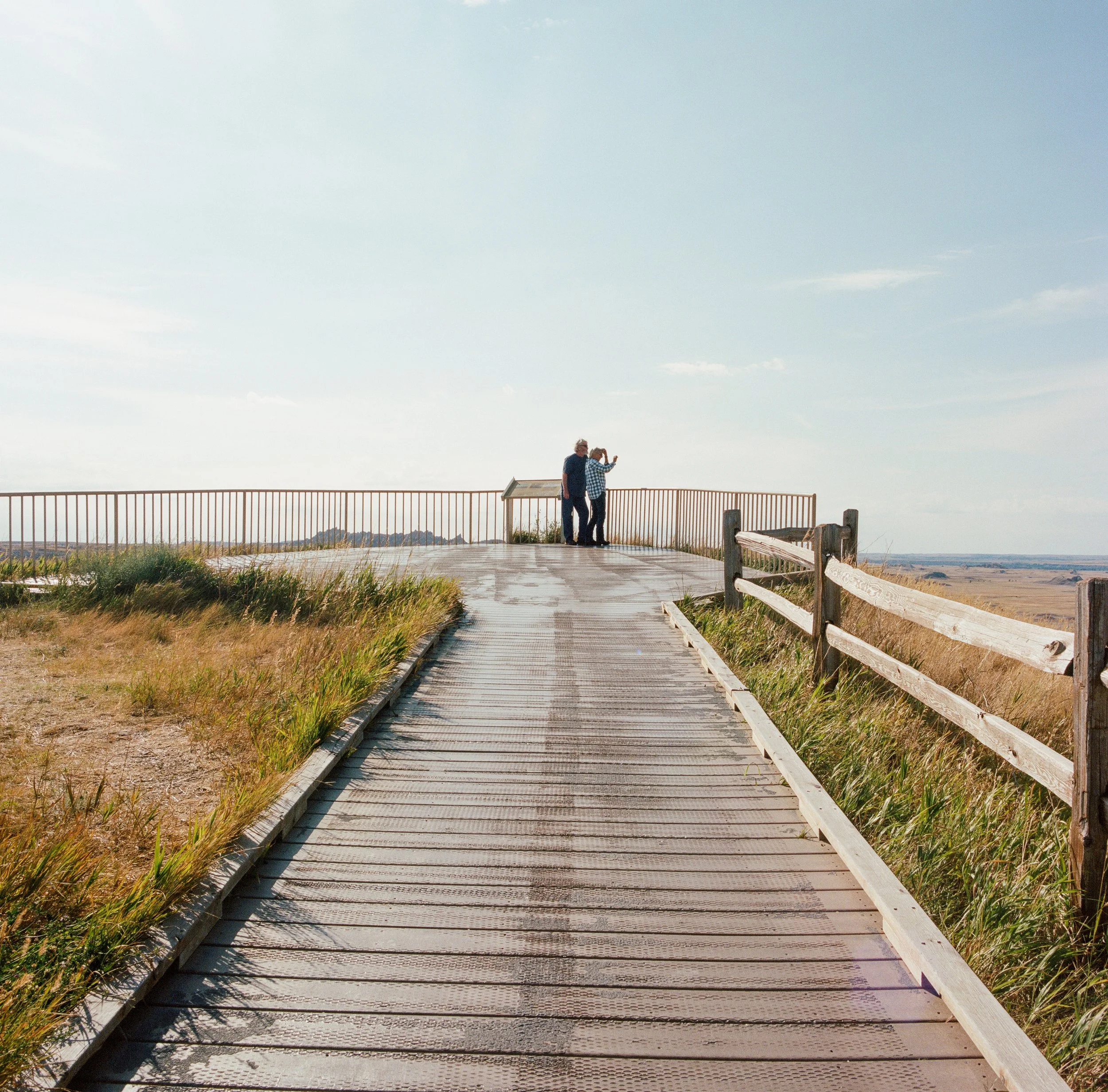
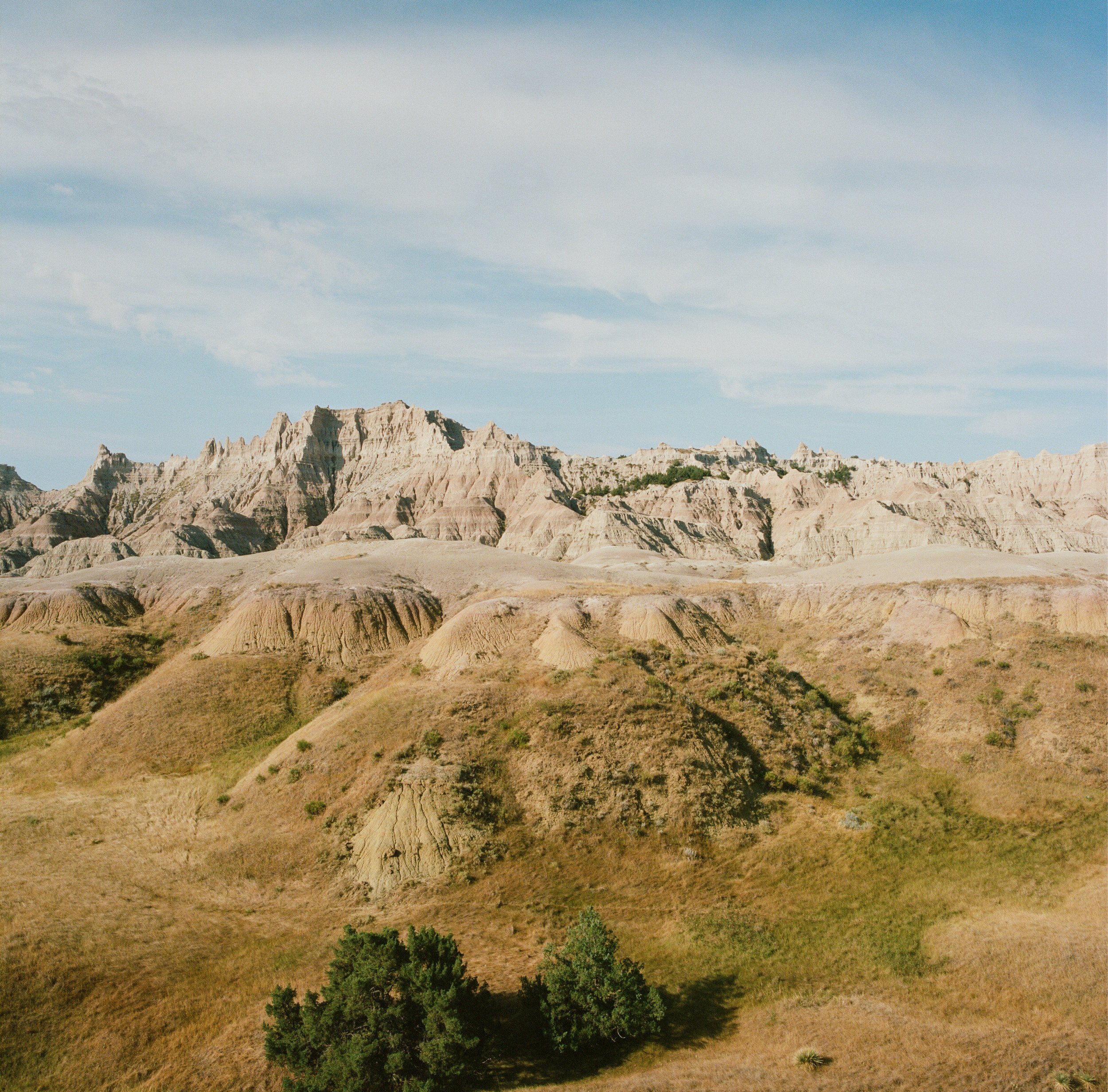
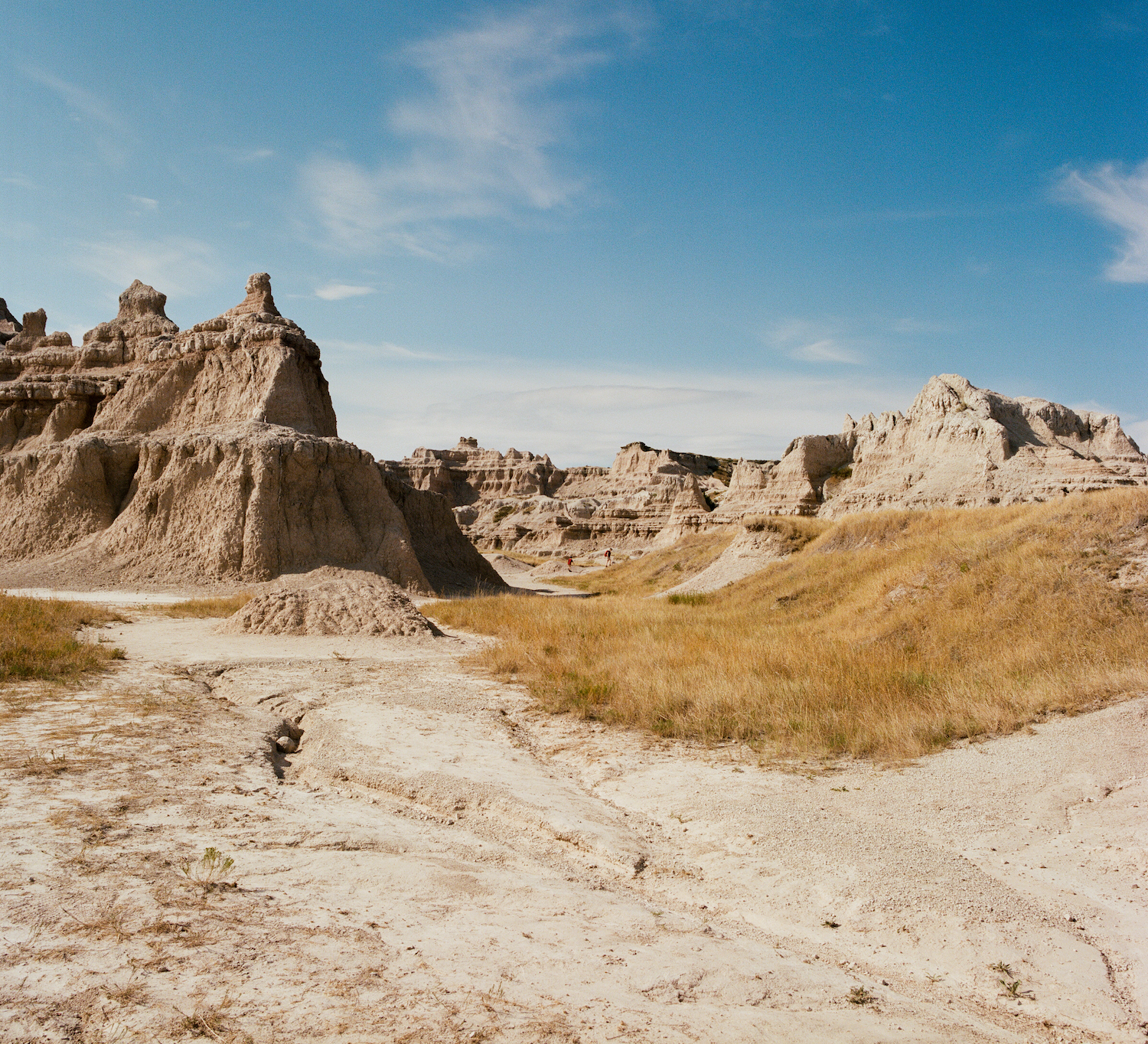
Strange and magical things happen when you enter The Badlands.
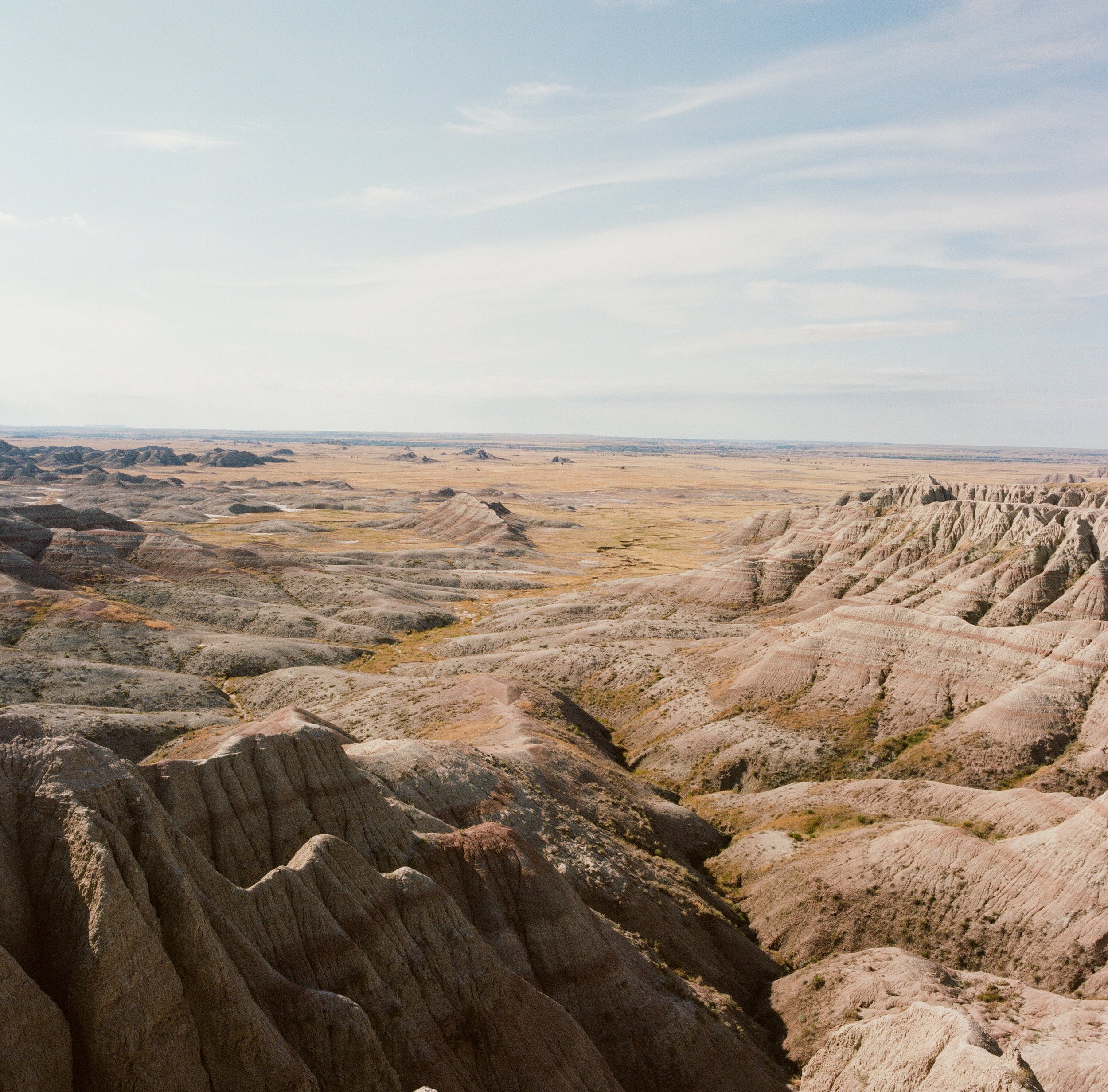
The horizon disappears beneath the weight of the sky as it intersects with the lightness of the land. The sun announces itself with a peculiarity that lies beyond time.
A certain tranquility and uneasiness overwhelms your senses. Immediately transfixed, you find yourself transported to you know not where. Thoughts pervade your thoughts.
As you glimpse the layers, the landscapes lead you on new paths. You imagine other times and other peoples.
You wonder if you too will one day become the color red. Then you switch gears to bath in the green.
The prairie somehow emerges from beneath the clouds, as your eyes navigate the endless expanses, trying to get their bearings. Are those people? Is this now?
Standing where others have stood, you feel the reassurance of time. You also start to tremble with a vertigo that only time can elicit.
Before us lays everything that came before us. The sun casts its shadows. The earth awaits.
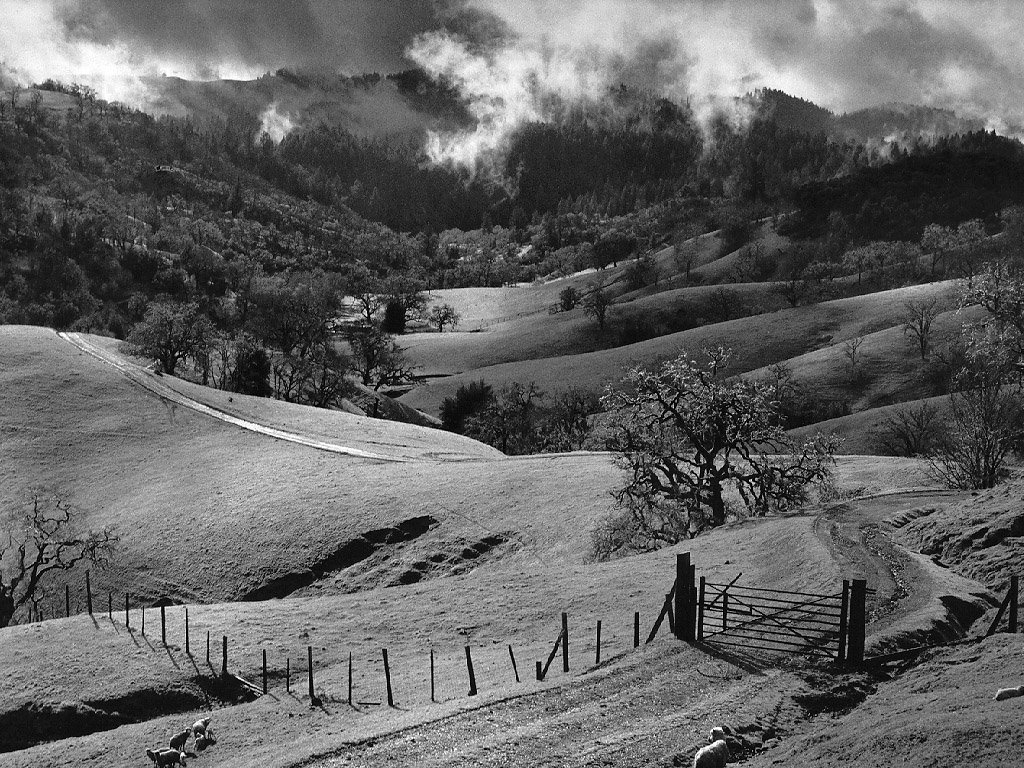
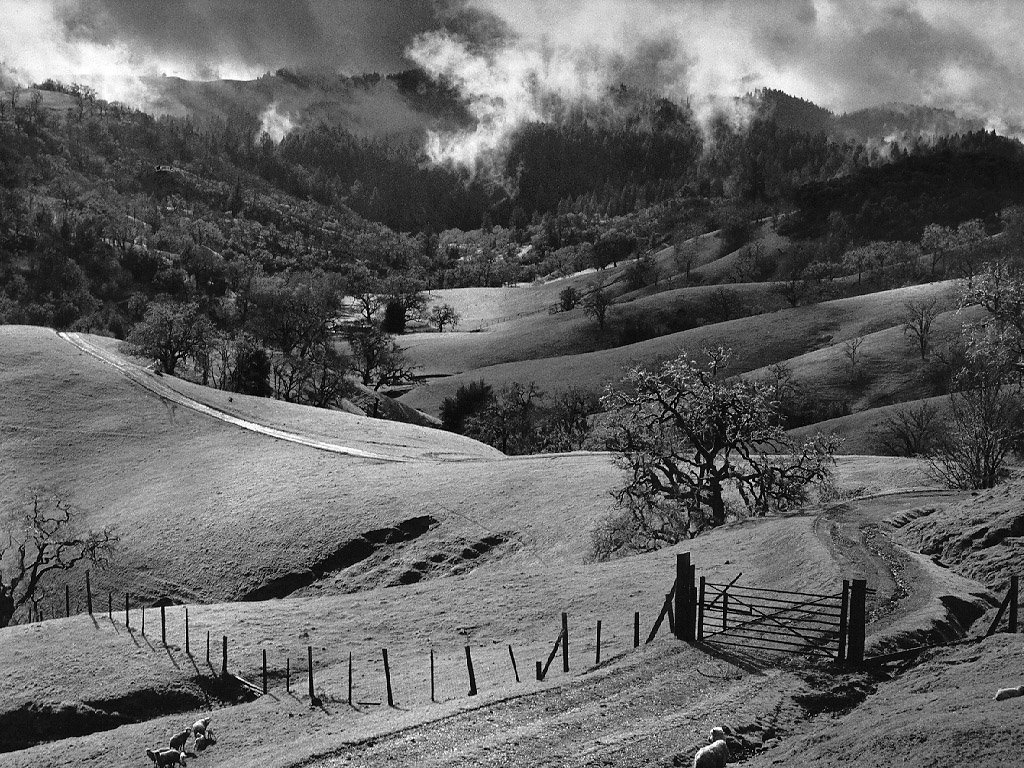
Ansel Adams
With the advent of the iPhone, and perhaps even before that, yes, before that, we've started, as a culture, to gain a new found appreciation for photography. In my estimations, we're coming to better understand, not only shot, composition and subject matter, but also post-production, execution and treatment. As Annie Leibovitz claims, following the old adage, the best camera is the one with you. You see, for us, that's pretty easy. Most of us carry our iPhones in our pockets or purses or have them readily accessible. The iPhone has changed the way we view the world.
Capturing a scene or a moment didn't use to be as spontaneous. When the great American photographer Ansel Adams desired to shoot a scene at Yosemite National Park, he would trek off into the wilderness, searching for the great unknown: the location as much as the subject. For a century that was defined by the cinema, photography wasn't so much as neglected, as not fully realized or endorsed. And yet, Ansel Adams found a way to reveal new possibilities for the medium.
Recently, I had the chance to catch the Ansel Adams retrospective, curated by himself. I was really struck by the breadth and depth of the work. As with most characterizations, I was presumptuously negative about the expanses of his work, but the import of Ansell Adams is spectacular. We're all increasingly coming to know and understand photography, and Adams still points the way.